India Directs Hospitals to Stop Reusing Single-Use Medical Devices
The Centre has instructed states and Union Territories to enforce restrictions on the reuse of disposable medical equipment, citing infection risks, patient safety concerns and allegations of full price billing for reused devices.
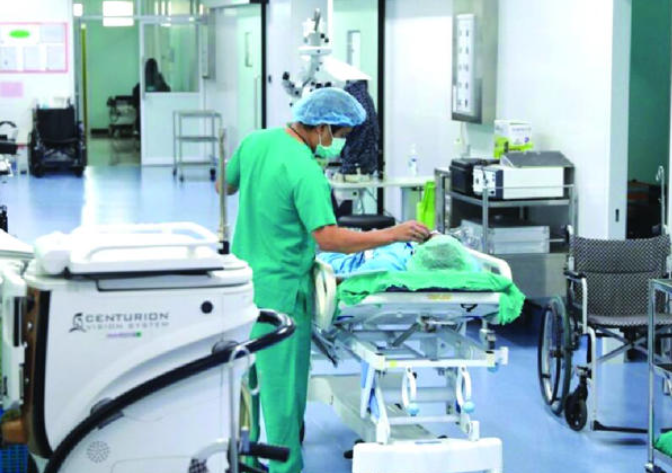
New Delhi, October 25: The Union government has directed states and Union Territories to strictly enforce the prohibition on reusing medical devices designed for one-time use, raising concerns over patient safety, infection prevention and healthcare costs at hospitals across the country.
The directive follows concerns raised by the Directorate General of Health Services (DGHS) about the continued practice of sterilising and reusing certain disposable medical devices in some private and corporate hospitals. The authorities have also flagged instances in which patients or government healthcare schemes were allegedly charged the full price of equipment despite its reuse.
The Centre’s intervention places renewed emphasis on compliance with medical device regulations and the responsibility of healthcare institutions to ensure that patients receive safe and appropriate treatment. The direction applies to public and private healthcare facilities, with state authorities and drug regulators expected to strengthen monitoring and enforcement.
According to reports published in the days leading up to October 25, the DGHS issued a communication dated October 16 highlighting the problem and calling for action by the relevant authorities. The concerns extend to specialised medical procedures in which devices come into direct contact with patients’ blood vessels, tissues or other parts of the body.
The issue has particular significance for departments dealing with cardiology, nephrology, oncology, cardiothoracic and vascular surgery, and neurosurgery, where specialised equipment is frequently used during complex interventions.
The government’s action seeks to address two related issues: the possibility of infection or other complications arising from the inappropriate reuse of disposable devices, and the financial burden on patients who may be charged for equipment that has already been used.
Source: ThePrint’s report on the DGHS directive
Patient Safety at the Centre of the Directive
Medical devices intended for one-time use are designed and labelled for a single procedure or patient use, according to their approved specifications. Unlike reusable equipment, which is designed to undergo appropriate cleaning, disinfection or sterilisation between procedures, disposable devices are not automatically suitable for repeated use.
Improper handling, inadequate sterilisation or damage during a previous procedure can create potential hazards. Depending on the device and the circumstances, these may include infection, contamination, mechanical failure or other complications during treatment.
Sterilisation alone does not necessarily make every disposable device safe for another procedure. Some devices contain components that may deteriorate during use or may not be suitable for the validated cleaning and sterilisation processes applied to reusable medical equipment.
This distinction is especially important in invasive procedures. Equipment used in cardiovascular interventions, dialysis-related treatment and surgery must meet appropriate safety and performance requirements because complications can have serious consequences for patients.
The DGHS has therefore called for stronger enforcement rather than allowing healthcare facilities to treat disposable and reusable devices as interchangeable categories.
The directive also reinforces the need for hospitals to maintain clear procurement and inventory practices. Healthcare facilities must be able to identify whether a device is intended for single use, ensure that staff follow its approved instructions and prevent unauthorised reuse.
Concerns Over Billing and Treatment Costs
Apart from clinical risks, the matter has raised questions about transparency in hospital billing.
Medical treatment can already involve substantial expenditure on diagnostic tests, surgical procedures, medicines, specialist consultations and equipment. Patients often have limited access to technical information about the devices used during treatment, leaving them dependent on hospitals to provide accurate details.
If a disposable device is reused but billed at its full purchase price, patients may face questions about whether the amount charged accurately reflects the service and equipment supplied.
The reported concerns also extend to government-funded treatment, where public money may be used to cover the cost of procedures. If a healthcare scheme is charged for equipment represented as new when it has been reused, the matter raises questions about financial accountability as well as patient protection.
The Centre’s direction signals that enforcement should address both the medical and financial aspects of the practice. Regulatory oversight is necessary to ensure that the prohibition is followed and that patients are not exposed to avoidable risks or misleading charges.
However, establishing the scale of the problem would require systematic inspections, records of device usage, procurement documentation and examination of hospital billing practices. Individual allegations should be investigated on the basis of available evidence rather than treated as proof that all hospitals engage in such conduct.
Role of States and Drug Regulators
Implementation will depend significantly on state health departments, Union Territory administrations and the officials responsible for regulating medical devices and healthcare facilities.
Authorities may need to examine procurement records, inspect device-storage areas, review hospital protocols and verify whether staff members are following manufacturers’ instructions. Clear documentation can help distinguish legitimate reusable equipment from products that must be discarded after a single use.
Hospitals also need effective internal systems to track medical equipment throughout its lifecycle. Staff involved in purchasing, operating theatres, intensive care units and infection-control departments should understand the relevant requirements.
Regular training can help reduce confusion over device classifications and ensure that disposable equipment is not returned to circulation after a procedure.
Regulators face the additional challenge of maintaining oversight across facilities of different sizes and levels of specialisation. Large corporate hospitals, smaller private establishments and public hospitals may have different procurement systems, staffing arrangements and reporting mechanisms. Nevertheless, patient safety standards must be consistently applied.
Enforcement should also provide a clear process for reporting suspected violations and investigating complaints. Where breaches are established, authorities can take action under the applicable legal and regulatory framework.
Implications for Hospitals and Healthcare Workers
For hospital administrators, the directive highlights the importance of reviewing existing practices and ensuring that operating procedures comply with device-specific instructions.
Procurement departments must account for the cost of replacing disposable equipment after use. Although single-use products can increase immediate expenditure, attempts to reduce costs through unauthorised reuse may expose institutions to regulatory action, reputational damage and additional costs arising from preventable complications.
Healthcare workers also play a critical role. Doctors, nurses, technicians and infection-control personnel need to be able to identify single-use products and follow appropriate disposal procedures.
A reliable reporting system is important so that staff can raise concerns without ambiguity about responsibility. Hospitals should make it clear who is accountable for procurement decisions, device handling, sterilisation protocols and the disposal of equipment after procedures.
The issue also demonstrates why cost control in healthcare must be balanced with safety requirements. Financial pressures cannot replace clinical standards, particularly when devices are used in procedures that involve significant risks.
Need for Greater Transparency
The Centre’s action is likely to increase attention on how hospitals document equipment use and communicate treatment costs to patients.
Healthcare providers can strengthen public confidence by maintaining accurate records, issuing itemised bills and explaining the categories of equipment used during procedures. Patients should also have access to channels through which they can seek clarification or report suspected irregularities.
At the same time, inspections and enforcement should be supported by reliable evidence. Transparent reporting of confirmed violations, corrective action and compliance levels would help authorities determine whether the measures are effective.
The latest directive places responsibility on healthcare institutions to ensure that equipment is used according to its approved purpose and that billing practices are consistent with the services delivered.
Ultimately, the effectiveness of the government’s intervention will depend on consistent enforcement, appropriate hospital procedures and accountability across the medical supply chain. Preventing the reuse of devices intended for one-time use is not simply a matter of regulatory compliance; it is also a fundamental part of protecting patients from avoidable harm and ensuring that healthcare expenditure is handled responsibly.