


Not All Disputes Belong in Courtrooms: CJI Highlights Mediation as Key to Justice
Mediation fosters creative solutions, strengthens relationships, and ensures cost-effective justice, says CJI Sanjiv Khanna, urging legal professionals to embrace flexibility in resolving disputes beyond courtrooms.
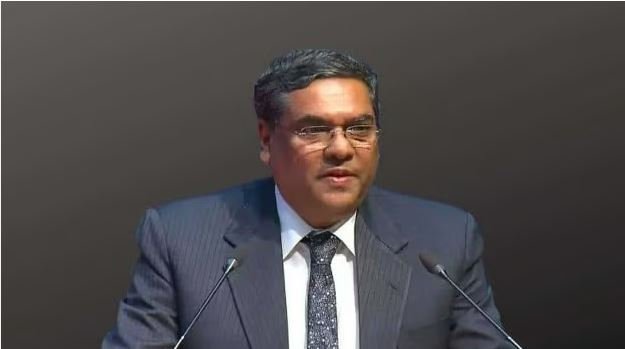
Mumbai, 15-02-2025: Chief Justice of India Sanjiv Khanna on Saturday underscored the growing importance of mediation as an effective and necessary alternative to litigation, emphasizing that not all disputes are best suited for courtrooms. Speaking at the third convocation ceremony of Maharashtra National Law University (MNLU) in Nagpur, he highlighted how mediation fosters creative solutions and strengthens relationships, offering a more holistic approach to dispute resolution. The Chief Justice urged legal professionals to view each case not merely as a legal issue but as a human story, advocating for a justice system that is cost-effective, time-bound, and adaptable to modern challenges.
India’s legal aid framework, he noted, stands among the most comprehensive in the world, providing assistance to all stakeholders, including both accused individuals and victims. The CJI elaborated on the evolving nature of legal disputes, stating that rigid legal solutions often fail to address the complexities of contemporary conflicts. “Just as problems cannot be fixed into boxes, neither can their solutions. As our challenges become more dynamic, the need for flexible and innovative resolutions grows,” he remarked. He further emphasized that mediation not only resolves conflicts efficiently but also preserves and enhances personal and business relationships, making it a crucial tool for justice in today’s interconnected world.
Highlighting broader societal concerns, Justice Khanna pointed out that the current generation faces unprecedented challenges such as climate change, digital privacy concerns, and the evolving nature of democracy due to technological advancements. These issues, he stressed, are not merely theoretical but pose significant threats to human dignity, liberty, and justice. Addressing these concerns requires legal professionals to think beyond conventional methods and develop innovative approaches to safeguard fundamental rights.
The Chief Justice also expressed confidence in India’s potential to lead the world in legal accessibility, combining its robust legal aid system with the enthusiasm and energy of young lawyers. Encouraging them to embrace a forward-thinking mindset, he urged the legal community to broaden their perspectives and work towards a justice system that is truly inclusive and accessible.
Adding to the discourse, Supreme Court judge Justice B.R. Gavai, who serves as the Chancellor of MNLU, extended his gratitude to the Maharashtra government for its support in establishing the university. He specifically acknowledged the contributions of former Chief Minister Devendra Fadnavis and his successors, including Uddhav Thackeray, for their role in strengthening legal education in the state. His remarks underscored the vital role of government initiatives in fostering legal excellence and ensuring the continued evolution of India’s judicial system.

