


Nepal’s First Woman PM Expands Cabinet, Three Ministers Sworn In Amid Political Transition
Kulman Ghising, Khanal, Aryal Join Karki’s Interim Government with Pledge of Reform and Stability
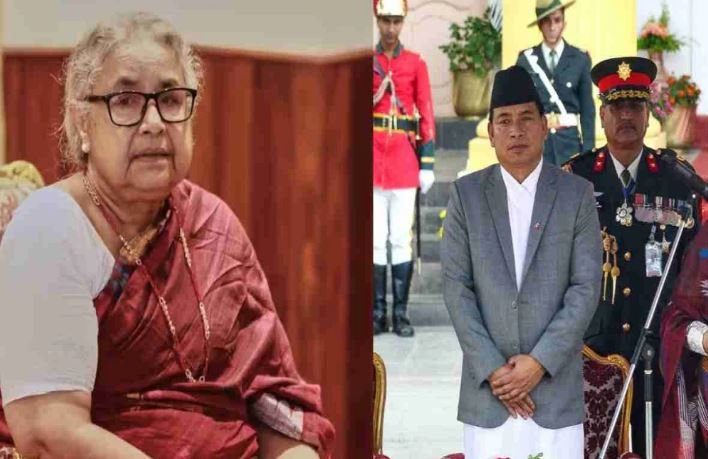
Kathmandu, Sept 15: Nepal’s interim government led by Prime Minister Sushila Karki expanded its Cabinet on Monday with the induction of three new ministers, signaling the beginning of governance under the country’s first woman prime minister. The swearing-in ceremony, held under a makeshift tent at the President’s Office, Sheetal Niwas, damaged during recent violent protests, was administered by President Ramchandra Paudel.
The Cabinet now comprises four members, including Karki herself, who will continue to oversee unassigned ministerial portfolios. The caretaker government is tasked with steering the Himalayan nation through a turbulent political transition and conducting parliamentary elections within six months, scheduled for March 2026.
Among those sworn in was former Nepal Electricity Authority (NEA) chief Kulman Ghising, widely credited with ending chronic load-shedding in the country during his earlier tenure. Ghising has been entrusted with three crucial portfolios—Energy, Water Resources and Irrigation; Physical Infrastructure and Transport; and Urban Development. His first decision after assuming office was to direct the recovery of unpaid dues worth approximately Rs 7 billion from 28 industries using dedicated and trunk lines, an issue that had earlier placed him at odds with the former Oli-led government.
Former finance secretary Rameshwor Khanal, known for his role in drafting and submitting a comprehensive 447-page economic reform report during the Oli government, was sworn in as finance minister. His appointment is seen as a signal of continuity in economic policymaking, with expectations that he will prioritize fiscal reforms and stability amid political uncertainty.
Om Prakash Aryal, a prominent lawyer and key negotiator during the youth-led Gen Z protests, took charge as Minister for Home Affairs as well as Law, Justice, and Parliamentary Affairs. In his first remarks after assuming office, Aryal stressed that the interim government’s foremost responsibility is to ensure free, fair, and impartial elections. He further pledged to rebuild physical infrastructure damaged in the recent unrest, strengthen governance, and investigate allegations of excessive force used during the demonstrations that claimed 72 lives. “Those displaced by the revolt must find their way back through the ballot box, not through violence,” Aryal remarked.
Prime Minister Karki, 73, assumed office on Sunday following the dramatic resignation of K. P. Sharma Oli amid mass protests spearheaded by Gen Z activists who accused his government of corruption and decried the controversial social media ban. Her appointment marked a historic moment for Nepal, making her the first woman to lead the government, following her earlier tenure as Chief Justice of the Supreme Court between 2016 and 2017.
The induction of ministers with diverse professional backgrounds—Ghising from the energy sector, Khanal from finance and reform, and Aryal from law and civic activism, suggests that the interim administration is attempting to balance technocratic expertise with the legitimacy of public demand for change. With political instability still fresh in public memory, the success of the Karki-led government will depend heavily on its ability to maintain order, prepare for elections, and address the grievances of those who lost faith in the previous regime.

