


US Reaffirms India as ‘Key Partner’ Despite New Pax Silica Initiative
Washington says India’s absence from inaugural initiative unrelated to trade talks; engagement on supply chains ongoing
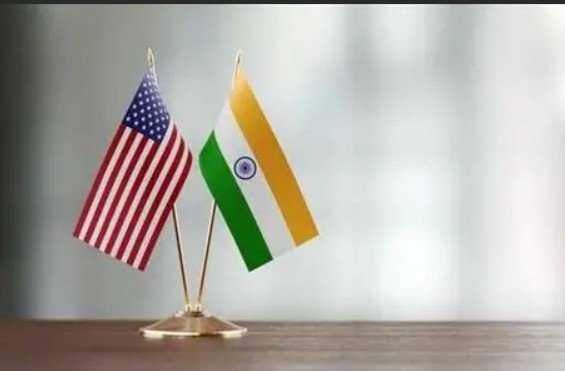
US, Dec 18 : The United States has underscored that India remains a “highly strategic potential partner” on supply chain security and advanced technologies, despite New Delhi not being part of the inaugural Pax Silica Summit, a US led initiative aimed at securing the global silicon and semiconductor supply chain.
Dismissing speculation that India’s absence reflected political or trade related tensions, US Under Secretary of State for Economic Affairs Jacob Helberg said such assumptions were “misplaced and incorrect”.
“There was a lot of speculation behind India not participating in the Pax Silica Summit,” Helberg told reporters at a news conference organised by the Foreign Press Centre. “I want to be clear that conversations between the United States and India pertaining to trade arrangements are a completely separate and parallel track to our discussions on supply chain security. We are not conflating those two things.”
Helberg reiterated Washington’s interest in deeper engagement with New Delhi, saying, “We view India as a highly strategic potential partner on supply chain security-related efforts, and we welcome the opportunity to engage with them.”
Launched last week, the Pax Silica initiative brings together an initial group of countries central to semiconductor manufacturing and advanced technology supply chains, including Singapore, Israel, Japan, South Korea, Australia and the United Kingdom. The framework aims to reduce single points of failure in global supply chains that underpin industries ranging from automobiles and smartphones to artificial intelligence.
Helberg said the initiative fits into a broader US economic security strategy based on four pillars—rebalancing trade, stabilising conflict zones, reindustrialising the United States, and securing supply chains.
“We launched a flagship initiative called Pax Silica to secure the silicon supply chain, which is the lifeblood of cutting-edge technologies—from cars and smartphones to artificial intelligence,” he said.
On India-specific engagement, Helberg said discussions with New Delhi were active and ongoing. “I am in nearly daily communication with our interlocutors in Delhi,” he noted, adding that the US was “actively determining ways of deepening that collaboration quickly.”
He also pointed to upcoming high-level engagement, saying he would attend the India AI Impact Summit in February, which could help identify tangible milestones for cooperation.
Helberg indicated that Indian participation in future Pax Silica-related efforts remained a possibility, noting that the initial grouping was intentionally limited to countries forming the core of semiconductor manufacturing before expanding further down the supply chain.
Describing the Pax Silica declaration as “historic”, Helberg said it marked the first collective effort by nations to treat compute, silica and minerals as shared strategic assets. “It reflects a growing foreign policy consensus that economic security is national security,” he said.
The initiative comes amid intensifying global competition over semiconductors and AI technologies—sectors seen as critical to economic growth and national security. India, which has rolled out incentive schemes to build a domestic semiconductor ecosystem, continues to feature prominently in US strategic thinking.
Washington and New Delhi have in recent years expanded cooperation through platforms such as the Initiative on Critical and Emerging Technology (iCET), reflecting shared interests in resilient supply chains and advanced manufacturing.

