


Parliament Passes VB-G RAM G Bill, 2025: Key Differences From MGNREGA Explained
New rural employment law raises guaranteed workdays, revises Centre-State funding, and shifts scheme to budget linked allocations
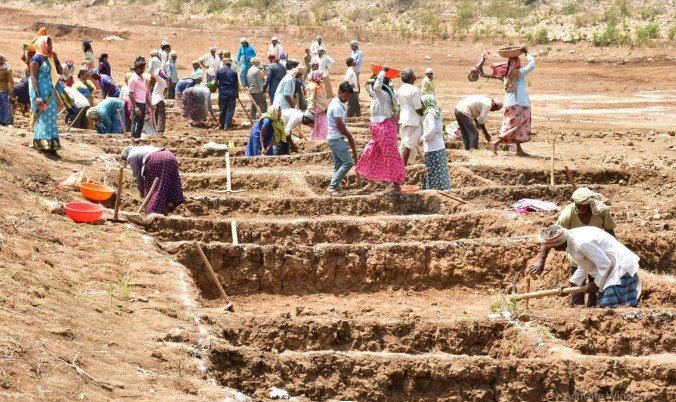
New Delhi, Dec 19 : Parliament on Thursday cleared the Viksit Bharat–Guarantee for Rozgar and Ajeevika Mission (Gramin) or VB-G RAM G Bill, 2025, amid strong opposition protests. Once it receives Presidential assent, the new law will replace the 20 year old Mahatma Gandhi National Rural Employment Guarantee Act (MGNREGA), 2005, marking a major overhaul of India’s flagship rural employment programme.
The government says the legislation introduces structural reforms to align rural employment with evolving socio-economic needs and the broader vision of Viksit Bharat 2047. Critics, however, argue it fundamentally alters the demand driven nature of MGNREGA.
Key differences between VB-G RAM G Bill and MGNREGA
Higher guaranteed employment days
Under the new law, rural households will be entitled to 125 days of guaranteed work per year, up from the minimum of 100 days provided under MGNREGA.
Revised Centre-State funding pattern
The Bill introduces a new cost-sharing structure:
90:10 (Centre:State) for northeastern states and Himalayan states/UTs with legislatures, including Uttarakhand, Himachal Pradesh and Jammu & Kashmir
60:40 for all other states and UTs with legislatures
100% Central funding for UTs without legislatures
Under MGNREGA, the Centre funded 90 per cent of unskilled labour costs across states.
Shift to normative budget allocation
A major structural change is the move to pre-fixed budget allocations. The Centre will allocate funds to states in advance, and any expenditure beyond this limit will have to be borne by the states themselves.
Earlier, under MGNREGA, funding was based on actual demand for work, making it a rights-based and demand-driven programme.
Mandatory pause during peak agricultural seasons
The new law requires states to declare 60 non-working days each year during peak agricultural seasons to prevent competition with farm labour. MGNREGA had no such statutory provision.
Reworked decentralised planning mechanism
Gram Panchayats will continue to propose local works such as water conservation, agriculture support and groundwater recharge. These projects will now be integrated into the Viksit Bharat National Rural Infrastructure Stack and linked with the PM Gati Shakti Master Plan for coordinated planning and implementation.
Under MGNREGA, while Panchayats had a role, planning and execution were less integrated with national infrastructure platforms.
Overall, the VB-G RAM G Bill represents a significant shift from a purely demand-driven rural employment guarantee to a budget-linked, centrally coordinated framework, reshaping the structure of rural wage employment in India.

