


Cold Snap Pushes NASA’s Artemis II Moon Mission to February 8
Arctic cold and high winds force NASA to revise Artemis II launch schedule at Kennedy Space Center
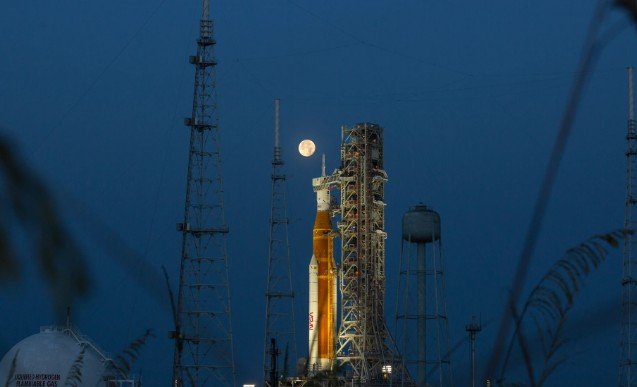
India, Jan 31 : NASA has rescheduled the launch of its Artemis II Moon mission to February 8 after cold weather and strong winds disrupted preparations at Kennedy Space Center in Florida. The mission, which will send four astronauts on a journey around the Moon, was earlier slated for February 6.
In a post on X, NASA said fueling of the Artemis II rocket has been moved to Monday, February 2, due to weather-related adjustments. “With this adjustment, the earliest possible launch date is Sunday, Feb. 8. A launch date will be set after teams have reviewed the results of the wet dress rehearsal,” the space agency said.
NASA explained that engineers have been closely tracking conditions as an unusual Arctic outbreak brought severe cold and gusty winds across Florida. After reviewing hardware capabilities against the forecast, mission managers decided to revise the timeline to avoid violating launch constraints.
Although preparations at the launch pad remain on track, officials said the revised schedule will better position teams for a successful wet dress rehearsal. Meanwhile, the Artemis II crew continues to remain in quarantine in Houston, as engineers keep the Orion spacecraft powered and its heaters configured for colder temperatures. Environmental purge systems for key rocket and spacecraft components have also been adjusted to handle the chill.
The Artemis II mission, expected to last about 10 days, will be a critical step toward Artemis III, planned for 2027, which aims to return humans to the Moon’s south pole and establish a sustained presence there. Artemis II will thoroughly test Orion and other deep space systems in real flight conditions, though the spacecraft will not land on the lunar surface.
The crew for the mission includes NASA astronauts Reid Wiseman (commander), Victor Glover (pilot), Christina Koch (mission specialist), and Canadian Space Agency astronaut Jeremy Hansen. The flight marks humanity’s first crewed lunar mission in more than five decades, following Apollo 17 in December 1972.

