


CM tables twin Bills to decriminalise minor offences, abolish leprosy-based discrimination
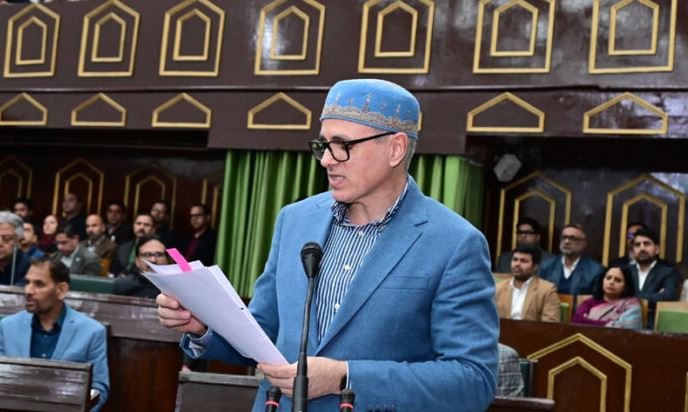
JAMMU, FEBRUARY 4: Chief Minister Omar Abdullah on Tuesday tabled two important Amendment Bills in the Jammu and Kashmir Legislative Assembly, signalling a major push toward decriminalising minor offences, improving ease of living and doing business, and eliminating discriminatory provisions against persons affected by leprosy.
The first Bill, titled Jammu and Kashmir Jan Vishwas (Amendment of Provisions) Act, 2026, seeks to amend several enactments of the Union Territory to rationalise offences and promote trust-based governance. The second Bill, titled Jammu and Kashmir Eliminating Discrimination Against Persons Affected by Leprosy Act, 2026, aims to remove outdated and discriminatory references to leprosy from various State laws that disqualify affected persons from holding public or institutional positions.
Introducing the Jan Vishwas Amendment Bill, the Chief Minister said it aligns J&K laws with the Centre’s Jan Vishwas Act, 2023, which focuses on decriminalising minor and procedural offences while encouraging compliance through civil penalties rather than criminal prosecution. The Bill also seeks to replace an Ordinance promulgated by the Lieutenant Governor on December 16, 2025, which is due to lapse six weeks after the conclusion of the ongoing Assembly session.
Under the proposed amendments, imprisonment provisions in several laws are proposed to be removed and substituted with enhanced monetary penalties. The move is intended to reduce criminalisation of routine and technical violations, improve regulatory certainty, and create a more business-friendly environment under the Business Reform Action Plan being monitored by the Government of India.
Key statutes proposed to be amended include the J&K Municipal Act, 2000; J&K Municipal Ombudsman Act, 2010; J&K Development Act, 1970; J&K State Town Planning Act, 1963; and the J&K Non-Biodegradable Material (Management, Handling and Disposal) Act, 2007.
In the J&K Municipal Act, 2000, imprisonment for certain offences is proposed to be replaced with higher fines, including stricter penalties for the sale of substandard food and drinks and for illegal felling of trees within municipal limits. The fine for selling substandard food or beverages is proposed to be increased to Rs 50,000, compared to the current maximum of Rs 2,000.
Under the J&K Municipal Ombudsman Act, 2010, the penalty for filing mala fide complaints is proposed to be enhanced, replacing imprisonment with a fine of not less than Rs 50,000, extendable up to Rs 1 lakh.
Similarly, in the J&K Development Act, 1970, jail terms for obstructing authorised officials and contractual works are proposed to be replaced with graded financial penalties, while fines under the J&K State Town Planning Act, 1963 are proposed to be substantially increased to strengthen deterrence.
For violations under the Non-Biodegradable Material Act, 2007, the Bill proposes doing away with imprisonment altogether and introducing heavy monetary penalties along with an adjudication mechanism. The maximum fine for certain offences is proposed to be increased to Rs 5 lakh, with a minimum of Rs 5,000, while second or subsequent offences could attract penalties up to Rs 10 lakh. An appeal mechanism before the Administrative Secretary, Forest, Ecology and Environment Department is also proposed.
The second Bill focuses on removing stigma and discrimination against persons affected by leprosy. It proposes deletion of the words “contagious leprosy” from disqualification clauses in several shrine-related laws, including the J&K Shri Amarnath Ji Shrine Act, 2000; J&K Shri Mata Vaishno Devi Shrine Act, 1988; J&K Shri Shiv Khori Shrine Act, 2008; and J&K Shri Mata Sukrala Devi Ji and Shri Mata Bala Sundari Shrine Act, 2013.
Additionally, the Bill proposes repeal of the J&K Prevention of Beggary Act, 1960, which had already been struck down by the High Court of J&K and Ladakh in 2019 for criminalising begging and violating constitutional rights.
The Government said the amendments follow the Supreme Court’s May 7, 2025 judgment directing all States and Union Territories to identify and remove discriminatory references against persons affected by leprosy. A committee constituted by the J&K Government had reviewed existing laws and recommended these changes.
In the Statement of Objects and Reasons, the Government noted that leprosy is now medically curable and patients become non-infectious after treatment, rendering such disqualifications outdated, irrational and unconstitutional. The proposed amendments aim to uphold the principles of dignity, equality and non-discrimination enshrined under Articles 14, 15 and 21 of the Constitution.
Both Bills are expected to be taken up for detailed debate during the ongoing Assembly session and are likely to be passed.

