


Tourism Revival Gains Momentum
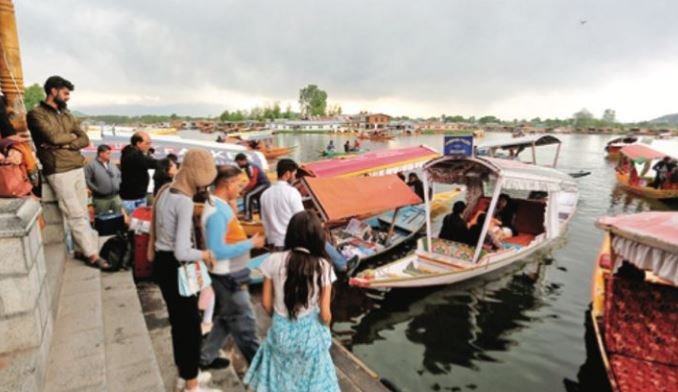
Jammu and Kashmir’s tourism sector has entered a defining phase, marked by record tourist arrivals in 2025 and a renewed sense of confidence in the region’s economic and social stability. The arrival of more than 1.77 crore visitors reflects not only the revival of tourism after years of disruptions but also the growing perception of Jammu and Kashmir as a safe, accessible, and diverse destination. This surge represents a combination of effective policy direction, improved connectivity, focused promotional campaigns, and the inherent natural and cultural appeal of the region. However, the challenge ahead lies in sustaining this growth while ensuring that expansion remains environmentally responsible, socially inclusive, and economically balanced.
The dominance of domestic tourism continues to shape the sector’s growth trajectory. With domestic visitors forming the overwhelming majority of total arrivals, the tourism economy has found a reliable foundation. At the same time, the relatively modest number of international tourists highlights both the untapped potential and the need for targeted global outreach. Chief Minister informed the House that from January 1, 2025 to December 31, 2025, as many as 1, 77, 65, 390 tourists were registered in Jammu and Kashmir. This included 36,410 international tourists and 1, 77, 28, 980 domestic tourists. Infrastructure readiness at key gateways such as Srinagar airport, along with existing immigration and passenger handling systems, indicates that the region is structurally prepared for international expansion. The real task now is to align airline commercial interests, global marketing strategies, and diplomatic tourism engagement to convert preparedness into operational connectivity. One of the most transformative developments has been the rise of community-based tourism models, particularly the Home Stay programme. By expanding accommodation capacity while directly involving local households in tourism, the programme has strengthened grassroots economic participation. It has created supplementary income opportunities, encouraged preservation of local culture, and reduced pressure on traditional hotel infrastructure. Yet, the programme also faces structural challenges, including uneven awareness levels, skill gaps, and infrastructure limitations in remote areas. Addressing these issues through training, financial assistance, and integrated rural infrastructure planning will be essential to ensure long-term sustainability. Tourism’s contribution to regional economic resilience is increasingly evident. Beyond direct employment in hospitality and travel services, tourism generates multiplier effects across handicrafts, transport, agriculture, food services, and small-scale entrepreneurship. In a region where employment diversification remains critical, tourism offers one of the most scalable and inclusive growth pathways. The sector also plays an important role in social stabilization by promoting people-to-people interaction, cultural exchange, and local confidence in economic opportunity. However, rapid tourism growth also demands stronger destination management frameworks. Environmental sustainability must remain central to policy planning, particularly in fragile ecological zones such as alpine meadows, wetlands, and high-altitude destinations. Scientific visitor management, waste control systems, and eco-sensitive infrastructure development must evolve alongside tourism expansion. Sustainable tourism is not merely an environmental necessity but also an economic safeguard, as the region’s natural beauty remains its primary competitive advantage. Government initiatives have played a crucial role in building momentum. Investments in tourism infrastructure, digital platforms, promotional campaigns, and diversification into adventure, sports, and cultural tourism have widened the sector’s base. Events such as marathons, winter sports festivals, and cultural exhibitions have helped position Jammu and Kashmir as a year-round destination rather than a seasonal one. Continued policy stability, investor confidence, and public-private partnerships will be key to maintaining this growth trajectory. The transition from recovery to expansion requires careful policy calibration. Tourism planning must balance growth with carrying capacity, infrastructure expansion with environmental safeguards, and visitor numbers with visitor experience quality. Future success will depend on integrated planning across tourism, urban development, the environment, transport, and skill development sectors.
Jammu and Kashmir’s tourism story today represents more than economic statistics. It reflects resilience, policy continuity, and public participation. If growth is guided by sustainability, community inclusion, and long-term planning, the tourism sector can emerge as one of the strongest pillars of economic transformation in the region. The opportunity is historic, but its success will depend on how responsibly and strategically it is managed in the years ahead.

