


Infrastructure, artisans, employment must form the core of J&K’s development agenda: Tanvir Sadiq
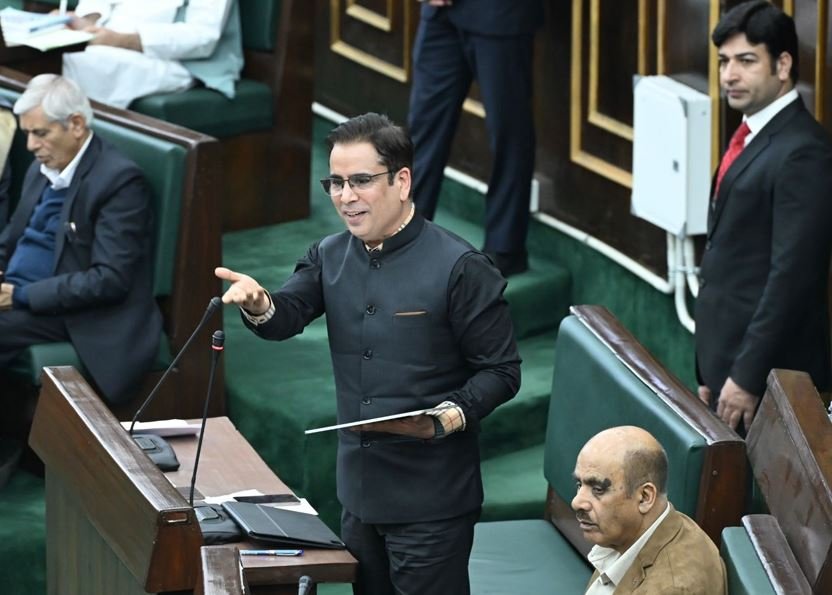
Srinagar, 12 Feb: Chief Spokesperson of the Jammu & Kashmir National Conference and MLA Zadibal, Tanvir Sadiq, today emphasized that key departments such as Public Works (PWD), Industries & Commerce, Mining, and Labour & Employment play a decisive role in strengthening the economic dignity, infrastructure backbone, and employment landscape of Jammu & Kashmir.
Speaking during discussions on departmental grants, Sadiq stressed that timely execution of infrastructure projects remains critical for balanced development. He called for Advance Administrative Approval and Authorization for macadamisation works well before the commencement of the working season to ensure smooth, efficient, and time-bound completion of projects.
Highlighting pressing infrastructure needs, he underscored the urgent necessity of constructing a flyover outside SKIMS to streamline traffic flow and ensure unhindered movement of patients and emergency services. He further stressed the importance of addressing critical road stretches, including the Nowshera–Soura road, Hawal–M.K. Chowk corridor, and the Syeda Kadal to Ashia Bagh road, to ease congestion and improve connectivity.
Drawing attention to the challenges faced by the handicrafts sector, Sadiq noted that thousands of artisans, particularly in areas such as Zadibal, are grappling with severe financial distress due to declining demand, inflationary pressures, and systemic constraints. He called for comprehensive relief measures, including loan restructuring, waiver of interest liabilities, and fresh financial assistance to revive the sector.
He also emphasized the need to protect and promote the unique identity of Kashmiri crafts and to establish institutional platforms that recognize and honor the invaluable contribution of artisans.
Addressing industrial growth, Sadiq highlighted the importance of adopting modern and sustainable practices in the cement sector. He advocated for the use of Refuse-Derived Fuel (RDF) as an alternative energy source, stating that it would promote scientific waste management, reduce environmental pollution, and lower energy costs for cement plants.
He emphasized that cement plants in Jammu & Kashmir must be upgraded with modern technology, improved efficiency standards, and robust environmental safeguards to enhance production capacity, reduce dependence on imports, and generate greater local employment while ensuring environmentally responsible industrial expansion.
Sadiq also expressed serious concern over the hardships faced by JK Cements pensioners. He observed that many former employees, who dedicated their lives to the institution, are living without adequate social and medical security. He urged the authorities to address their welfare concerns on priority and ensure dignity and support in their post-retirement years.
On the mining sector, he noted that the operationalisation of gypsum mines holds significant potential for generating local employment, strengthening allied industries, and reducing reliance on external supplies. He stressed that local youth must be given priority in employment opportunities and that policies must guarantee transparent and equitable utilization of mineral resources.
Further emphasizing employment generation and worker welfare, Sadiq called for the expansion of skill development initiatives, enhanced social security coverage for informal workers, and targeted financial support for artisans, shikara owners, and labourers dependent on Dal Lake for their livelihoods.
He also underscored the importance of exploring structured overseas employment opportunities for the youth of Jammu & Kashmir through safe, transparent, and government-supported mechanisms, drawing inspiration from successful models implemented in other states.
Reiterating his commitment to inclusive growth, Sadiq asserted that sustainable development in Jammu & Kashmir must remain people-centric, ensuring that infrastructure development, economic opportunity, and social security measures reach every section of society particularly the youth, workers, and artisan communities who form the backbone of the region’s economy.

