


AI-Driven Diagnostic Innovations Take Centre Stage at Global AI Impact Summit
Health pavilion demo highlights faster reporting, radiologist support and future-ready medical technology
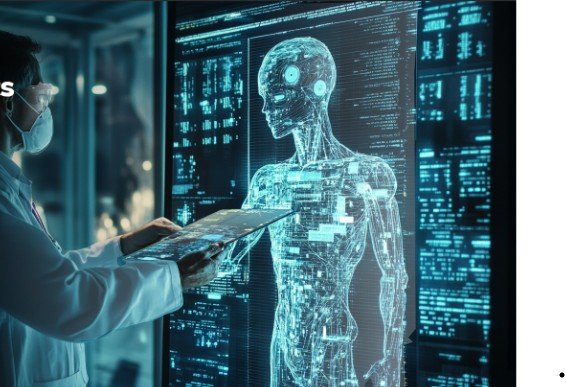
NEW DELHI, Feb 18: AI-powered diagnostics emerged as a major attraction at the Global AI Impact Summit, with a live demonstration showing how artificial intelligence could significantly transform medical imaging and reporting.
At the health pavilion in Bharat Mandapam, visitors gathered around a life-sized mannequin placed on a hospital bed while a robotic arm simulated an ultrasound scan. Multiple screens displayed vital parameters and imaging outputs, illustrating how AI integration can streamline diagnostic workflows.
The system on display is designed to assist radiologists by analysing ultrasound images instantly and flagging potential abnormalities. Developers said the model can reduce the time required to generate reports by automatically identifying areas of concern and enabling quicker clinical verification.
Varun Dube, Head of Innovation at Wipro, said the platform is intended to support medical professionals rather than replace them. He explained that once a radiologist reviews and validates the scan, the diagnostic report can be produced almost immediately, accelerating the overall process.
Currently, ultrasound reports may take several hours or even a full day to be delivered. By narrowing the clinician’s focus and automating measurements, the AI-powered diagnostics system aims to enhance efficiency while maintaining medical oversight.
The project has been under development for nearly a year in collaboration with academic institutions such as IIT Delhi and IISc Bengaluru. It has been trained using a mix of open source, synthetic and real world datasets. However, developers acknowledged that regulatory clearance and extensive clinical validation remain essential before large scale adoption.
Data privacy continues to be a significant hurdle. Since healthcare information is highly sensitive, access to diverse and unbiased datasets is limited, which can affect the robustness of AI models. Ensuring compliance and patient safety remains a priority, officials said.
The company plans to integrate the software into existing ultrasound and imaging machines through partnerships with equipment manufacturers. Because the solution is software-based, it could be embedded without major hardware changes, potentially easing adoption in hospitals and diagnostic centres.
Beyond healthcare, similar AI visual analysis systems are being deployed in industrial inspections, infrastructure monitoring and hazardous environment assessments. These models can be mounted on drones or robotic platforms to detect structural faults, corrosion or leaks in real time.
At the summit, the robotic ultrasound exhibit stood out as a practical example of how AI-powered diagnostics could soon become a standard layer within medical devices, helping clinicians work more efficiently and improving patient care delivery.

