


India Launches ‘Prahaar’, First Comprehensive Counter-Terrorism Policy
Government Rolls Out Intelligence-Led Counter-Terror Policy with Global Coordination Focus
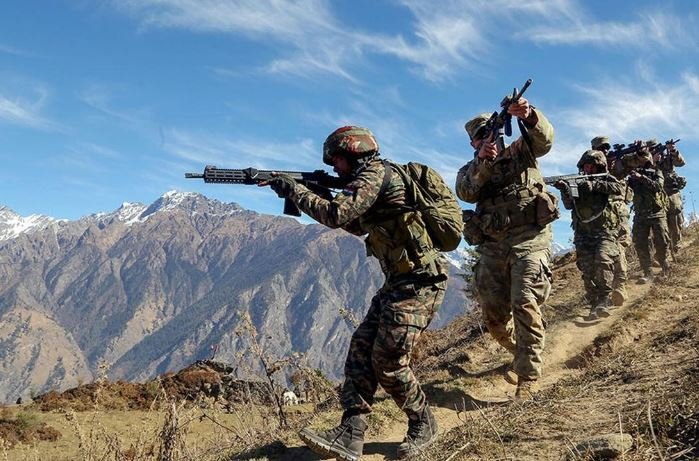
New Delhi, February 23: The Government of India on Monday unveiled the country’s first dedicated counter-terrorism policy titled “Prahaar”, outlining a comprehensive and multi-layered national strategy rooted in a doctrine of zero tolerance towards terrorism. The policy, announced by the Ministry of Home Affairs, aims to strengthen intelligence-driven prevention, dismantle terror ecosystems, and deny extremist groups access to funding, weapons, logistics and safe havens.
The newly introduced framework is structured around seven foundational pillars: prevention, effective response, strengthening internal capacities, adherence to human rights and rule-of-law processes, addressing the root causes that enable radicalisation, shaping international counter-terror cooperation, and ensuring recovery and resilience through a whole-of-society approach.
The document notes that instability in India’s immediate neighbourhood has historically led to ungoverned spaces that can be exploited by extremist elements. Without naming any country, it observes that some nations in the region have occasionally used terrorism as an instrument of state policy. At the same time, the policy reiterates that India does not associate terrorism with any specific religion, ethnicity, nationality or civilisation and maintains a consistent position of condemning violence in all forms.
India’s approach is described as proactive and intelligence-guided, reflecting the diverse threats the country faces across land, air and maritime domains. The strategy gives primacy to intelligence collection and real-time dissemination to executive agencies, with special emphasis on disrupting terror-financing networks under existing legal frameworks.
The policy underscores the strengthening of coordination mechanisms between central agencies and state police forces. The Multi-Agency Centre and the Joint Task Force on Intelligence operating under the Intelligence Bureau serve as nodal platforms for seamless sharing of counter-terror inputs and coordinated preventive action across the country.
Highlighting emerging threats, the document draws attention to the evolving tactics of terrorist organisations. It states that groups operating from foreign soil have attempted to orchestrate violence in India, including through the use of drones in regions such as Punjab and Jammu and Kashmir. It also points to the growing nexus between terrorist outfits and organised criminal networks for logistics, recruitment and funding.
Technology-driven anonymity presents a significant challenge, the policy notes. Encryption tools, dark web platforms, cryptocurrency wallets and advanced digital communication methods have enabled terror groups to conceal identities and financial flows. The document flags the risks associated with misuse of Chemical, Biological, Radiological, Nuclear, Explosive and Digital materials, as well as the potential weaponisation of drones and robotics. Cyber-attacks by criminal hackers and hostile state actors are also identified as critical concerns.
To counter online radicalisation and recruitment, intelligence and law enforcement agencies have intensified monitoring and disruption of extremist propaganda on social media and messaging applications. Law enforcement agencies regularly dismantle overground worker networks that provide logistical and financial support to terrorists.
Responding to terrorist incidents is defined as a coordinated, multi-stakeholder exercise involving central, state and district authorities. A standard operating procedure issued by the Ministry of Home Affairs governs intelligence dissemination, analysis and follow-up through the Multi-Agency Centre to ensure swift and unified action.
The policy also emphasises that India’s counter-terror framework operates within constitutional safeguards. Anti-terror laws, it states, uphold human rights and provide multiple levels of legal redressal through the judicial system. Continuous review and amendment of domestic legal regimes are envisaged to address emerging threats and strengthen prosecutions.
Recognising that socio-economic vulnerabilities can be exploited by extremist forces, the document highlights government initiatives aimed at addressing poverty, unemployment and marginalisation. Rehabilitation and community reintegration efforts involve collaboration with doctors, psychologists, civil society members, religious leaders and non-governmental organisations.
On the international front, India commits to strengthening bilateral and multilateral cooperation, facilitating deportation of wanted fugitives, and working towards designation of terrorists at the United Nations. Investments in advanced technologies and partnerships with private enterprises are also envisaged to counter future threats.
The Prahaar policy marks a significant institutional step in formalising India’s counter-terror architecture, signalling a shift towards integrated, technology-driven and globally aligned strategies to safeguard national security while maintaining constitutional values.

