


Rooftop Solar Panels Win Trust in J&K
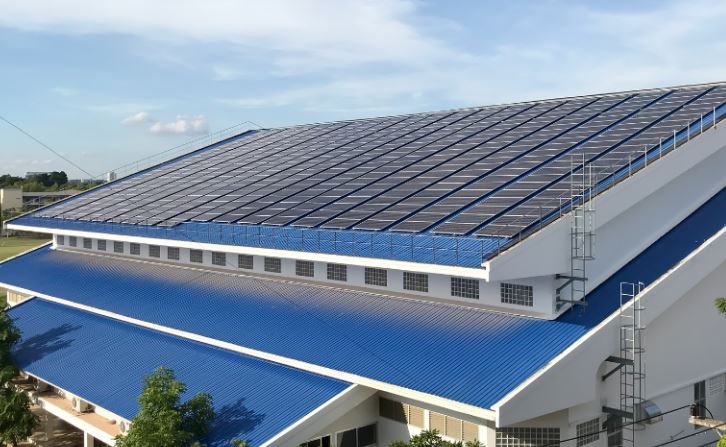
The response to the PM Surya Ghar Muft Bijli Yojana in Jammu and Kashmir presents a promising picture of how clean energy is steadily finding acceptance at the household level. Since the launch of the scheme in February 2024, the Union Territory has received 97,260 applications for rooftop solar installations. Up until March 5, 2026, these applications resulted in the installation of 25,160 systems. These figures reflect not only growing awareness among the public but also a gradual shift toward cleaner and more affordable sources of electricity.
The statistical progress of the scheme becomes even more significant when examined year by year. In the initial phase, from February 13 to December 31, 2024, Jammu and Kashmir recorded 7,097 applications. During this period, 560 rooftop solar systems were installed, and Central Financial Assistance amounting to Rs 2.53 crore was released. This early stage may have been modest in terms of installations, but it laid the foundation for public confidence and awareness about the benefits of rooftop solar energy. The real momentum came in 2025, when the scheme witnessed a sharp rise in participation. During that year alone, 76,146 applications were received, accounting for the overwhelming share of total applications in the Union Territory. At the same time, 17,939 rooftop solar systems were installed, while subsidy assistance of Rs 128.23 crore was disbursed to beneficiaries. This substantial jump in both applications and installations indicates that the scheme moved beyond the introductory stage and began to establish itself as a practical option for households seeking relief from rising electricity costs. The current year has also shown encouraging progress. Between January 1 and March 5, 2026, Jammu and Kashmir registered 14,017 fresh applications and completed 6,661 installations. During this short period alone, Rs 51.45 crore was released as Central Financial Assistance. These figures suggest that the pace of implementation has improved and that both public demand and administrative response have remained strong in the early months of 2026. Overall, the Union Territory has received Rs 182.21 crore in Central Financial Assistance under the scheme. This subsidy support has been one of the most important factors behind the scheme’s growing popularity. For many households, the initial cost of rooftop solar installation can be difficult to manage. Financial assistance from the Centre reduces this burden and makes the transition to solar energy more realistic and attractive for ordinary families. In practical terms, subsidy support has helped turn interest into action. The government has also introduced several measures to improve implementation and increase public convenience. The process has been made fully online, from application to subsidy disbursal, with the financial assistance being transferred directly into beneficiaries’ bank accounts. Consumers are also being offered collateral-free loans from nationalized banks at concessional interest rates linked to the repo rate, with repayment periods extending up to 10 years. These steps are important because they reduce both procedural complexity and financial pressure on applicants. Simplifying regulatory approvals has provided further administrative support. In certain cases, the requirement of technical feasibility has been waived, and automatic load enhancement up to 10 kilowatts has been allowed. Vendor registration procedures have also been streamlined to ensure that there is no shortage of qualified installers as demand grows. In addition, regular monitoring is being carried out in coordination with DISCOMs, while regional review meetings are being held to address bottlenecks. A dedicated grievance redressal mechanism and multilingual call center through helpline number 15555 have also been established to assist consumers.
The data from Jammu and Kashmir clearly shows that the PM Surya Ghar Muft Bijli Yojana is gaining meaningful ground. Nearly one lakh applications, more than 25,000 installations and subsidy support of over Rs 182 crore together underline the scale of public interest and the significance of policy support. At the same time, the gap between total applications and completed installations indicates that there is still room for faster execution. Even so, the progress made so far is encouraging and points towards a gradual but important household-level clean energy transition in Jammu and Kashmir. The government should now focus on faster installations, wider awareness campaigns, and stronger coordination among DISCOMs, banks, and vendors. We must give special attention to rural and remote areas to ensure equitable benefits for all sections. Timely subsidy release, regular monitoring, and simplified procedures will be essential to convert growing public interest into a lasting and inclusive clean energy transformation.

