


Supreme Court Directs Petitioners to Law Commission Over Muslim Law Gifts
Court declines to hear plea challenging exemption from registration for gifts under Muslim personal law
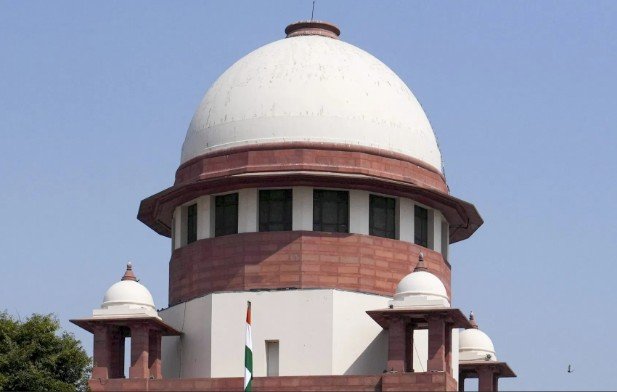
New Delhi, Mar 13: The Supreme Court of India on Thursday advised petitioners challenging provisions related to gifts under Muslim personal law to approach the Law Commission of India for possible amendments in existing legislation.
A bench headed by Chief Justice Surya Kant said the appropriate course for the petitioners would be to present their concerns before the Law Commission, which is mandated to examine laws and recommend reforms where necessary.
The petition had questioned the constitutional validity of Section 129 of the Transfer of Property Act, 1882 and Section 2 of the Muslim Personal Law (Shariat) Application Act, 1937 in relation to the term “gift”.
Counsel for the petitioners argued that gifts made under Muslim personal law are exempt from registration and stamp duty requirements, while similar exemptions are not extended to non-Muslims, raising concerns about possible discrimination.
The bench, which also included Justices Joymalya Bagchi and Vipul M Pancholi, observed that if the provisions resulted in financial loss to the public exchequer or required modification, Parliament would be the appropriate authority to amend the law.
The court questioned why the petitioners had not raised the issue earlier, noting that the law dates back to 1882.
Chief Justice Surya Kant remarked that if there were concerns regarding alleged discrimination or the interaction between personal law and constitutional principles, the matter could be examined by the Law Commission, which is tasked with reviewing legal frameworks and suggesting reforms.
The bench subsequently disposed of the plea, granting liberty to the petitioners to approach the Law Commission for further consideration of the issue.

