


Wangchuk hails release as win-win, says Centre has opened door for meaningful Ladakh dialogue
After NSA revocation, Wangchuk calls for constructive talks on Ladakh’s long-pending demands
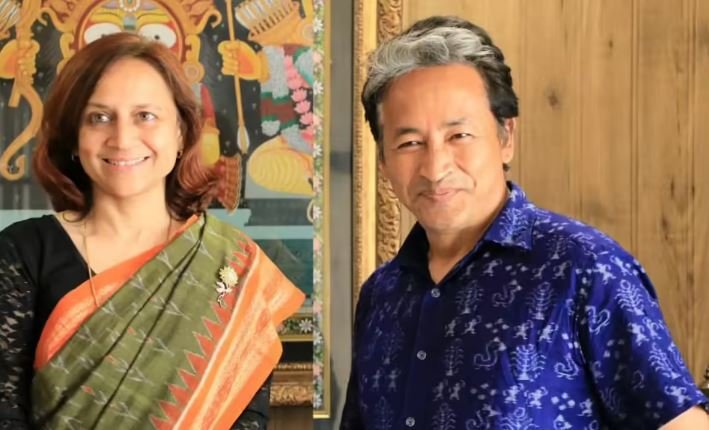
- Sonam Wangchuk strikes conciliatory note after release, sees trust-building move by Centre
NEW DELHI, Mar 17: In his first public remarks after being released from jail, Ladakh activist Sonam Wangchuk on Tuesday described the revocation of his detention under the National Security Act as a “win-win” development and said the Centre had extended its hand to build trust and enable a meaningful and constructive dialogue with the people of Ladakh.
Addressing a press conference in the national capital alongside his wife and HIAL co-founder Gitanjali J Angmo, Wangchuk said the larger objective of the movement in Ladakh had always been to begin a sincere dialogue process rather than pursue confrontation. He said he had been confident of securing relief through the courts, but added that a legal victory alone would not have been enough if it did not also help advance the cause of Ladakh.
“We were sure of a victory in court, but a win was not enough. I wanted a win-win,” Wangchuk said, while welcoming what he described as a constructive gesture from the government. He said the Centre’s move should be seen as an attempt to create confidence and open space for meaningful engagement, which, according to him, had always been the central demand of Ladakh’s peaceful protest movement.
Wangchuk said the people of Ladakh had struggled for years, including through marches to Delhi and hunger strikes, not for confrontation but to persuade the government to sit across the table and listen. In a pointed remark, he said it is often the government that appeals for dialogue when people take to violence, whereas in Ladakh, people have been urging the government to start talks despite choosing a democratic and peaceful path.
On the way forward, Wangchuk said he would travel to Ladakh and hold consultations with the Leh Apex Body and the Kargil Democratic Alliance, the two major platforms that have led the agitation over the past five years on demands including statehood and extension of the Sixth Schedule to Ladakh. He indicated that any next step would be taken in coordination with these bodies, which remain central to the movement’s political direction.
Asked whether he would resume agitation, Wangchuk said he never wished to sit on hunger strike and had done so only out of compulsion. Now that the government had shown readiness to engage, he expressed hope that a positive example could be set through dialogue and mutual understanding. His comments marked a notably conciliatory tone and suggested a willingness to support a negotiated path if the Centre follows through with substantive talks.
Wangchuk, 59, had been detained on September 26, 2025, two days after violent protests in Leh linked to the agitation left four people dead. He was released from Jodhpur Central Jail on March 14 after the Union government revoked his detention with immediate effect, with official reporting indicating that the move was meant to facilitate dialogue in Ladakh.
His release came at a sensitive moment in Ladakh politics. The Leh Apex Body and the Kargil Democratic Alliance have continued their engagement with the Ministry of Home Affairs over their key demands, and just a day before Wangchuk’s remarks, the two bodies held rallies and a shutdown in Leh and Kargil demanding the next round of talks promised during the high-powered committee process. The last such meeting took place on February 4, where the release of Wangchuk and other detainees was also raised.
Taken together, Wangchuk’s release and his carefully worded response appear to have created a fresh opening in Ladakh’s long-running constitutional and political movement.

