


EU, Australia Seal Free Trade Deal, Boost Strategic Defense Partnership
Agreement marks revival of long-stalled negotiations as both sides aim to diversify trade and enhance security cooperation
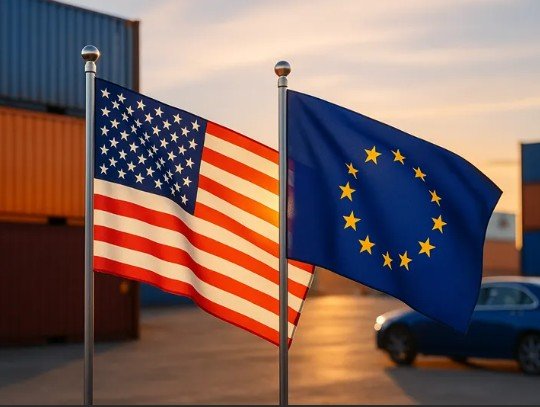
Melbourne: The European Union and Australia on Tuesday finalized a long-awaited free trade agreement, reviving negotiations that had stalled nearly two years ago over market access and product labeling disputes. The deal reflects a shared push to expand trade networks and reduce dependence on major global powers amid rising economic uncertainty.
European Commission President Ursula von der Leyen and Australian Prime Minister Anthony Albanese signed the pact at Parliament House, describing it as a commitment to rules based trade and mutual economic growth. Both leaders highlighted the importance of strengthening partnerships at a time when global supply chains and tariff policies are increasingly unpredictable.
The agreement eliminates tariffs on several key Australian exports, including wine, seafood and horticultural products, while also granting limited quota-based access for Australian red meat into European markets. It further outlines changes to product naming rights, with Australian producers set to phase out the use of certain traditionally European labels over time.
Beyond trade, the two sides announced a new defense partnership aimed at expanding cooperation in areas such as maritime security, cyber defense, counter terrorism and tackling hybrid threats. The collaboration also opens the door for Australia to participate in the EU’s Horizon Europe research and innovation programme.
Leaders from both regions stressed that the pact underscores their shared commitment to global stability and open markets. The agreement is also expected to help the EU secure access to critical raw materials, while offering Australia broader opportunities in international trade.
While the deal signals a significant breakthrough, analysts note that its full economic impact will become clearer once detailed provisions are implemented and trade flows adjust in the coming years.

