


Save Wular, Save Ecology
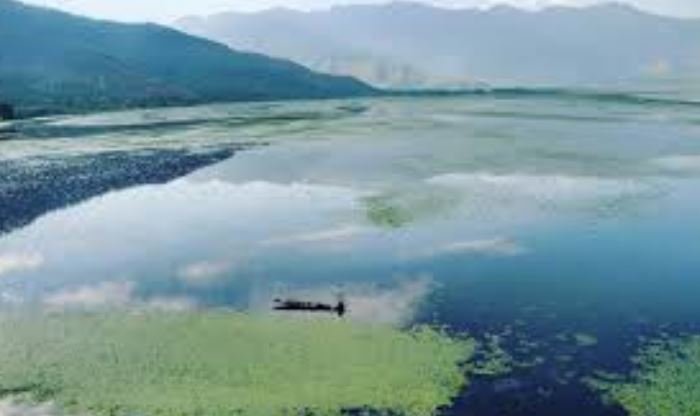
One of the most significant environmental efforts underway in Jammu and Kashmir is the restoration of Wular Lake. As one of Asia’s largest freshwater lakes and a recognized Ramsar site, Wular is not merely a water body of scenic or geographic importance. It is a living ecological system that supports biodiversity, regulates hydrology, buffers floods, and sustains communities around it. When such a lake begins to shrink under the pressure of siltation, encroachment, and ecological imbalance, the damage extends far beyond the wetland itself. It affects livelihoods, environmental security, and the long-term resilience of the region.
This is why the recent conservation work at Wular carries such importance. The restoration of nearly five square kilometers of critically silted areas through large-scale dredging is not a routine engineering exercise. It is an attempt to recover the lake’s natural ability to hold water, breathe ecologically, and function as a living wetland. In a time when climate uncertainty and erratic weather are making natural systems more fragile, the revival of Wular’s water-holding capacity becomes a matter of both ecological wisdom and public interest. The strengthening of bunds along vulnerable stretches also deserves attention in this context. Wetlands are often discussed only in environmental terms, but they are equally important for human security. A healthier Wular can offer greater flood buffering to nearby communities and help reduce vulnerability in surrounding areas. This is a reminder that environmental restoration is not separate from public welfare. It is often one of its most practical forms. The selective removal of willow plantations has naturally sparked discussion, but we must carefully understand the broader principle behind it. If invasive or ecologically adverse vegetation begins to alter the character of a wetland, then scientific habitat management becomes necessary. Conservation cannot mean preserving every feature exactly as it stands if some of those features are themselves contributing to ecological decline. The crucial point is that such intervention must remain selective, phased, and scientifically justified. The emphasis on need-based removal rather than blanket clearance is therefore important because it reflects an effort to restore balance rather than impose disruption. Equally significant is the parallel work being done in the catchment. If we confine our efforts solely to the lake basin, wetland restoration will not succeed, as erosion and sediment flow continue from the surrounding slopes. Afforestation, plantation, and soil conservation in the catchment are therefore not secondary activities. They are central to the long-term survival of the lake. A wetland can be desilted today, but without catchment treatment, tomorrow’s sediment load will begin to undo that progress. The scale of planting and slope treatment around Wular suggests that a more integrated understanding is gradually taking shape. Boundary demarcation using geospatial tools is another notable step. Environmental decline often deepens where uncertainty allows encroachment and weak enforcement. Scientific demarcation, backed by GPS and remote sensing, provides conservation a firmer administrative basis. It transforms protection from vague intention into measurable territory. In that sense, effective environmental governance depends not only on ecological knowledge but also on institutional clarity. The ecotourism component, if managed sensitively, may also add value to the larger effort. Walkways, parks, and viewing facilities can help build public connection with the lake and create a wider constituency for its protection. But this part of the project must remain carefully balanced. Wular should not become a victim of its visibility. Tourism can support conservation only when it remains low-impact, well-regulated, and subordinate to ecological priorities. What makes the Wular initiative encouraging is that it reflects a move away from fragmented conservation to something more holistic. Desiltation, vegetation management, bund strengthening, catchment treatment, demarcation, and eco-sensitive visitor infrastructure together suggest an understanding that wetlands survive through systems, not isolated acts. This is the direction in which environmental policy must continue to move.
We cannot allow Wular Lake to gradually decline or treat it as a peripheral ecological concern. Its restoration is not only about saving a wetland. It is about protecting a natural asset that sustains environmental balance, community security, and regional resilience. If the present momentum is maintained with scientific discipline and long-term commitment, Wular can become not only a restored lake but also a model of how ecological recovery is possible when planning, governance, and environmental responsibility move together.

