


Supreme Court of India Rebuke of Mamata Banerjee Gives BJP Poll-Time Edge
Judicial criticism over alleged interference in ED action sharpens political narrative as BJP intensifies ground campaign ahead of voting phases
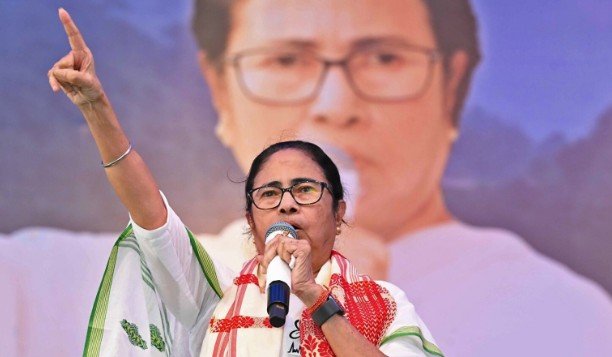
NEW DELHI: A sharp rebuke by the Supreme Court of India directed at West Bengal Chief Minister Mamata Banerjee over alleged interference in enforcement actions has injected fresh momentum into the election discourse, with the Bharatiya Janata Party leveraging the development to sharpen its campaign narrative ahead of crucial polling phases.
The controversy stems from the top court’s observations regarding Banerjee’s reported intervention during raids conducted by the Enforcement Directorate at premises linked to I-PAC, a political consulting firm that has worked with the ruling Trinamool Congress. The remarks have quickly become a focal point in the intensifying political contest.
BJP Steps Up Offensive
Seizing the moment, BJP leaders launched a coordinated attack, portraying the court’s criticism as evidence of governance failure. Party spokesperson Gaurav Bhatia accused Banerjee of fostering disorder and questioned her continuation in office, asserting that voters would deliver a decisive verdict on counting day.
Across West Bengal, BJP workers amplified the issue through rallies, local outreach, and digital campaigns. The party’s messaging has increasingly centered on law-and-order concerns, attempting to position the court’s observations as validation of its long-standing allegations against the state government.
Campaign Tactics Intensify on Ground
In Kolkata and surrounding regions, political messaging took creative forms. Residents reported the appearance of anonymous posters featuring QR codes and slogans that appeared to mock alleged financial practices linked to the ruling party. Though unofficial, such tactics are being widely interpreted as part of an aggressive last-mile campaign strategy aimed at influencing undecided voters.
Simultaneously, the BJP’s organisational machinery has shifted into high gear. Union Home Minister Amit Shah chaired extensive strategy meetings with state leaders, focusing on booth-level management, voter mobilisation, and turnout optimisation. Shah is expected to remain actively engaged in the state until the end of campaigning, underlining the party’s high-stakes approach.
Narrative Shift in a High-Stakes Contest
Within BJP circles, there is a growing belief that the current electoral battle differs significantly from previous contests. Leaders argue that a combination of anti-incumbency sentiment and ideological outreach has helped deepen the party’s influence across regions where it previously struggled.
The party has built its campaign around multiple themes, including governance issues, welfare promises, and identity politics. It also claims that enhanced deployment of central forces and stricter monitoring mechanisms could reduce electoral irregularities, thereby creating a more level playing field.
TMC Remains a Formidable Force
Despite BJP’s intensified efforts, the Trinamool Congress continues to project confidence, drawing strength from its strong organisational base and past electoral successes. In the last assembly election, the party secured a decisive mandate, reinforcing Banerjee’s position as one of the most resilient regional leaders in Indian politics.
Political observers note that while judicial developments can influence narratives, voter behaviour in West Bengal often hinges on a complex mix of local issues, party loyalty, and leadership perception.
Crucial Days Ahead
As the state moves through multiple phases of polling, the impact of the Supreme Court’s remarks will likely remain a key talking point. Both major parties are expected to continue shaping their campaigns around governance, credibility, and public perception.
With high-voltage campaigning entering its final stretch, the electoral contest in West Bengal appears poised for another intense and closely watched showdown.

