


“BJP Mocks Rahul Gandhi as ‘Election Oracle of Defeats’ Amid Fresh Political Jibe”
War of words intensifies between BJP, Congress, and Mamata Banerjee as West Bengal Assembly Elections 2026 begin with sharp ideological clashes
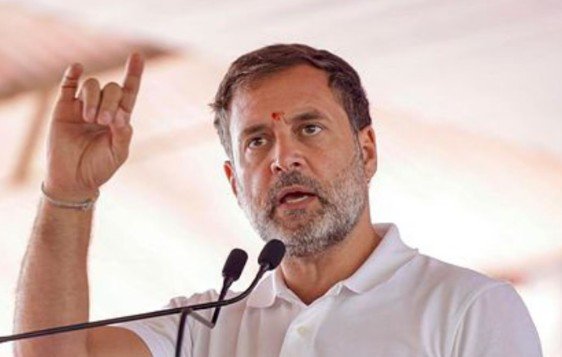
New Delhi, Apr 23: The opening phase of the West Bengal Assembly Elections 2026 on Thursday triggered a fresh political confrontation, with the Bharatiya Janata Party launching a sharp attack on senior Congress leader Rahul Gandhi over his recent criticism of West Bengal Chief Minister Mamata Banerjee.
As polling commenced across key constituencies, BJP spokesperson Pradeep Bhandari mocked Gandhi’s political track record, branding him an “expert” in forecasting electoral defeats. In a video message shared on social media platform X, Bhandari claimed that Gandhi’s predictions have consistently coincided with losses for the Indian National Congress.
He argued that the Congress leader’s recent remarks against Banerjee reflect a broader shift in political perception, even among opposition ranks. According to Bhandari, Gandhi’s criticism signals an emerging belief that the current leadership in West Bengal has led to increasing communal tensions and governance concerns.
The BJP spokesperson further suggested that such statements from Gandhi indirectly strengthen the BJP’s narrative that political change in the state is imminent. He asserted that internal criticism within opposition parties points to dissatisfaction with the existing administration and creates momentum for the BJP’s expansion in the region.
The remarks came in response to Gandhi’s own video statement posted a day earlier, where he accused Banerjee’s government of failing to maintain a “clean” administration. Gandhi argued that governance lapses and political polarization in the state allowed the BJP to gain a foothold in West Bengal’s political landscape.
Addressing voters ahead of the crucial polling phase, Gandhi urged support for the Congress, positioning the party as a viable alternative capable of reshaping the state’s political direction. He emphasized that a lack of inclusive governance had opened the door for ideological divisions, which he attributed to both the ruling leadership in the state and the BJP’s national strategy.
In a broader attack, Gandhi also targeted the BJP, accusing it of undermining democratic processes in several states, including Haryana, Madhya Pradesh, and Maharashtra. He framed the ongoing elections as a larger ideological contest, describing it as a battle between competing visions for the country’s future.
The BJP, however, dismissed these allegations, reiterating its stance that it represents governance reforms and development-oriented politics. Party leaders maintained that the electorate in West Bengal is increasingly seeking an alternative to the current regime, citing issues of law and order, corruption, and political violence.
Meanwhile, the political atmosphere in West Bengal remains highly charged as voters participate in the first phase of polling. With multiple parties vying for influence, the election is shaping up to be a significant test of regional leadership as well as national political narratives.
The exchange between BJP and Congress leaders highlights deepening fractures within the opposition spectrum, even as they collectively challenge the BJP’s dominance at the national level. Analysts believe such public disagreements could influence voter perception and impact alliance dynamics in the longer term.
As the election progresses through multiple phases, all eyes remain on how these narratives resonate with voters and whether they translate into electoral gains for any of the major political players.

