


Election Commission Issues Fresh Post-Poll Guidelines for West Bengal Elections
New guidelines mandate strict handling of camera data as voter participation hits historic high, Phase 2 preparations intensify with enhanced monitoring measures.
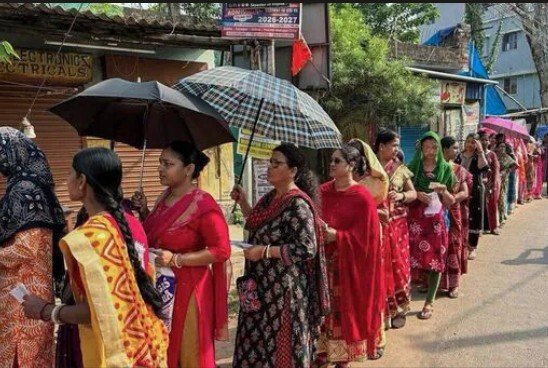
West Bengal, Apr 24 : The Election Commission of India (ECI) has rolled out a fresh set of post-poll guidelines following the successful completion of Phase 1 voting in West Bengal, aiming to ensure greater transparency, accountability, and security in the electoral process. The move comes amid a historic voter turnout, signaling heightened public engagement and necessitating stricter monitoring protocols.
Strict Surveillance Protocols Introduced
In its latest advisory, the Commission has placed significant emphasis on the handling and preservation of surveillance data collected during polling. Officials have been instructed not to remove SD cards from cameras immediately after voting concludes. Instead, only the cameras themselves may be carefully dismounted, and that too under the direct supervision of designated sector officers.
The guidelines further specify that extraction of SD cards will only be permitted at officially designated Data Collection and Receiving Centres. This process must occur in the presence of the Assistant Returning Officer, ensuring a controlled chain of custody for sensitive election footage.
According to officials, this measure is designed to prevent tampering, loss, or unauthorized access to video evidence, which plays a critical role in verifying electoral integrity. All recorded footage is to be securely stored and systematically archived for future reference and potential investigations.
Tight Exit Rules for Polling Personnel
Another key directive mandates that no member of the polling staff, including Booth Level Officers (BLOs), may leave the polling station until all camera equipment has been properly dismounted. This rule reinforces accountability at the booth level and ensures that surveillance systems remain intact until officially handled.
The Commission’s approach reflects a broader push toward minimizing procedural lapses and reinforcing confidence among voters and political stakeholders alike.
Webcasting Expansion Ahead of Phase 2
As part of preparations for the second phase of polling scheduled for April 29, the Commission has also announced a trial run of enhanced webcasting systems. Beginning Friday at 10 a.m., the exercise will be conducted in three phases to test the robustness and reliability of live monitoring infrastructure.
Webcasting has emerged as a key tool in modern elections, allowing authorities to observe polling activities in real time and respond swiftly to irregularities. The expanded use of this technology is expected to further strengthen oversight mechanisms in sensitive areas.
Historic Voter Turnout Marks Phase 1
Phase 1 of the elections witnessed an unprecedented surge in voter participation, with turnout reaching an impressive 92.72 percent—marking the highest ever recorded in the state since independence. Voting took place across 16 districts, covering 152 assembly constituencies out of the total 294 seats.
Chief Election Commissioner Gyanesh Kumar described the turnout as a landmark achievement, noting that it surpasses the previous record of 84.72 percent set during the 2011 assembly elections.
A total of 1,478 candidates, including 167 women, contested in this phase, reflecting a diverse and competitive electoral landscape.
Women Voters Lead Participation
One of the most notable aspects of the polling was the higher participation rate among women voters. Female turnout stood at 92.69 percent, exceeding the 90.92 percent recorded among male voters. Participation from third-gender voters was reported at 56.79 percent.
This trend highlights the growing political engagement of women and the effectiveness of targeted voter awareness campaigns. Analysts believe that increased accessibility, safety measures, and outreach programs have contributed significantly to this shift.
Technology-Driven Monitoring
Senior officials, including Election Commissioners S S Sandhu and Vivek Joshi, closely monitored the polling process through live webcasting systems. This allowed for real-time oversight across all polling stations, enabling quick responses to any emerging issues.
The use of digital tools has become central to election management, offering transparency while also acting as a deterrent against malpractice.
Voter-Friendly Initiatives Boost Confidence
The surge in turnout has been widely attributed to a range of voter-centric initiatives introduced by the Commission. These include:
Improved voter information slips for easier identification
Reduced number of voters per polling booth to avoid overcrowding
Enhanced support systems for persons with disabilities
Better queue management and polling infrastructure
Such measures have not only streamlined the voting process but also strengthened public trust in the system.
Official Response and Ground Feedback
Speaking to the media in Kolkata, State Chief Electoral Officer Manoj Agarwal expressed satisfaction with the overall conduct of Phase 1. He noted that the Commission’s efforts were reflected in the high turnout and smooth execution of polling.
Officials also emphasized that most voters were able to cast their ballots freely and without fear, reinforcing the credibility of the process.
While acknowledging a few isolated incidents of violence, authorities maintained that these were minor and did not significantly impact law and order. In one such case, a vehicle belonging to a political candidate was reportedly damaged by unidentified individuals, prompting the registration of a formal complaint.
Looking Ahead to Phase 2
With Phase 2 approaching, the Commission is focusing on replicating the success of the initial round while addressing minor gaps. Additional measures are being planned to further boost voter confidence, particularly in urban centers like Kolkata.
Authorities expect turnout levels to remain high, driven by increased awareness and improved election management practices. Enhanced surveillance, expanded webcasting, and stricter enforcement of guidelines are likely to play a crucial role in ensuring a smooth and credible voting process.
Provisional Data and Final Counts
It is important to note that the current turnout figures remain provisional. Data from certain polling stations is still being compiled, and postal ballots have yet to be included in the final count. The official figures will be confirmed after complete verification.
Conclusion
The introduction of stringent post-poll guidelines by the Election Commission marks a significant step toward strengthening electoral integrity in West Bengal. Coupled with record-breaking voter participation and advanced monitoring systems, these measures underscore a broader commitment to conducting free, fair, and transparent elections.
As the state moves into the next phase of polling, all eyes will remain on how effectively these protocols are implemented and whether the momentum of high civic engagement continues.

