


Bengal records massive 92.72 per cent turnout in Phase I, Tamil Nadu votes 85.14 per cent in high-stakes polls
Heavy voting in Bengal and Tamil Nadu sets stage for intense electoral showdown on May 4
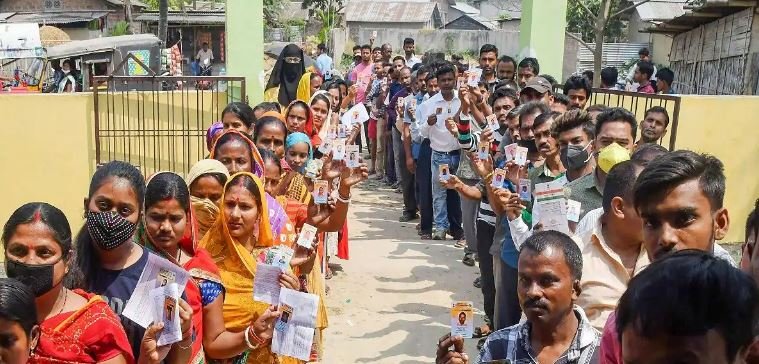
- West Bengal sees highest turnout since Independence in first phase, Tamil Nadu posts historic polling figures
- SIR row, sporadic violence and strong voter turnout shape opening phase of Bengal and Tamil Nadu polls
New Delhi, 23-04-2026: West Bengal registered an impressive voter turnout of 92.72 per cent in the first phase of the Assembly elections, while Tamil Nadu recorded 85.14 per cent polling in a one-phase contest, making the opening round of the 2026 Assembly elections one of the most closely watched electoral exercises in the country. The high participation in both states reflected strong political mobilisation, heightened public interest and the intensity of the contest unfolding across eastern and southern India.
In West Bengal, polling was held for 152 Assembly constituencies in the first phase, with the remaining 142 seats of the 294-member House scheduled to go to the polls on April 29. Tamil Nadu, on the other hand, voted for all 234 Assembly seats in a single day. The counting of votes for West Bengal, Tamil Nadu, Kerala, Assam and the Union Territory of Puducherry is scheduled for May 4.
The record turnout in West Bengal came despite sporadic incidents of violence and a highly charged political atmosphere. Reports spoke of clashes, allegations of intimidation and attacks on candidates in some pockets, even as polling remained brisk through the day with long queues visible across several rural and urban constituencies. Chief Election Commissioner Gyanesh Kumar described the turnout in Bengal’s first phase as the highest ever in the state since Independence, underlining the scale of voter participation in what is being seen as a crucial opening round of the contest.
The political stakes in Bengal are particularly high, with the Bharatiya Janata Party making an aggressive bid to dislodge the Mamata Banerjee-led Trinamool Congress, which is seeking a fourth consecutive term. The battle has also unfolded against the backdrop of sharp controversy over the Special Intensive Revision of electoral rolls, under which more than 91 lakh names were reportedly deleted statewide, turning the revision exercise into a major political flashpoint between the BJP and opposition parties, especially the TMC.
Compared with earlier elections, the Bengal turnout marks a sharp jump. Reports said turnout in the 2021 Assembly election phases ranged roughly between 79 and 86 per cent, making the current participation level significantly higher, although direct comparison remains politically contested because of the reduced electorate after the revision exercise. In the 2021 elections, the BJP had won 59 of these 152 seats, while the TMC had secured 93, making this phase especially important for both camps.
Tamil Nadu too witnessed strong and widespread participation, with 85.14 per cent turnout across the state’s 234 constituencies. The polling percentage surpassed the 73.63 per cent recorded in the 2021 Assembly election and also crossed the 78.29 per cent turnout seen in 2011, which had earlier been the state’s highest in recent Assembly polls. The strong voter response indicated a high-voltage electoral contest and reflected the importance voters attached to the outcome.
In Tamil Nadu, the contest is primarily centred on the ruling DMK-led alliance and the AIADMK-led front, with other players such as actor-politician Vijay’s Tamilaga Vettri Kazhagam and Seeman’s Naam Tamilar Katchi also seeking to make a visible electoral impact. Chief Minister M.K. Stalin campaigned around the “Dravidian Model” of governance, while AIADMK General Secretary Edappadi K. Palaniswami sought a return to power after five years in opposition.
Taken together, the record polling figures in West Bengal and Tamil Nadu have set the stage for an intense and politically significant verdict. While Bengal’s opening phase reflected a charged battle shaped by turnout, violence allegations and the electoral roll controversy, Tamil Nadu’s single-phase polling underscored the scale of voter engagement in a contest that could reshape the state’s political balance. With counting due on May 4, both states now move into a crucial waiting period, with the unusually high turnout certain to fuel competing claims of momentum from all major parties.

