


Under-Flyover Parking
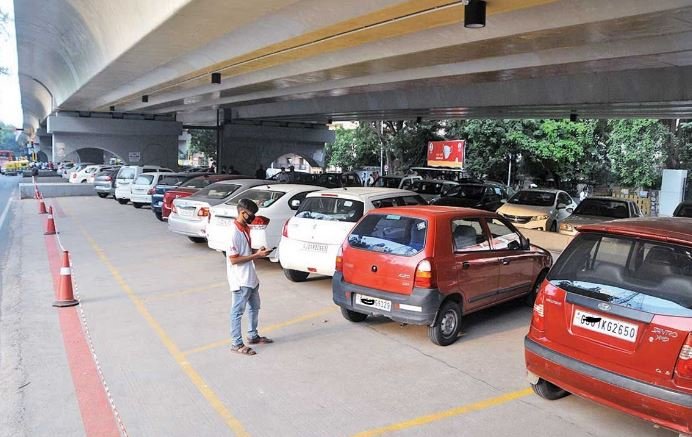
Jammu’s growing parking crisis has become one of the most visible challenges of urban life. With rising vehicular pressure, expanding markets, and limited organized parking spaces, the city is witnessing increasing congestion on several important routes. Roads meant for smooth movement often turn into informal parking zones, leaving commuters, pedestrians, shopkeepers, and emergency services to face avoidable inconvenience. In this context, the proposal submitted by BJP spokesperson and convenor of international affairs, Gaurav Gupta, to Lieutenant Governor Manoj Sinha to develop under-flyover spaces into structured parking facilities deserves serious and thoughtful consideration.
Modern cities are judged not just by the roads and flyovers they build but also by how wisely they use the spaces around them. Jammu already has important flyover infrastructure at locations such as Kunjwani, Akhnoor Road, and Jewel. Beneath these structures, sizable spaces remain either unused, underutilized, or vulnerable to encroachment and disorder. If these areas are scientifically planned and converted into organized parking zones, they can become valuable public assets without requiring major land acquisition. This is precisely the kind of practical urban thinking that growing cities need. The problem of haphazard roadside parking is not merely an issue of traffic discipline. It affects the entire rhythm of city life. When vehicles occupy road margins, carriageway space shrinks, bottlenecks increase, and travel time rises. Pedestrians are pushed into unsafe walking conditions, public transport slows down, and emergency movement becomes difficult. Markets suffer because visitors struggle to find safe parking, while residents face daily stress due to congestion near commercial hubs. A city cannot remain efficient if mobility is left to chance. Under-flyover parking offers a workable solution, provided it is implemented with proper planning and safety standards. The proposal for a detailed survey of available spaces beneath major flyovers is the right starting point. Not every stretch may be appropriate, and each location necessitates meticulous evaluation of traffic flow, ingress and egress points, pedestrian safety, drainage, illumination, security, and structural factors. Once suitable locations are identified, parking bays can be clearly demarcated, supported by signage, CCTV surveillance, proper illumination, and trained management staff. The idea of smart parking systems should also be explored. Digital payment, real-time availability information, regulated parking hours, and transparent fee collection can improve efficiency and reduce misuse. Public-private partnership models may help develop and maintain these facilities in a professional manner while also reducing the financial burden on the administration. However, any such model must remain people-friendly, affordable, and accountable. Public convenience should remain the guiding principle. Several cities have experimented with productive use of under-flyover spaces for parking and public utilities. Jammu can learn from such models while adapting them to its geography, traffic patterns, and civic needs. The aim should not be to copy another city blindly but to create a Jammu-specific solution that respects local conditions. Well-managed under-flyover parking can also prevent encroachments, discourage illegal dumping, improve civic aesthetics, and bring neglected urban spaces under regulated public use. This proposal also fits into the larger vision of making Jammu a smarter and more organized city. Urban development is not only about big projects. Sometimes, meaningful change comes through better use of existing infrastructure. Converting unused spaces into functional parking areas is an example of cost-effective planning. It reflects a shift from reactive traffic management to preventive urban design. The administration under Lieutenant Governor Manoj Sinha has an opportunity to examine this proposal with seriousness and take it forward through expert consultation, traffic studies, and pilot projects. A beginning can be made at one or two suitable locations before expanding the model across the city. The Jammu Municipal Corporation, Traffic Police, Smart City authorities, Public Works Department, and urban planners should work together to ensure that the initiative is safe, practical, and sustainable.
Gaurav Gupta’s intervention has brought attention to a genuine civic issue that affects thousands of citizens every day. Jammu needs solutions that are simple, realistic, and future-oriented. Under-flyover parking may not solve the entire parking problem, but it can certainly become an important part of a broader mobility strategy. With scientific planning, transparent execution, and public cooperation, the spaces lying beneath flyovers can be transformed from neglected corners into organized facilities that make Jammu cleaner, safer, and more convenient for all.

