


Asian Stocks Mixed as Stable Oil Prices Keep Markets Cautious
Asian Markets Trade Mixed as Oil Stability Eases Investor Concerns
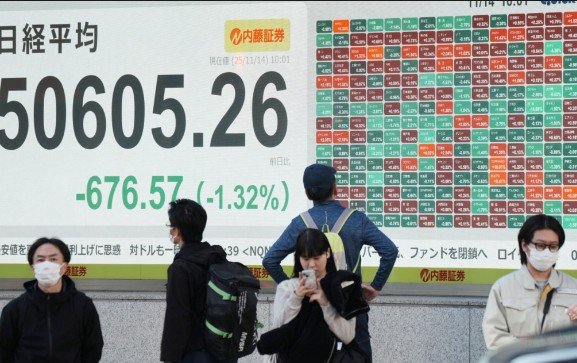
Asia, May 04 : Asian equity markets delivered a mixed performance on Monday after major U.S. indices ended last week at record highs, supported by strong quarterly earnings from leading American corporations. Investors across the region remained cautious as geopolitical tensions in West Asia continued to influence sentiment, particularly through fluctuations in crude oil prices and concerns surrounding the Strait of Hormuz.
Despite uncertainty linked to the Iran conflict, stable energy prices helped calm fears of immediate supply disruptions, allowing several Asian technology-heavy markets to post notable gains.
Oil Market Remains in Focus Amid Strait of Hormuz Tensions
Crude oil prices showed limited movement during early Monday trade as traders assessed the latest developments involving the United States and Iran.
U.S. benchmark crude slipped 21 cents to settle at $101.74 per barrel, while Brent crude, the global oil benchmark, edged up by 5 cents to reach $108.19 per barrel.
Market participants are closely monitoring the Strait of Hormuz, one of the world’s most critical energy shipping routes. The waterway handles a significant portion of global crude exports, making any military or political instability in the region a major concern for financial markets.
Analysts believe the oil market remains highly sensitive to developments in the Gulf region, especially after reports suggested several vessels continue to remain stationary due to storage shortages and logistical disruptions.
Stephen Innes of SPI Asset Management stated that producers are struggling to manage inventory as limited storage capacity in the Gulf forces some operations to slow output.
Trump Announces ‘Project Freedom’ Deployment
Investor attention also turned toward Washington after U.S. President Donald Trump announced the launch of “Project Freedom,” a major military initiative aimed at protecting maritime activity around the Strait of Hormuz.
According to Trump, the operation includes the deployment of guided-missile destroyers, more than 100 aircraft, and nearly 15,000 military personnel under U.S. Central Command.
Although the Pentagon did not provide detailed deployment locations, the announcement reinforced expectations of an expanded American military presence in the region.
Trump also indicated that diplomatic engagement with Iran could still produce “positive outcomes,” despite Tehran rejecting Washington’s proposal to assist commercial vessels exiting the strategic waterway.
Asian Equities Deliver Divergent Performance
Trading activity across Asia reflected a cautious but selective risk appetite among investors.
Hong Kong’s Hang Seng Index climbed 1.4% to close at 26,135.47, supported by gains in financial and technology shares. Markets in mainland China and Japan remained shut due to the Golden Week holidays, reducing overall regional trading volumes.
Australia’s S&P/ASX 200 slipped 0.3% to 8,704.70 as weakness in mining and energy stocks weighed on sentiment.
Meanwhile, technology shares drove strong rallies in South Korea and Taiwan. South Korea’s Kospi surged 3.8%, while Taiwan’s Taiex jumped 4.2%, reflecting renewed investor confidence in semiconductor and artificial intelligence-related companies.
The gains mirrored optimism seen in the U.S. technology sector after upbeat earnings from major firms fueled another rally on Wall Street.
U.S. Markets Reach Fresh Record Highs
On Friday, the S&P 500 advanced 0.3% to close at a record 7,230.12, extending its winning streak to five consecutive weeks.
The Nasdaq Composite rose 0.9% to a fresh all-time high of 25,114.44, lifted by strong performances from technology giants. In contrast, the Dow Jones Industrial Average slipped 0.3% to finish at 49,499.27.
Shares of Apple Inc. gained 3.3% after the company reported quarterly earnings that exceeded market expectations. Strong iPhone sales and continued growth in services revenue contributed significantly to investor optimism.
Technology companies have remained the primary drivers of the U.S. market rally throughout 2026, particularly firms linked to artificial intelligence, cloud computing, and semiconductor manufacturing.
Corporate Earnings Continue to Surprise Analysts
The latest earnings season in the United States has delivered stronger-than-expected results across multiple sectors.
According to FactSet, more than 84% of companies within the S&P 500 have reported quarterly profits above Wall Street estimates during the first quarter of 2026.
Analysts currently project overall profit growth for S&P 500 companies to reach nearly 15% compared to the same period last year.
The strong earnings performance has helped offset investor concerns linked to geopolitical tensions, elevated energy prices, and fears of slowing global economic growth.
However, economists caution that prolonged instability in West Asia could still increase inflationary pressures if oil prices rise further in the coming weeks.
Energy Costs Remain Key Risk for Global Economy
Financial markets continue to view oil prices as the most significant uncertainty for the global economic outlook.
Prior to the recent conflict involving Iran, Brent crude traded slightly above $70 per barrel. The sharp rise since then has raised fears that sustained disruptions in energy transportation could slow consumer spending, increase business costs, and complicate central bank policy decisions.
Although higher crude prices have boosted revenues for several major oil producers, many energy company stocks have remained under pressure due to declining net income compared to last year’s exceptionally strong earnings cycle.
Investors are now watching whether tensions in the Gulf escalate further or whether diplomatic efforts can stabilize supply routes and reduce volatility in commodity markets.
Currency Markets Show Modest Movement
In foreign exchange trading, the U.S. dollar strengthened against the Japanese yen, rising to 157.18 yen from 156.80 yen.
The euro weakened slightly to $1.1724 from $1.1746 as traders assessed geopolitical risks and the outlook for global interest rates.
Currency markets are expected to remain volatile as investors monitor developments in oil prices, military activity in the Gulf, and upcoming economic data from the United States and Europe.

