


Solarize Every Rooftop
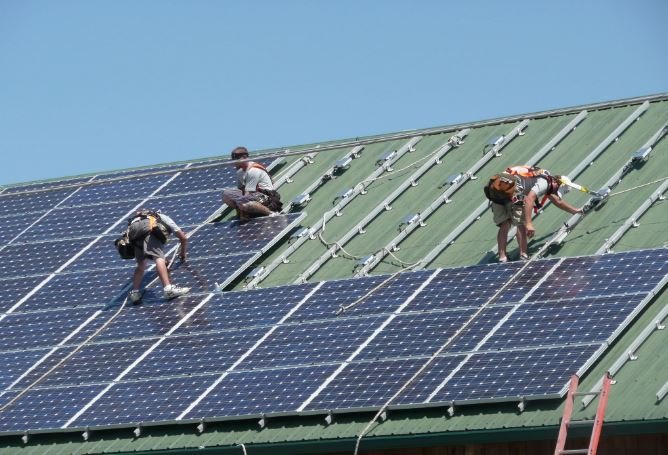
Prioritising solarisation over conventional electricity is no longer a matter of choice for Jammu and Kashmir. It has become an urgent developmental necessity. In a region where difficult terrain, scattered habitations, harsh weather, and rising energy demands continue to test the limits of conventional power infrastructure, solar energy must be pushed with clarity, speed, and seriousness. The assurance given by Minister for Science and Technology Satish Sharma to accelerate solar adoption, especially through rooftop solar systems, is a much-needed policy signal that must now be converted into visible action on the ground.
Jammu and Kashmir cannot afford to remain dependent only on traditional electricity systems that often struggle to serve remote, hilly, and underserved areas with consistency. Transmission challenges, maintenance issues, and weather-related disruptions have repeatedly exposed the weakness of relying solely on conventional power supplies. Solar energy offers a direct, practical, and future-orientated answer. It can reduce the load on the existing grid, improve energy access in far-flung regions and give consumers a cleaner and more reliable alternative. The push for rooftop solar deserves aggressive implementation. Every government building, school, hospital, panchayat office, commercial establishment, and suitable household should be encouraged to join this clean energy movement. Rooftop solar is not merely a technical project. It is a powerful tool of energy independence. It can reduce electricity bills, ease pressure during peak demand, create jobs for local youth and strengthen the renewable energy market across the Union Territory. However, policy declarations alone will not change the energy future of Jammu and Kashmir. The real test lies in removing bottlenecks without delay. Pending approvals, slow clearances, administrative hesitation and poor coordination can no longer be allowed to weaken solar projects. The issues raised by the Jammu and Kashmir Solar Association must be addressed in a time-bound and result-orientated manner. If the government is serious about green energy, then files must move faster, departments must coordinate better and implementation agencies must be held accountable. There is also a need to end the casual approach that often affects public-orientated development schemes. Solarisation requires discipline, transparency and urgency. Consumers must not be left confused about subsidies, procedures, equipment standards or maintenance support. Private stakeholders must not be forced to struggle through avoidable procedural hurdles. A strong renewable energy ecosystem can grow only when the government creates confidence among investors, service providers and the public. The focus on remote and underserved areas must remain central. Clean energy cannot become another benefit limited to urban spaces and better-connected institutions. Its strongest impact will be visible in mountain villages, border belts, tribal areas and economically weaker households. A solar-powered home, school, health centre or small business in a remote village is not just an energy achievement. It is a statement that development has reached where it was needed the most. Jammu and Kashmir needs a bold energy transition that reduces dependence on conventional sources and prepares the region for the future. Hydropower and traditional electricity will continue to play a role, but solar energy must now be treated as a strategic priority, not as a secondary option. Climate concerns, rising consumption and infrastructure stress demand a serious shift towards clean and decentralised energy systems. Satish Sharma’s assurance has raised expectations. The government must now ensure that those expectations are not lost in routine official processes. The renewable energy sector needs clear policy support, quick decisions, simplified procedures, better coordination and strict monitoring. Solarisation should move from meetings and assurances to rooftops, public buildings, farms, institutions and remote habitations.
The message is clear. Jammu and Kashmir must not wait for an energy crisis to deepen before acting decisively. Solar energy is available, practical and necessary. If pursued with determination, it can reduce dependency, protect the environment, empower consumers, generate employment and strengthen inclusive development. The time for slow movement is over. The Union Territory needs a strong, accountable and mission-mode solar push that can make clean energy a real force of transformation across Jammu and Kashmir.

