


US Push on Iran at UN Faces Likely Block from China and Russia
Washington seeks global backing to secure the Strait of Hormuz, while Beijing and Moscow raise objections over bias and possible military implications.
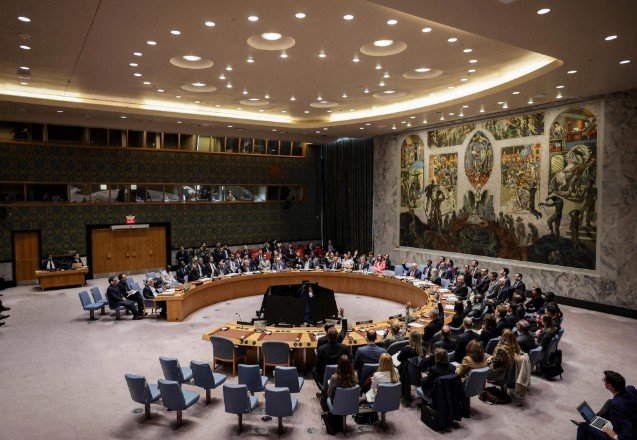
US, May 08 : The United States has intensified diplomatic efforts at the United Nations by urging member nations to support a new resolution targeting Iran over alleged threats to maritime security in the Strait of Hormuz. However, diplomats at the Security Council say the proposal is expected to face strong resistance from China and Russia, both of whom are likely to use their veto power.
The draft resolution, introduced jointly by the United States and Bahrain, has received backing from several Gulf nations including Saudi Arabia, the United Arab Emirates, Kuwait and Qatar. The proposal calls on Iran to immediately halt attacks in and around the strategic waterway and reveal the locations of naval mines allegedly deployed in the region.
The Strait of Hormuz remains one of the world’s most critical oil shipping routes, carrying a major share of global energy exports. Western nations and Gulf allies have repeatedly accused Tehran of threatening commercial navigation during the ongoing conflict in West Asia.
Speaking at the United Nations headquarters, U.S. envoy Mike Waltz defended the resolution and warned against blocking the measure. He argued that rejecting the proposal would weaken international efforts aimed at protecting freedom of navigation and regional stability.
Waltz said nations opposing the resolution should explain whether they genuinely support peace and secure maritime trade routes. His remarks came while representatives from Gulf states stood alongside American diplomats to demonstrate regional support for the initiative.
Despite Washington’s push, several diplomats familiar with closed-door Security Council discussions indicated that both China and Russia raised major concerns over the wording of the draft. According to diplomatic sources, Moscow demanded either a complete rewrite or withdrawal of the proposal, while Beijing criticized the text as unbalanced and politically driven.
China reportedly objected to the resolution’s reference to Chapter VII of the U.N. Charter, which gives the Security Council authority to impose sanctions or authorize military action. Chinese officials are believed to fear that such language could later be interpreted as international approval for stronger military measures against Iran.
A Chinese veto could also create diplomatic complications ahead of U.S. President Donald Trump’s scheduled visit to China next week. The ongoing Iran conflict is expected to feature prominently during discussions between Washington and Beijing, adding further sensitivity to the issue.
This is not the first time the Security Council has been divided over Iran. Last month, Russia and China vetoed another U.S.-supported draft resolution that critics argued could pave the way for legitimizing military action against Tehran.
Iran strongly condemned the latest proposal. Iranian Ambassador Amir Saeid Iravani described the draft as “one-sided” and politically motivated, accusing Washington of lacking credibility on maritime security issues due to its military actions against Iranian vessels.
Tehran has consistently denied accusations that it seeks to disrupt international shipping, instead blaming Western military deployments for escalating tensions in the Gulf region. Iranian officials argue that the United States is using the Security Council to pressure Tehran politically while ignoring broader regional concerns.
Meanwhile, diplomatic efforts to reduce hostilities between the United States and Iran continue behind the scenes. Sources familiar with negotiations said both sides are examining the possibility of a temporary arrangement that could pause fighting while leaving key disputes unresolved.
Bahrain’s U.N. envoy Jamal Fares Alrowaiei expressed hope that council members could still work toward a compromise in the coming days. He said Bahrain remained committed to constructive negotiations aimed at achieving consensus on the resolution.
U.S. Secretary of State Marco Rubio earlier described the proposal as a crucial test for the credibility and effectiveness of the United Nations. He also urged China and Russia not to obstruct international efforts focused on regional security and safe maritime passage.
The coming days are expected to determine whether the resolution advances to a formal vote or becomes another casualty of growing geopolitical divisions among the world’s major powers.

