


H. D. Kumaraswamy Says Regional Parties Face Tough Road to Independent Power in Karnataka
JD(S) leader points to changing political trends in Karnataka and Tamil Nadu while questioning the feasibility of large-scale welfare promises.
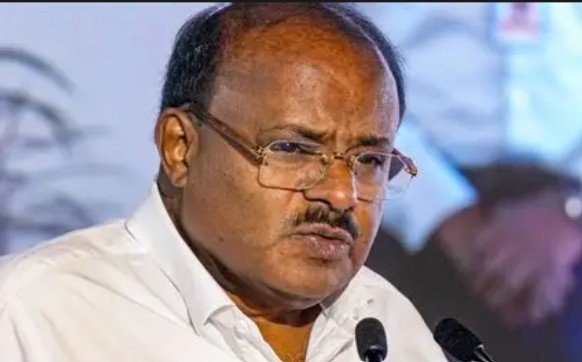
Holenarasipura (Hassan): H. D. Kumaraswamy on Friday said the current political environment in Karnataka does not favour regional parties forming a government independently, observing that the state’s electoral dynamics differ significantly from several other parts of the country.
After offering prayers at the Sri Ranganathaswamy Temple in Mavinakere Betta of Holenarasipura taluk, the Union Minister told reporters that recent Assembly election outcomes in five states reflected a clear public inclination toward political change in at least three of them. Referring to discussions emerging within Karnataka’s political circles, he said speculation has already begun over the possibility of a shift in power during the 2028 Assembly elections.
Speaking about the controversy surrounding the recount issue in the Shringeri constituency, Kumaraswamy criticised the Congress party for raising allegations linked to electoral malpractice. He argued that the party lacked credibility to speak on such matters and dismissed its accusations as politically motivated.
The JD(S) leader also spoke at length about the role of Congress in alliance politics at the national level. Drawing from earlier political developments in the country, he referred to the rise and fall of governments led by leaders such as Charan Singh, V. P. Singh, Chandra Shekhar and former Prime Minister H. D. Deve Gowda. According to him, Congress had historically played a major role in destabilising governments at different points in time.
Commenting on political developments in Tamil Nadu, Kumaraswamy said the changing equations involving the DMK, AIADMK and actor-politician Vijay have generated fresh interest across the state. However, he dismissed speculation about a possible joint arrangement between DMK and AIADMK, stating that such a development appears highly unlikely based on his political experience.
He further said that constitutional procedures and numerical strength in the Assembly would ultimately determine government formation in Tamil Nadu, with the Governor expected to act according to legal and constitutional advice.
Kumaraswamy also claimed that he had sensed a political shift emerging in Tamil Nadu several weeks ago. He observed that voters, after witnessing the dominance of two major Dravidian parties for decades, now appear eager to experiment with an alternative political force.
Highlighting the influence of cinema on Tamil Nadu politics, he said public sentiment seems to favour giving an opportunity to a “new face,” indirectly referring to Vijay’s growing political presence. He added that recent political developments had surprised many observers, particularly because earlier media assessments had projected a comfortable return to power for the DMK.
The former Karnataka Chief Minister also raised concerns about the financial practicality of extensive welfare assurances being discussed in Tamil Nadu politics. Referring to proposed free schemes linked to Vijay’s political campaign, Kumaraswamy questioned how such large-scale promises could be implemented within the limitations of the state’s annual budget.
He noted that while Tamil Nadu’s budget stands at around Rs 3.40 lakh crore, some of the welfare proposals being discussed could potentially require significantly higher expenditure. Stressing the importance of fiscal responsibility, he said governments must carefully evaluate long-term economic sustainability before making ambitious public commitments.
Concluding his remarks, Kumaraswamy cautioned against unrealistic political promises and said the future political direction of both Karnataka and Tamil Nadu would depend on how voters respond to emerging leadership and governance models in the coming years.

