


Duggar pays tribute to legendary Dogri poet Dinu Bhai Pant On his 109th birth anniversary, May 11, 2026
A timeless tribute to Dogri poetry’s towering voice
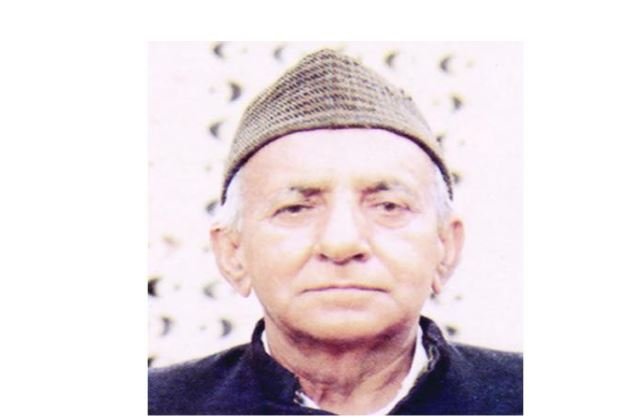
- Remembering Dinu Bhai Pant, the poetic pride of Duggar
- Dinu Bhai Pant’s literary legacy continues to inspire generations
Duggar land has always been a sacred cradle of courage, culture, wisdom, and creativity. In the vast and vibrant cultural landscape of India, the Jammu region holds a distinct place for its civilizational depth, linguistic richness, and proud literary inheritance. This soil has produced warriors, singers, journalists, writers, poets, scholars, reformers, and intellectuals who, through their work and sacrifice, have raised the glory of Duggar to great heights. Among these illustrious sons of the soil stands the unforgettable name of Dinu Bhai Pant, a legendary Dogri poet, playwright, and cultural torchbearer whose voice gave strength, beauty and direction to Dogri literature.
Born on May 11, 1917, in the village Panthal of present-day Reasi district in Jammu and Kashmir, Dinu Bhai Pant emerged as one of the pioneering figures of nationalistic and socially conscious poetry in the Dogri language. His poetry was deeply rooted in the life of the common man. He gave words to the pain, struggles, hopes, and dignity of ordinary people. At a time when Dogri literature was still seeking wider recognition, Pant Ji took upon himself the noble task of popularizing Dogri poetry and bringing it closer to the hearts of the people. His efforts proved remarkably fruitful and helped strengthen the cultural confidence of the Duggar region.
As early as the 1940s, Dinu Bhai Pant had established himself as a prominent Dogri poet through his memorable works such as Mangu Di Chhabil, Gutlun, and Veer Gulab. These creations carried the fragrance of the soil, the rhythm of rural life and the moral force of a society undergoing change. His poetry was not ornamental alone. It was alive with social concern, patriotic feeling, and human sensitivity. A large part of his creative expression beautifully reflects the social and political transformations witnessed in Jammu and Kashmir during his time.
Pant Ji was not only a poet of rare depth but also a playwright of considerable merit. He wrote stage plays in both Dogri and Urdu, enriching the theatre tradition of the region. His Dogri play Sarpanch received the second prize of Rs. 700 from the Jammu and Kashmir Academy in 1962. The play was staged at several places by Dogri Sanstha and earned appreciation for its strong dramatic qualities, realistic treatment and engaging presentation of rural social life.
The rise of Dogri language and literature in the modern era cannot be discussed without remembering the contribution of Dogri Sanstha, founded in 1944 on the auspicious day of Basant Panchami. Dinu Bhai Pant was among its founding members, along with distinguished literary personalities such as D. C. Prashant, Prof. Ram Nath Shastri, Sansar Chand Baru, B. P. Sathe, N. D. Mishra and others. The establishment of Dogri Sanstha gave a powerful platform to the language and inspired generations of writers to work for its dignity and recognition. Earlier, in 1942, as part of the wider Hindi reawakening movement, Pant Ji had also founded Hindi Sahitya Mandal, reflecting his wider commitment to language, literature and cultural awakening.
His own journey was marked by struggle and determination. The untimely demise of his mother in 1937 interrupted his education, yet he continued with courage and completed his higher education from Ranbir High School in 1939. In 1941, he passed the Bhushan and Prabhakar examinations. His learning, discipline and literary temperament shaped him into a writer whose works combined emotional sincerity with intellectual depth.
Dinu Bhai Pant also served society through various official responsibilities. He worked as a staff artist and later as a casual scriptwriter after the establishment of the Jammu radio station in 1947. In 1948, he was appointed publicity officer in the Rehabilitation Department, where he contributed during a difficult period when thousands of refugees required support and rehabilitation. Later, he served as Panchayat Organizer in 1950 and rose to a senior cadre position in the state government. He also worked as a cultural officer in the Jammu and Kashmir Dehat Sudhar Department, where his cultural sensitivity and administrative role moved together.
His published works include Gutlun, Mangu Di Chhabil, Veer Gulab, Dadi Te Main, Sarpanch, and Swarg Ki Khoj. His celebrated Dogri work, Ayodhya, won him the prestigious Sahitya Akademi Award in 1985, bringing national recognition to his literary brilliance and to the richness of Dogri expression.
Dinu Bhai Pant breathed his last on March 23, 1992, after suffering a heart attack. It was a painful day for the literary world of Duggar, but his departure did not silence his voice. His poetry, plays, and cultural service continue to live in the collective memory of the region. He gave the Dogri language dignity, depth, and direction. He turned the emotions of the common people into literature and transformed the pulse of Duggar into poetry.
On his 109th birth anniversary, the people of Duggar bow in respectful remembrance to this great son of the soil. Dinu Bhai Pant Ji may not be physically among us, but his literary light continues to guide lovers of Dogri language and culture. His legacy is not only a matter of pride but also a responsibility. To honour him truly, we must preserve, promote, and celebrate Dogri with the same devotion with which he served it throughout his life.
By Ravi Rohmetra
Writer and Social Worker

