


Rahul Gandhi Attacks ‘Compromised’ PM, Says Nation Needs Strong Leadership
Congress accuses government of shifting burden onto citizens after PM urges fuel conservation and reduced spending during global uncertainty.
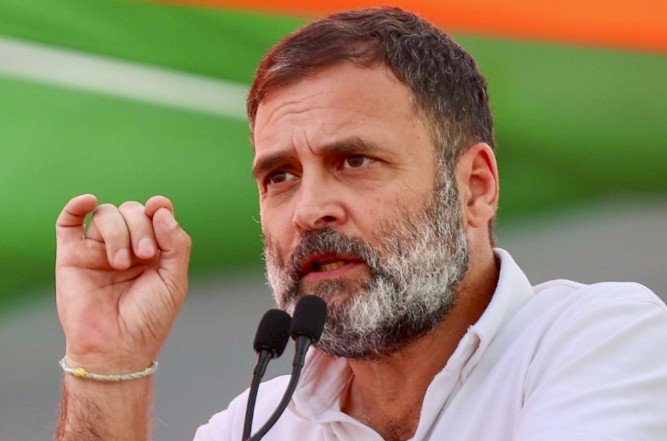
NEW DELHI, May 11: Leader of Opposition in the Lok Sabha Rahul Gandhi launched a sharp political attack on Prime Minister Narendra Modi on Monday, accusing the government of failing to effectively manage the economic challenges emerging from the escalating conflict in West Asia.
The Congress leader criticised the Prime Minister’s recent appeal asking citizens to adopt austerity measures to reduce pressure on the economy and conserve foreign exchange reserves. Gandhi described the remarks as a reflection of what he called the government’s inability to handle mounting international and domestic economic pressures.
In a post shared on social media platform X, Gandhi referred to Modi as a “compromised PM” and questioned the Centre’s preparedness in dealing with the fallout of the ongoing geopolitical crisis.
“People are being advised not to buy gold, reduce fuel consumption, avoid foreign travel, and limit household spending. These are not signs of strong governance but indications of policy failure,” Gandhi said.
The Congress MP argued that after more than a decade in power, the government should have developed stronger economic safeguards instead of asking ordinary citizens to shoulder the burden of global disruptions. He alleged that the BJP-led administration repeatedly shifts responsibility to the public whenever major economic challenges arise.
The political confrontation intensified after Prime Minister Modi, while addressing a public rally in Hyderabad on Sunday, urged citizens to adopt practical steps to help the country navigate economic uncertainty caused by tensions in West Asia.
The Prime Minister called for careful use of petrol and diesel, increased reliance on metro rail systems, carpooling, and wider adoption of electric vehicles. He also suggested postponing non-essential foreign travel and gold purchases for one year to help preserve India’s foreign exchange reserves.
Modi said rising crude oil prices and disruptions in global supply chains due to the conflict had increased pressure on economies worldwide, including India. He stressed that collective public participation would help strengthen the country during a difficult international situation.
Drawing comparisons with behavioural changes adopted during the COVID-19 pandemic, Modi encouraged companies and institutions to once again consider work-from-home arrangements, virtual meetings, and digital coordination wherever possible to reduce fuel usage and operational costs.
The Prime Minister also advocated reduced dependence on imported edible oils and chemical fertilisers. He promoted natural farming, local manufacturing, and Swadeshi products as part of a broader strategy to make India economically self-reliant during global instability.
Congress leaders, however, accused the government of lacking a concrete contingency strategy. Party spokespersons said the Centre should focus on stabilising fuel prices, protecting supply chains, and insulating the economy from international shocks instead of advising people to cut back on consumption.
The opposition party further claimed that the government had failed to secure long-term energy stability despite being aware of geopolitical tensions for several months. Congress leaders argued that citizens should not be forced into economic sacrifices because of what they termed poor planning by the Centre.
The BJP defended the Prime Minister’s remarks, saying Modi was encouraging national solidarity and responsible economic behaviour during a period of global uncertainty. Party leaders argued that many countries facing energy and supply crises were adopting similar public conservation measures.
Political observers believe the issue could trigger a wider debate on inflation, energy security, and economic preparedness in the coming weeks. With fuel prices, fertiliser costs, and import expenses under pressure globally, both the ruling alliance and opposition parties are expected to sharpen their narratives around economic management.
The exchange between the Congress and the BJP also signals how international developments are increasingly influencing domestic political discourse, particularly as concerns grow over the long-term economic impact of the ongoing West Asia conflict.

