


Buddha’s Blessings Endure
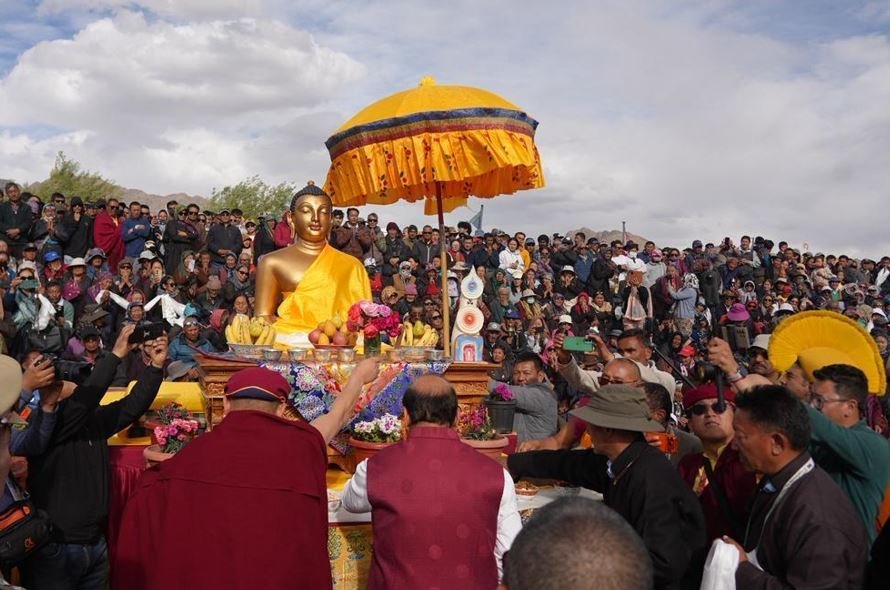
The Sacred Exposition of the Holy Relics of Tathāgata in Ladakh was not merely a religious event. It was a powerful spiritual moment that reminded the world of the enduring strength of faith, peace and compassion. The 14-day exposition in Leh and Zanskar, where more than 1.18 lakh devotees paid obeisance, reflected the deep devotion of the people and the growing recognition of Ladakh as a global centre of spiritual awakening. In a time when the world is troubled by conflict, unrest, and material pressures, the message of Lord Buddha stands stronger than ever. Peace is not weakness. Compassion is not silence. It is the highest form of human strength.
The presence of the holy relics created an atmosphere of reverence across Ladakh. Devotees from remote villages, monasteries, border areas, different parts of India and abroad travelled long distances to seek blessings. Their patience, discipline and devotion showed the spiritual character of Ladakh’s society. People stood in long queues for hours with calmness and faith. This was not ordinary public participation. It was a living expression of belief, unity and collective respect. Such discipline must be admired, preserved and projected as one of Ladakh’s greatest cultural strengths. The exposition also gained deeper meaning as it coincided with Monlam Chenmo, the Great Prayer Festival of Ladakh, dedicated to world peace and universal happiness. The participation of monks, nuns, venerable Rinpoches, scholars, pilgrims and devotees gave the event a wider spiritual and cultural dimension. Sacred prayers, Chhams, cultural programmes and religious gatherings reflected the living continuity of Ladakh’s Buddhist heritage. This heritage is not a museum memory. It is alive in the daily life, values and conduct of the people. Lieutenant Governor Shri Vinai Kumar Saxena rightly described the exposition as a symbol of cultural unity and harmony. His vision of Ladakh as a global centre of peace, contemplation and spiritual awakening deserves serious attention. Ladakh is not only known for mountains, monasteries and natural beauty. It carries a spiritual depth that can guide visitors towards inner calm and moral reflection. The successful conduct of this grand exposition proves that Ladakh has the ability to welcome the world not only as a tourist destination, but as a sacred destination for peace, learning and spiritual experience. At the same time, this recognition brings responsibility. Ladakh must protect its spiritual identity with firmness. Spiritual tourism should not be allowed to become a careless commercial activity. The sanctity of monasteries, prayer spaces, cultural traditions and local customs must be preserved with seriousness. Development is necessary, but it must respect the soul of the land. Roads, facilities, accommodation and visitor services should improve, but not at the cost of silence, dignity and ecological balance. The inauguration of the exposition on Buddha Purnima by Union Home Minister Shri Amit Shah also highlighted the importance of Ladakh’s Buddhist heritage in India’s larger civilisational identity. The participation of national and international dignitaries, religious leaders, ambassadors, scholars and pilgrims gave the event the character of cultural diplomacy. In a divided world, Buddhist heritage can become a bridge of dialogue, peace and shared humanity. India must use this soft power with wisdom and confidence. The successful conduct of the exposition was also the result of public cooperation and institutional coordination. The efforts of the Ladakh Buddhist Association, the All Ladakh Gonpa Association, venerable Rinpoches, the UT Administration, the Indian Army, the Indian Air Force, ITBP, Ladakh Police and volunteers deserve sincere appreciation. Managing such a large gathering requires discipline, planning and commitment. Ladakh showed all these qualities with grace. However, the real task begins now. If Ladakh is to emerge as a global spiritual destination, it needs sustained planning. Monasteries must be preserved, spiritual circuits must be developed carefully, scholars and researchers must be encouraged, cultural documentation must be strengthened and young people must be connected with their heritage. Environmental protection must remain central, because Ladakh’s spiritual beauty is inseparable from its natural purity.
The holy relics may return to the National Museum, but their blessings and message will remain in Ladakh’s heart. The exposition leaves behind a profound message that faith should become a force for peace, culture should strengthen the bonds of unity, and spiritual heritage should illuminate the path of modern progress. Ladakh has shown that it can stand as a beacon of compassion, calm and wisdom in a troubled world, and this sacred promise must be preserved with sincerity and vision.

