


NEP Push Gains Pace as Universities Introduce Industry Focused Courses
Higher education institutions expand skill-based learning to improve employability among students
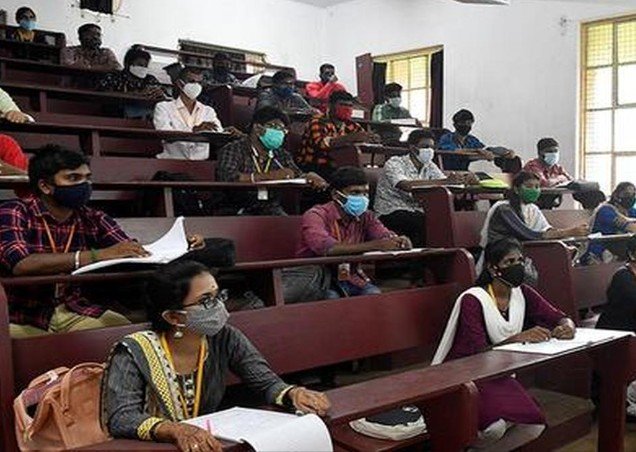
NEW DELHI, May 19: Universities across India have accelerated the implementation of industry-focused academic programmes under the National Education Policy (NEP) framework, with several institutions introducing specialised courses linked to artificial intelligence, renewable energy, financial technology and digital communication.
Education officials said the move aims to bridge the gap between classroom learning and market requirements as industries increasingly demand practical skills alongside academic qualifications. Central universities, IITs and private institutions have announced collaborations with technology companies and research organisations to strengthen internship opportunities and project-based learning.
According to education experts, students are now showing greater interest in interdisciplinary programmes that combine engineering, management, data science and communication studies. Universities are also redesigning curricula to include entrepreneurship training and startup incubation support.
The Ministry of Education has encouraged colleges to adopt flexible credit systems and digital learning platforms. Many institutions have started hybrid learning models allowing students to complete certification programmes from international platforms alongside regular degree courses.
Industry leaders welcomed the reforms, saying India’s growing digital economy requires a workforce equipped with modern technological skills. Recruiters believe the new academic approach could improve placement opportunities and global competitiveness for Indian graduates.
Officials also stated that vocational training and apprenticeship programmes are being integrated into undergraduate studies to provide students with early professional exposure. Several state governments have additionally announced scholarship schemes for students enrolling in emerging technology programmes.
Education analysts believe the reforms could significantly reshape India’s higher education landscape over the next decade by making graduates more adaptable to changing job markets.

