


US Confirms Weekend Strikes on Iranian Drone Command Facilities
Washington says operation targeted radar and drone infrastructure following the downing of an American surveillance aircraft near the Strait of Hormuz.
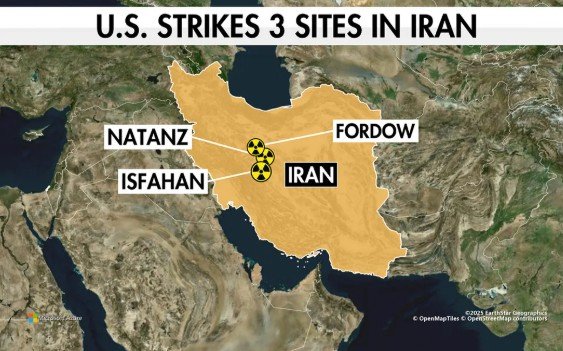
WASHINGTON, June 1: The United States has announced that its military carried out a series of defensive air operations against Iranian military installations over the weekend, escalating tensions in an already volatile Gulf region.
According to the U.S. Central Command (CENTCOM), the action was undertaken after Iranian forces allegedly brought down an American MQ-1 surveillance drone flying in international airspace. U.S. officials described the incident as a direct threat to regional security and freedom of navigation.
Military aircraft subsequently targeted multiple locations linked to Iran’s air defense and unmanned aerial vehicle capabilities. The strikes focused on radar facilities and drone-related infrastructure situated in Goruk and on Qeshm Island, strategic areas overlooking key maritime routes in the Persian Gulf.
CENTCOM stated that the operation successfully neutralized several military objectives, including an air-defense system, a drone command facility, and two attack drones prepared for deployment. U.S. authorities emphasized that the mission was designed to protect American personnel and assets operating in the region.
Officials further confirmed that no U.S. service members were injured during the engagement and that all participating aircraft returned safely after completing their objectives.
The latest military action follows a week of heightened confrontation between Washington and Tehran. Earlier exchanges saw Iranian forces launch attacks aimed at a U.S. military installation, while American forces conducted operations against what officials identified as drone-related activities threatening international shipping lanes near the Strait of Hormuz.
Security analysts warn that continued military exchanges between the two nations could increase instability across the Gulf, a region critical to global energy supplies and international trade. The Strait of Hormuz remains one of the world’s most strategically important waterways, carrying a significant portion of global oil exports.
While both sides have defended their actions as necessary responses to perceived threats, diplomatic observers are urging restraint to prevent further escalation that could draw additional regional actors into the conflict.
The latest developments underscore the fragile security environment in the Middle East, where military incidents at sea and in the air continue to raise concerns about the possibility of a broader confrontation between the United States and Iran.

