


Admiral Krishna Swaminathan Takes Charge as Navy Chief, Pledges Combat Readiness and Modernisation
New naval chief outlines vision focused on operational preparedness, indigenous capability and emerging technologies.
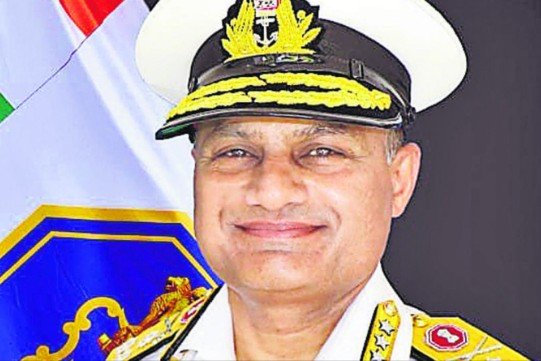
NEW DELHI, June 8: Admiral Krishna Swaminathan has formally assumed charge as the Chief of the Naval Staff, taking command of the Indian Navy at a time when maritime security challenges continue to evolve across the Indo-Pacific region.
The appointment marks a new chapter for India’s naval forces as the country seeks to strengthen its maritime capabilities amid a rapidly changing strategic environment. Admiral Swaminathan succeeds Admiral Dinesh Kumar Tripathi and brings with him nearly four decades of operational, command and strategic experience.
Soon after assuming office, the new Navy chief reaffirmed his commitment to maintaining the highest standards of operational readiness and combat effectiveness. He emphasised that safeguarding India’s security and economic interests would remain the foremost priority of the naval force.
Admiral Swaminathan said the Indian Navy continues to operate in a complex and dynamic regional environment that requires constant vigilance and preparedness. He highlighted the importance of maintaining strong maritime capabilities to address emerging challenges and protect national interests.
The new chief outlined a vision centred on modernisation, technological advancement and self-reliance. He stressed that ongoing capability enhancement programmes would continue to receive priority attention and that efforts would be made to accelerate the induction of advanced technologies into naval operations.
Defence experts view his appointment as particularly significant given India’s expanding maritime responsibilities. The Indian Ocean Region has become increasingly important for global trade, energy security and geopolitical competition, placing greater emphasis on naval preparedness.
Admiral Swaminathan’s career includes command of several frontline warships and major naval formations. Before assuming the top post, he served as the Flag Officer Commanding-in-Chief of the Western Naval Command, one of the Navy’s most important operational commands.
Officials said his extensive experience in communication systems, electronic warfare and operational planning would be valuable as the Navy pursues modernisation initiatives. The force is currently engaged in multiple projects aimed at enhancing combat capabilities and strengthening indigenous defence production.
One of the key themes highlighted by the new Navy chief is the importance of indigenisation. The Navy has been among the leading proponents of indigenous shipbuilding and defence manufacturing, with a large number of warships currently being constructed in Indian shipyards.
The emphasis on self-reliance aligns with the government’s broader objective of reducing dependence on imported defence equipment. Several indigenous platforms, including warships, submarines and advanced systems, are expected to play a major role in future force development.
Military analysts believe the coming years will be crucial for India’s maritime strategy. The Navy is expected to expand its operational reach, strengthen partnerships with friendly nations and enhance its presence across strategically important sea lanes.
Admiral Swaminathan has also underlined the importance of jointness among the armed forces. Greater integration between the Army, Navy and Air Force is considered essential for addressing modern security challenges and improving operational effectiveness.
The Navy’s modernisation agenda includes investments in artificial intelligence, unmanned systems, cyber capabilities and advanced surveillance technologies. These emerging domains are expected to shape future naval warfare and operational planning.
The new chief’s emphasis on readiness and technological transformation comes amid increasing attention to maritime security issues in the Indo-Pacific. Ensuring freedom of navigation, protecting sea lines of communication and responding to regional contingencies remain key priorities for the force.
Defence observers say Admiral Swaminathan’s leadership will be closely watched as India advances major defence reforms and continues efforts to strengthen its maritime posture. His tenure is expected to focus on balancing operational commitments with long-term capability development.
With modernisation projects underway and new platforms entering service, the Indian Navy is poised for significant transformation. Under Admiral Swaminathan’s leadership, the force aims to enhance its operational effectiveness while supporting India’s broader strategic objectives in the maritime domain.
As regional security dynamics continue to evolve, the Navy’s role in protecting national interests is expected to become increasingly important. The new chief’s emphasis on preparedness, innovation and self-reliance reflects the direction in which India’s maritime force is heading in the years ahead.

