


Haj Policy 2027 Announced, Government Introduces Measures for Smoother Pilgrimage
Applications for Haj-2027 open as government focuses on technology driven services, improved assistance and smoother pilgrimage management
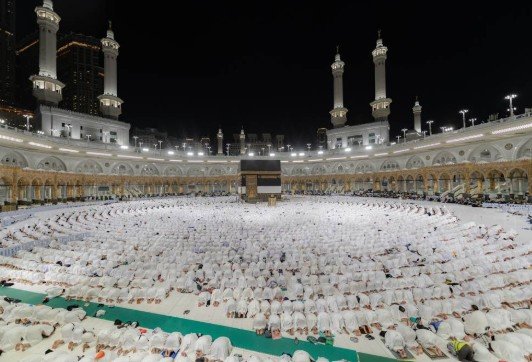
NEW DELHI, June 22: The Centre on Monday unveiled the Haj Policy 2027 and opened the application process for Indian Muslims intending to undertake the annual pilgrimage next year. The new policy aims to improve the overall pilgrimage experience through enhanced facilities, better support mechanisms and the introduction of technology driven services.
Union Minority Affairs Minister Kiren Rijiju announced the policy and said applications for Haj-2027 can now be submitted through the Haj Committee of India. Pilgrims can apply online via the official Haj Committee portal and the Haj Suvidha mobile application, making the registration process more accessible and convenient.
According to the Ministry of Minority Affairs, the latest framework builds upon several initiatives introduced during Haj-2026, including upgraded accommodation arrangements in Mecca, sofa-cum-bed facilities in Mina and the successful rollout of the 20-day Short Haj Package.
The government indicated that the allocation of pilgrimage seats between the Haj Committee of India and private tour operators is expected to continue at the existing 70:30 ratio. Under the proposed arrangement, 1,22,518 seats will be managed by the Haj Committee of India, while 52,507 seats will be allocated to the private sector.
Officials said efforts would continue to secure a higher quota for Indian pilgrims. Last year, India received a quota of 1,75,025 pilgrims from Saudi Arabia.
The announcement follows a high-level review meeting chaired by Rijiju on June 18, where the performance of Haj-2026 was assessed and preparations for the next pilgrimage season were finalised. The ministry stated that releasing the policy well in advance would help ensure timely preparations and compliance with schedules laid down by Saudi authorities.
Highlighting India’s performance during the previous pilgrimage season, the ministry noted that the Indian Haj Mission received two prestigious Labbaytum Awards from Saudi Arabia’s Ministry of Hajj and Umrah in the category of Best Haj Coordination and Communication. It was the first time India received the recognition.
One of the significant changes introduced under the new policy is the strengthening of on-ground support for pilgrims. The ratio of State Haj Inspectors has been improved from one inspector for every 150 pilgrims to one for every 135 pilgrims, enabling more effective assistance during the pilgrimage.
To address concerns regarding waiting lists, authorities have decided to give preference to the top 20 per cent of applicants who remained on the final waiting list during Haj-2026. The move is aimed at ensuring a fairer allocation process for those who narrowly missed selection earlier.
The ministry also announced the continuation of the Short Haj Package following positive feedback from pilgrims. In response to increasing demand from eastern India, Kolkata has been added as a new embarkation point under the package.
Health and safety remain a major focus area in the revised policy. Medical screening procedures will now be aligned more closely with Saudi health guidelines. Enhanced checks will ensure that individuals suffering from serious chronic illnesses are assessed carefully before being cleared for travel, reducing health risks during the pilgrimage.
A major highlight of Haj Policy 2027 is the proposed integration of artificial intelligence into pilgrimage management. The government plans to gradually introduce AI-powered systems for application verification, document processing, flight demand forecasting and real-time grievance monitoring.
Officials believe these technological interventions will help improve efficiency, reduce errors and ensure faster responses to pilgrims’ concerns throughout the journey.
The ministry is also developing a multilingual conversational AI support system that will provide round-the-clock assistance to pilgrims. The service will operate in Hindi, Urdu and several regional languages, allowing users to seek guidance through both voice and text-based interactions.
The AI assistant is expected to support applicants at every stage, including registration, payment-related queries, travel details, accommodation information, baggage regulations, complaint registration and emergency support. Authorities believe the initiative will particularly benefit first-time and elderly pilgrims by providing accurate information without dependence on intermediaries.
In another significant development, the government plans to integrate its systems with Saudi Arabia’s Nusuk platform. The proposed linkage is intended to ensure seamless coordination between Indian and Saudi authorities, enabling pilgrims to receive consistent updates and services throughout their pilgrimage.
Rijiju urged prospective pilgrims to complete their applications within the stipulated deadlines and directed all concerned agencies to ensure transparency and efficiency during the registration process.
Reaffirming the government’s commitment, the minister said every effort would be made to provide Indian pilgrims with a safe, comfortable, transparent and dignified pilgrimage experience.
With technology, improved infrastructure and enhanced support services at the centre of the new framework, Haj Policy 2027 marks another step towards modernising pilgrimage management and improving the overall experience for Indian pilgrims.

