


Delhi High Court Orders Removal of Objectionable Social Media Posts Against MP Raghav Chadha
Court directs takedown of select online content while observing that the remaining material does not appear defamatory at this stage; detailed order awaited.
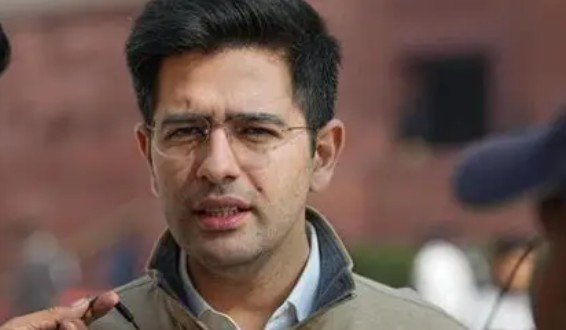
New Delhi, July 1: The Delhi High Court on Wednesday directed the removal of certain objectionable social media posts targeting Member of Parliament Raghav Chadha, providing partial interim relief in a case concerning alleged defamatory and AI-generated online content. While ordering the takedown of specific material, the court observed that the remaining content placed before it did not appear to be defamatory on the face of it.
Justice Subramonium Prasad delivered the interim order while hearing Chadha’s plea seeking legal action against the publication and circulation of posts that he claimed had damaged his reputation and infringed upon his personality rights. The detailed copy of the court’s order is yet to be released.
During the proceedings, the court clarified that the dispute was not primarily one involving personality rights. However, after examining the material presented by both sides, the judge directed that certain objectionable content be removed from social media platforms.
At the same time, the court stated that the remaining posts challenged in the petition did not, at this preliminary stage, appear to satisfy the legal threshold for defamation. The observations were made while disposing of the application for interim relief, with the main matter expected to continue before the court.
The High Court had earlier reserved its verdict on May 21 after hearing detailed arguments from both parties regarding the request for immediate removal of the disputed online material.
In his petition, Chadha sought urgent directions to social media platforms and concerned parties to remove allegedly false, fabricated and manipulated content that had been circulating online. He argued that advancements in artificial intelligence and deepfake technology had enabled the creation of misleading digital material that falsely portrayed him and harmed his public image.
According to the plea, AI-generated visuals and deepfake content were being created and shared without his consent, amounting to an unauthorised use of his identity and violating his legal and constitutional rights. The petition contended that such content had the potential to mislead the public while causing lasting damage to an individual’s reputation in the digital age.
The case also highlighted growing concerns over the misuse of artificial intelligence technologies for generating deceptive content that closely resembles real individuals. Legal experts have increasingly pointed to the challenges posed by deepfakes, particularly as AI tools become more sophisticated and widely accessible.
The petition argued that the rapid spread of manipulated digital content across multiple social media platforms makes it difficult for affected individuals to prevent reputational harm once such material gains widespread circulation. It called for timely judicial intervention to prevent further dissemination of false information.
The issue of personality rights and online identity protection has become increasingly significant before Indian courts in recent years. Several prominent public figures have approached the Delhi High Court seeking legal remedies against unauthorised use of their names, photographs, videos and digitally altered content.
Among those who have previously secured interim relief from the court are actors Aishwarya Rai Bachchan, Abhishek Bachchan and Salman Khan, spiritual leader Sri Sri Ravi Shankar, journalist Sudhir Chaudhary, entrepreneur and podcaster Raj Shamani, and Andhra Pradesh Deputy Chief Minister Pawan Kalyan. In those cases, the High Court granted interim protection to safeguard their personality and publicity rights against misuse on digital platforms.
The latest order reflects the judiciary’s continued engagement with legal questions arising from artificial intelligence, deepfake technology and digital misinformation. As online content becomes increasingly difficult to distinguish from authentic material, courts are being called upon to balance freedom of expression with the protection of individual reputation and privacy.
The detailed reasoning behind the interim order will become clearer once the Delhi High Court releases its written judgment. Until then, the direction to remove selected objectionable content marks an important development in the evolving legal framework governing AI-generated material, online defamation and digital personality rights in India.

