


India Reaffirms Kashmir’s Status, Slams Pakistan Over Cross Border Terrorism at UN
Indian envoy says trust cannot exist under the Indus Waters Treaty while terrorism is used as state policy; reasserts Jammu and Kashmir is an inseparable part of India
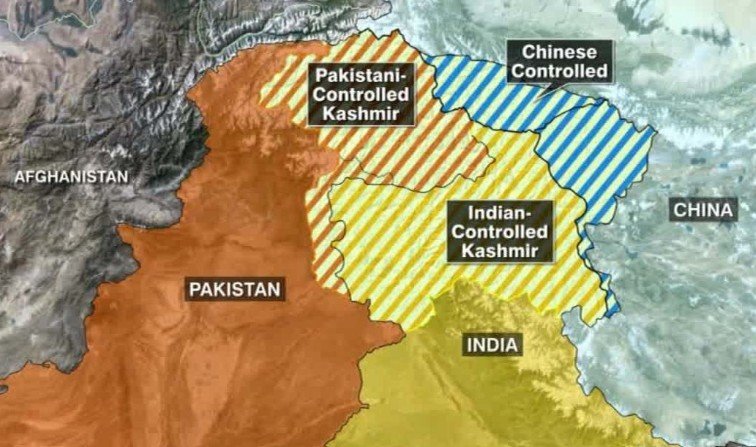
United Nations, July 23: India delivered a strong rebuttal to Pakistan at the United Nations Security Council on Wednesday, accusing Islamabad of promoting a false narrative on the Indus Waters Treaty (IWT) and asserting that meaningful cooperation cannot coexist with cross-border terrorism. New Delhi also reaffirmed that Jammu and Kashmir remains an integral and inalienable part of India, dismissing Pakistan’s claims on the region.
The remarks were made by India’s Permanent Representative to the United Nations, Ambassador Parvathaneni Harish, during the High-Level Open Debate of the UN Security Council on “Natural Resources Governance: the Foundation of Peace, Security and Prosperity.”
Exercising India’s right of reply, Ambassador Harish said the delegation was compelled to respond after Pakistan attempted to use the global forum to advance what he described as misleading and politically motivated allegations against India.
Addressing the issue of the Indus Waters Treaty, Harish said India’s position has remained consistent and unambiguous. He stressed that agreements based on mutual trust and goodwill cannot function effectively when cross-border terrorism continues to be employed as an instrument of state policy.
The Indian response came after Pakistan’s Permanent Representative to the UN, Asim Iftikhar Ahmad, accused New Delhi of “weaponising water” by keeping the Indus Waters Treaty in abeyance. Pakistan claimed that the decision was unlawful and argued it could adversely affect the livelihoods of more than 240 million people dependent on the Indus river system.
The Indus Waters Treaty, signed in 1960 with World Bank facilitation, regulates the sharing of the six rivers of the Indus basin between India and Pakistan. Under the agreement, the eastern rivers were allocated to India, while Pakistan received rights over the western rivers, subject to specific provisions.
India placed the treaty in abeyance following the April 22, 2025, Pahalgam terror attack, maintaining that bilateral cooperation under the agreement cannot continue in an environment marked by persistent cross-border terrorism.
On the issue of Jammu and Kashmir, the Indian envoy reiterated New Delhi’s longstanding position, stating that the Union Territory has always been and will continue to remain an inseparable part of India. He described this as a constitutional and legal reality that Pakistan continues to ignore.
Harish further stated that the only unresolved issue concerning Jammu and Kashmir relates to what India considers Pakistan’s illegal occupation of parts of Indian territory. He suggested that Pakistan should focus on addressing its own internal challenges instead of making allegations against India on international platforms.
During the broader discussion on natural resources, the Indian representative emphasized that the illegal exploitation and trafficking of natural resources can contribute to financing armed groups and extending conflicts in several regions of the world. However, he underlined that natural resources should primarily serve as a foundation for sustainable development, peace and economic prosperity.
He also reaffirmed that sovereign nations bear the primary responsibility for governing and managing their natural resources. Calling for greater international cooperation, Harish advocated transparent governance, accountable institutions, responsible supply chains and stronger global efforts to combat the illicit exploitation of natural resources.
India’s intervention at the Security Council reflected its broader position that issues related to terrorism and national sovereignty must be addressed alongside discussions on international cooperation and resource governance. The exchange also underscored the continuing diplomatic differences between India and Pakistan over terrorism, the Indus Waters Treaty and the status of Jammu and Kashmir.

