


Trump Warns of ‘Major Military Response’ After Houthi Attack on Saudi Oil Tankers
Red Sea strike intensifies Middle East conflict, pushes Brent crude above $100 a barrel as fears grow over disruption to global energy supply routes
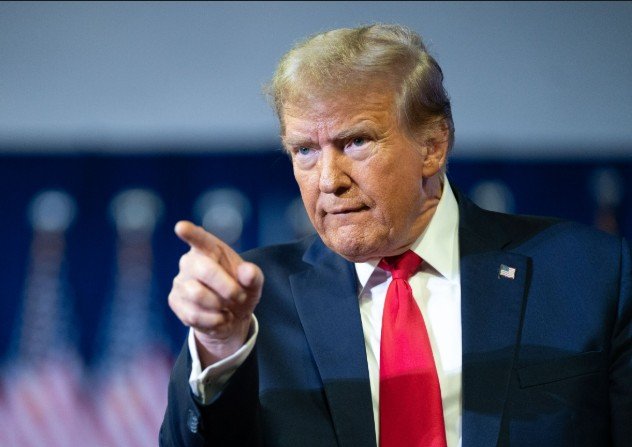
WASHINGTON, July 24: The conflict in the Middle East escalated sharply after US President Donald Trump warned of a severe military response against Iran and Yemen’s Houthi rebels following missile and drone attacks on two Saudi oil tankers in the Red Sea. The latest developments have heightened concerns over regional stability and sent global oil prices soaring amid fears of disruptions to vital maritime trade routes.
Trump declared that any future attacks by the Houthis would be treated as actions backed by Iran, accusing Tehran of directing and supporting the Yemeni rebel group. He vowed that both Iran and the Houthis would face significant military consequences if such incidents continued.
The warning came after the Houthis claimed responsibility for striking two Saudi oil tankers operating near the Bab el-Mandeb Strait, one of the world’s busiest shipping corridors connecting the Red Sea to the Indian Ocean. The attacks have raised fresh concerns about the security of international energy supplies already under pressure from the prolonged regional conflict.
Oil Prices Surge Above $100
The strikes triggered an immediate reaction in global energy markets. Brent crude climbed more than six per cent, crossing the $100-per-barrel mark for the first time in several months as traders feared that the conflict could disrupt another strategic shipping lane after tensions around the Strait of Hormuz.
Analysts warned that simultaneous threats to both waterways could significantly affect global oil exports, shipping costs and inflation, particularly for countries dependent on Middle East energy supplies.
US-Iran Military Confrontation Deepens
The tanker attacks came as military exchanges between Washington and Tehran intensified. US forces carried out fresh air and missile strikes on Iranian targets, extending an operation that has continued for nearly two weeks after the collapse of an interim ceasefire.
Iran responded by targeting facilities linked to the United States in neighbouring countries hosting American military bases. Iranian state media reported explosions on Qeshm Island near the Strait of Hormuz following US missile strikes, highlighting the strategic importance of the waterway through which a large portion of the world’s oil shipments pass.
The ongoing military exchanges have transformed the conflict into one of the most volatile regional crises in recent years.
Trump Holds Iran Responsible
In a statement posted on social media, Trump asserted that Iran would be held fully accountable for any additional Houthi attacks.
He described the Houthis as Iranian proxies and warned that any repeat incident would invite major military punishment against both Tehran and the rebel movement. Trump also indicated that his administration was considering broader military operations against Iran, saying the country had “not received enough pain yet.”
The US president later added that damages caused to commercial cargo vessels would ultimately be recovered using Iranian financial assets frozen under American control, although he did not explain how such a plan would be implemented.
Questions Over Iranian Support
Reports citing sources in Iran and Yemen suggested that Tehran had recently sent Revolutionary Guard commanders, military advisers and missile-related equipment to Yemen before the Houthis announced their naval blockade targeting Saudi shipping.
The Houthis rejected those reports and maintained that their operations were independently planned.
The rebel group has recently declared a naval blockade against Saudi Arabia, aiming to disrupt oil exports routed through the Red Sea after Gulf shipments were affected by tensions in the Strait of Hormuz.
Saudi Tankers Targeted
According to Houthi statements, missile and drone attacks targeted the Saudi oil tankers Encelia and Layla.
Maritime security officials said the Encelia transmitted a distress signal after reportedly being struck near the Saudi port of Jizan. Saudi authorities confirmed that the vessel caught fire at its bow, though details regarding casualties or the extent of damage were not immediately available.
Independent confirmation of the reported strike on the second tanker was still pending, although Trump referred to attacks on two Saudi vessels during his remarks.
The incidents have prompted shipping insurers to significantly increase premiums for vessels operating in the southern Red Sea.
Global Shipping Under Pressure
The attacks have renewed fears over the security of the Bab el-Mandeb Strait, a critical maritime passage linking Europe, Asia and the Middle East.
Several shipping companies have reportedly altered routes to avoid the danger zone, opting for longer voyages around southern Africa instead of passing through the Red Sea and Suez Canal.
Industry experts warned that prolonged disruptions could increase freight costs, delay deliveries and place additional pressure on global supply chains.
Iran Claims Strikes on US Facilities
Iran announced that it had launched attacks on American military infrastructure in Jordan and Kuwait, claiming to have targeted missile systems, fuel depots and electronic warfare installations.
Jordan’s military stated that it intercepted several Iranian missiles and drones, with only one projectile landing in an uninhabited area.
Iran’s Revolutionary Guards also claimed responsibility for striking a US electronic warfare facility at Al-Adiri base in Kuwait in retaliation for earlier American attacks on Iranian territory.
Neither the United States nor Kuwait reported casualties following the alleged strike.
Iranian military officials reiterated that retaliatory operations would continue as long as American attacks on Iranian infrastructure persisted.
Congress Questions Military Escalation
The latest escalation has also intensified political debate in Washington.
The Republican-controlled House of Representatives approved legislation urging President Trump to halt further military operations against Iran, arguing that Congress holds constitutional authority over declarations of war.
Although similar resolutions have been introduced in recent months, they have not resulted in any significant policy changes. The Senate later voted against another proposal seeking to restrict the administration’s military campaign.
Growing Economic Concerns
The expanding conflict is increasingly affecting the global economy, with rising oil prices fuelling inflationary concerns and creating uncertainty in financial markets.
Energy analysts caution that continued attacks on key shipping routes could disrupt international trade, raise transportation costs and weaken economic growth if tensions continue to escalate.
With military exchanges continuing across multiple fronts and diplomatic efforts showing little progress, the Middle East remains on edge as governments worldwide monitor the impact on energy security and regional stability.

