


Sonia Gandhi Alleges Modi Government Is Undermining Education, Suppressing Students
Congress leader alleges rising privatisation, repeated exam failures and police action against student protesters reflect a deepening crisis in India's education sector.
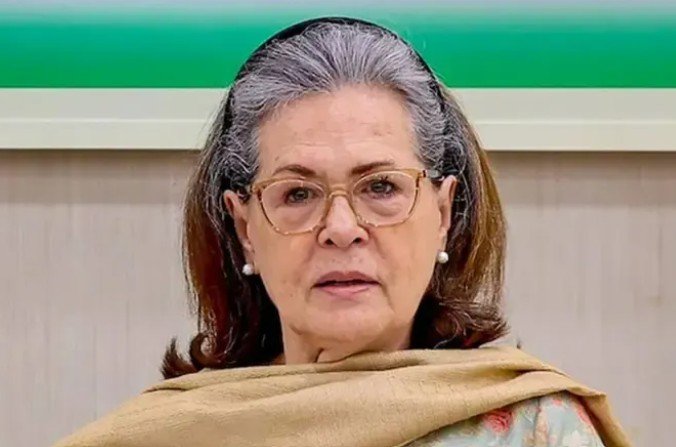
New Delhi, July 24: Congress Parliamentary Party Chairperson Sonia Gandhi on Friday launched a scathing attack on the Narendra Modi-led government, accusing it of undermining India’s education system, suppressing student voices, and failing to address long-standing concerns over examination reforms and public education.
In an opinion article titled “An Education System’s Collapse, Young India’s Trauma” published in The Hindu, Gandhi said students across the country have peacefully demanded accountability and meaningful reforms but were instead met with force and intimidation. She asserted that supporting students is not merely a political responsibility but also a constitutional and moral obligation.
According to Gandhi, the recent wave of protests by students over examination paper leaks, irregularities in recruitment, and declining educational standards reflects growing frustration among the youth. She argued that instead of initiating dialogue, the government responded with coercive measures that have further deepened public anger.
The Congress leader alleged that the Centre has adopted an increasingly confrontational approach towards dissent, claiming that students seeking transparency and fairness have been portrayed as adversaries rather than partners in nation-building. She said the government’s handling of peaceful demonstrations has reinforced concerns about democratic freedoms and accountability.
Referring to the events of July 20, Gandhi criticised the police action against student protesters in Delhi, alleging that law enforcement agencies resorted to excessive force, including lathi charges and tear gas, to disperse demonstrators. She claimed several protesters sustained injuries and that even students returning home were affected during the crackdown.
She described the images and videos from the protests as deeply disturbing, saying they reflected the growing disconnect between the government and the aspirations of young Indians. Gandhi alleged that the authorities chose repression instead of engagement at a time when students were demanding reforms in the education sector.
Drawing parallels with earlier incidents, Gandhi recalled the police action during the Citizenship (Amendment) Act protests in universities and the treatment of protesting women wrestlers, arguing that the government’s response to dissent has followed a similar pattern over the years.
The Congress veteran further accused the administration of routinely preferring confrontation over dialogue. She said farmers, activists, and now students have all experienced what she described as an increasingly authoritarian approach, adding that the latest developments marked another low point in the government’s engagement with citizens.
Gandhi also criticised attempts to question the motives of student protesters, alleging that the government had once again resorted to branding dissent as politically motivated instead of addressing the underlying issues. She maintained that the authorities should have focused on reforming policies rather than discrediting those raising legitimate concerns.
Highlighting what she called the structural decline of public education, Gandhi claimed that government expenditure on school and higher education has steadily reduced over the past decade. She argued that shrinking investment in public institutions has weakened access to quality education, forcing families to rely increasingly on private institutions and expensive coaching centres.
She alleged that while a large number of government schools have closed in recent years, private educational institutions have expanded significantly. According to her, this trend has accelerated the commercialisation of education, making higher learning less affordable for ordinary families.
The Congress leader pointed to the booming coaching industry as evidence of the growing financial burden on households. She argued that students preparing for competitive examinations such as NEET often spend enormous sums on coaching because confidence in the public education system has eroded.
Gandhi also raised concerns about the functioning of the National Testing Agency (NTA), alleging that the centralisation of major entrance examinations has exposed systemic weaknesses. She argued that replacing state and university-level examinations with centrally administered tests has not delivered the expected improvements in transparency or efficiency.
Questioning the agency’s capacity, she claimed the NTA remains understaffed and relies extensively on private contractors to conduct examinations. She also alleged that repeated paper leaks and administrative lapses have damaged the credibility of the country’s examination system and created uncertainty for millions of aspirants.
According to Gandhi, repeated examination controversies have undermined students’ trust in the recruitment and admission process. She said these failures have left deserving candidates anxious about their academic and professional futures.
Beyond education, Gandhi argued that employment opportunities have failed to keep pace with the aspirations of graduates. She said even students who successfully complete their education often struggle to secure quality jobs, adding that this has intensified frustration among young people.
The Congress leader also criticised Union Education Minister Dharmendra Pradhan, alleging that the government has ignored recommendations aimed at strengthening the examination system. She claimed the Centre has avoided meaningful accountability despite recurring concerns over entrance examinations and recruitment processes.
Concluding her remarks, Gandhi said India must invest in strengthening public education, restoring trust in examinations, and creating transparent institutions that serve students fairly. She asserted that the voices of young people deserve to be heard through dialogue rather than suppression and called for comprehensive reforms to rebuild confidence in the country’s education system.

