


Trump Declares ‘The Show Must Go On’ at Rescheduled White House Correspondents’ Dinner
President attends revamped media gala months after shooting disrupted the original event, as press freedom and media-government tensions dominate the evening.
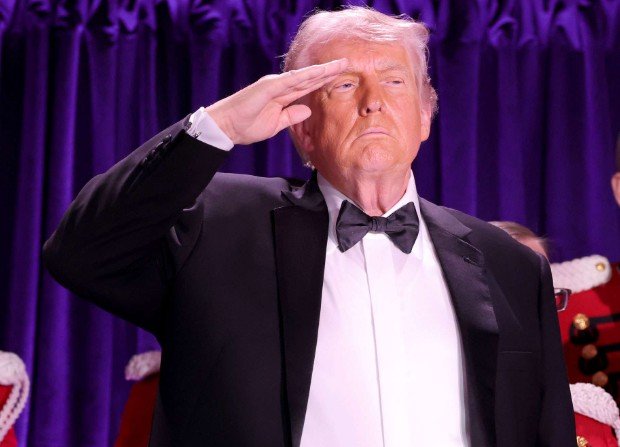
Washington, July 24: U.S. President Donald Trump struck a defiant yet measured tone as he attended the rescheduled White House Correspondents’ Association (WHCA) dinner on Friday, telling a gathering of journalists, media executives and government officials that “the show must go on” after a shooting forced the cancellation of the original event earlier this year.
The annual dinner, traditionally viewed as a celebration of journalism and the First Amendment, was held under significantly tighter security at the Waldorf Astoria in Washington after the April incident, when an armed attacker stormed a security checkpoint, prompting an evacuation before the event could begin.
Opening his remarks, Trump acknowledged the extraordinary circumstances surrounding the gathering and reiterated his belief that the event should proceed despite the earlier violence. While he had previously hinted that he might deliver a sharply critical speech aimed at the media, the president instead blended humor with political commentary throughout the evening.
One of his most notable remarks drew laughter from the audience as he described the ballroom as hosting “the largest group of Trump Derangement Syndrome people put together at one time,” reflecting his often-contentious relationship with the national press.
WHCA President Weijia Jiang welcomed attendees by emphasizing resilience and the importance of continuing the tradition despite the attack. Referring to the interrupted April ceremony, she told the audience that journalists would not allow intimidation or violence to overshadow the role of a free press.
“Tonight our message is simple: We are back,” Jiang said. “We refuse to let an act of violence have the final word.”
Unlike previous editions, this year’s event adopted a more restrained format. Attendance was limited to about 700 guests, substantially fewer than in past years. Security measures included multiple identity verification points, explosives-detection dogs, armed officers and a single controlled entrance. Organizers also eliminated the traditional red carpet arrivals and pre-dinner receptions.
The evening primarily focused on recognizing excellence in journalism. Trump remained in attendance throughout more than an hour of award presentations, including honors for reporters whose investigative work scrutinized his administration.
The association also introduced two special awards acknowledging courage displayed during the April attack. One recognized Secret Service Agent Victor Gonzales, who was struck in his protective vest while responding to the gunman at the security checkpoint. Another honored the staff of the Washington Hilton, where the original dinner had been scheduled before the emergency evacuation.
Entertainment was provided by mentalist Oz Pearlman, while the formal dinner featured a simplified program that reflected organizers’ intention to shift attention toward the resilience of journalists rather than ceremony.
Despite the event’s successful return, debate surrounding the White House Correspondents’ Dinner continues. Critics argue that the gathering creates an appearance of excessive familiarity between journalists and the political figures they are tasked with covering.
Media ethics experts have long questioned whether such social events risk undermining public confidence in independent journalism, particularly during periods of heightened political polarization.
This year’s dinner also unfolded against a backdrop of escalating tensions between the Trump administration and several major news organizations. In recent months, disputes have intensified over legal actions involving reporters, access to the White House press corps and broader concerns regarding press freedom.
Several press freedom organizations had urged the WHCA to use the occasion to speak more forcefully about protecting journalists and defending constitutional freedoms, arguing that the celebration of a free press should also include a clear response to growing pressure on independent media.
Even with those divisions, organizers maintained that the evening’s primary purpose remained unchanged: honoring journalism, recognizing outstanding reporting and reaffirming the essential role of a free and independent press in American democracy. By successfully staging the event after months of uncertainty, they sought to demonstrate that violence would not silence either the media or the institutions that support democratic accountability.

