


CJI Surya Kant Warns Against Fully Replacing Human Mediators with AI
At the Commonwealth Peace Mediation Conference in Jaipur, the Chief Justice says technology should support dispute resolution but trained mediators must remain at its core.
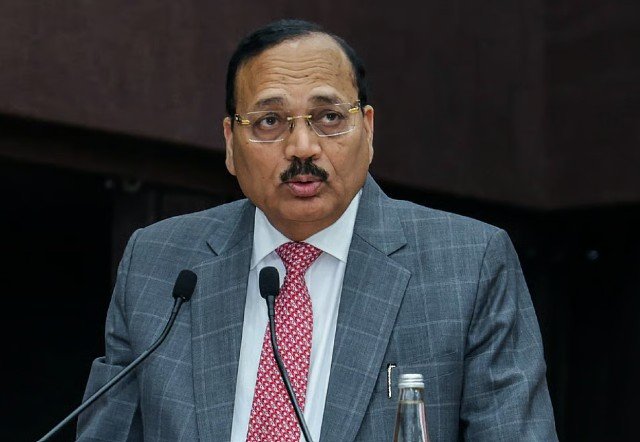
JAIPUR, Jul 31: Chief Justice of India Surya Kant on Friday underlined the importance of keeping human involvement at the heart of digital dispute resolution, cautioning that artificial intelligence should assist mediation rather than replace trained professionals.
Speaking at the inaugural session of the Commonwealth Peace Mediation Conference 2026 in Jaipur, the CJI acknowledged the transformative role of technology in making mediation accessible across the Commonwealth. However, he stressed that the emotional and interpersonal aspects of conflict resolution cannot be replicated by AI systems.
“Technology can widen access to justice, but online mediation should not be handed over entirely to AI-based platforms. While artificial intelligence may imitate human conversation, it cannot demonstrate genuine empathy or offer sincere apology,” Justice Kant said. He recommended that trained mediators should continue to lead online mediation processes.
Highlighting the growing acceptance of mediation within India’s legal framework, the Chief Justice said it has evolved into an equal pillar of the justice delivery system with the support of the Mediation Act. According to him, mediation and courts complement one another rather than compete for relevance.
He explained that courts provide legal certainty and authoritative decisions when disputes cannot be settled, whereas mediation offers parties the opportunity to resolve conflicts through dialogue before litigation becomes necessary.
Justice Kant also rejected the notion that peace and the rule of law stand in opposition. Instead, he described peace as one of the highest achievements of a well-functioning legal system, emphasizing that effective mediation strengthens both justice and social harmony.
Reflecting on the essence of conflict resolution, the CJI said successful mediation depends on listening carefully, understanding underlying interests and finding practical solutions acceptable to all parties. These qualities, he noted, require rigorous training and experience rather than technological automation.
Calling mediation one of the legal profession’s most demanding disciplines, Justice Kant observed that it involves patience, communication and trust-building skills that remain uniquely human despite advances in artificial intelligence.
Sharing a personal anecdote from his childhood in a Haryana village, he recalled how disagreements were traditionally settled through discussions before village elders. Although the process was never formally described as Alternative Dispute Resolution, he said it embodied the same principles that modern mediation seeks to promote.
“The true measure of peace is not merely signing an agreement but ensuring that relationships survive after a dispute ends,” he remarked, adding that lasting reconciliation is a more meaningful indicator of successful mediation than legal paperwork alone.
Justice Kant expressed confidence that the conference would generate practical recommendations across diverse areas, including family disputes, workplace conflicts, commercial disagreements, infrastructure projects, criminal justice, environmental issues and international peacebuilding.
He also voiced hope that the proposed Jaipur Declaration on Peace Mediation would emerge as a useful framework for mediators, legal professionals and policymakers across Commonwealth nations.
Rajasthan High Court Acting Chief Justice S. P. Sharma said mediation has the potential to strengthen public trust in institutions while promoting social harmony. He added that the justice system should encourage greater participation from communities at the grassroots level.
The inaugural event was attended by Union Minister of State for Law Arjun Ram Meghwal, Rajasthan Chief Minister Bhajanlal Sharma, Zambia Supreme Court Judge Abha Nayar Patel, along with senior judicial officers and legal experts.
Organised by the Rajasthan State Legal Services Authority (RSLSA), the three-day conference runs until August 2 and has brought together representatives from 52 Commonwealth countries to discuss expanding mediation as an effective and accessible mechanism for resolving disputes.

