


Spanish PM Pedro Sánchez Faces Intense EU Criticism Over Ceuta Border Crisis
Pedro Sánchez rejects criticism from European leaders, while renewed debate over border security and asylum policy exposes sharp divisions across the bloc.
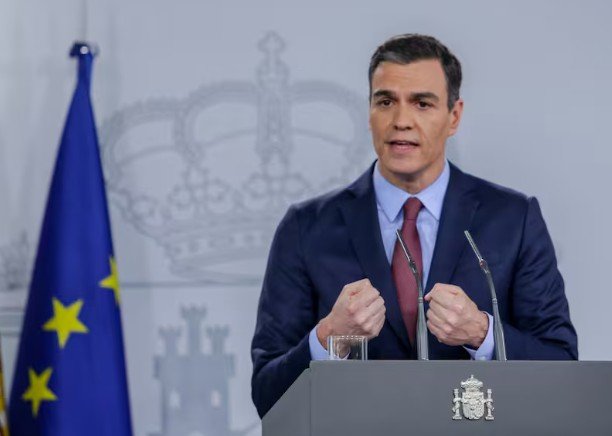
BRUSSELS, Aug. 4: Spain has come under intense political pressure from several European Union member states following last week’s migration surge into the North African enclave of Ceuta, with Prime Minister Pedro Sánchez defending his government’s response against accusations of weak border management.
The crisis unfolded after an estimated 50,000 to 60,000 migrants attempted to enter Ceuta over two days, triggering a humanitarian emergency. While most migrants were returned shortly afterward through coordinated efforts between Spanish and Moroccan authorities, the incident claimed more than 80 lives, including people who drowned or were caught in overcrowded conditions near the border.
The developments have reignited the EU’s long running debate over migration policy, with leaders from 22 member nations publicly criticising Spain’s approach. In a joint letter, they argued that recent judicial decisions in Spain had weakened border controls and encouraged irregular migration.
The criticism centres on a Spanish Supreme Court ruling that requires migrants arriving by sea to receive due legal process before deportation. Spanish authorities maintain that traffickers deliberately misrepresented the judgment to persuade thousands of migrants to attempt dangerous crossings around Ceuta’s border barriers.
Responding to the criticism, Sánchez defended Spain’s record, highlighting the country’s contribution to European migration solidarity in recent years. He pointed to Spain’s role in assisting EU partners during previous migration emergencies involving Belarus and Italy, arguing that burden-sharing must remain a collective European responsibility.
The dispute has once again exposed ideological divisions within the European Union, with conservative governments advocating stricter border enforcement while progressive leaders continue to emphasise humanitarian obligations alongside security measures.
Several governments have renewed calls for tighter surveillance at land, sea and air entry points and accelerated deportation procedures under the European Migration and Asylum Pact. Supporters argue that stronger controls are necessary to deter irregular migration and improve border management.
However, humanitarian organisations have expressed concern that tougher policies could undermine international asylum protections. Rights groups warned against expanding offshore detention facilities and urged European governments to address the underlying drivers of migration through legal migration pathways and stronger international cooperation.
Italian Prime Minister Giorgia Meloni emerged as one of the strongest critics of Spain’s response, announcing enhanced border monitoring measures and backing plans to process asylum seekers outside the European Union. Spanish officials rejected the proposal, arguing that it conflicts with European legal standards and the bloc’s principle of solidarity.
Despite the political tensions, European Commission President Ursula von der Leyen praised Spain’s operational response while calling for a comprehensive review of the crisis to improve the EU’s preparedness for future migration challenges. The Commission also stressed the need to strengthen external border management while maintaining coordinated cooperation among member states.
According to the EU border agency Frontex, irregular migration into Europe has declined significantly compared with previous years, with border crossings during the first half of 2026 falling sharply from earlier peaks. Nevertheless, the events in Ceuta have demonstrated that migration remains one of the most politically sensitive issues confronting the European Union.

