


Ladakh records over two lakh tourist arrivals in June and July this year
Tourist arrivals in July rise 56.15% compared to July 2025
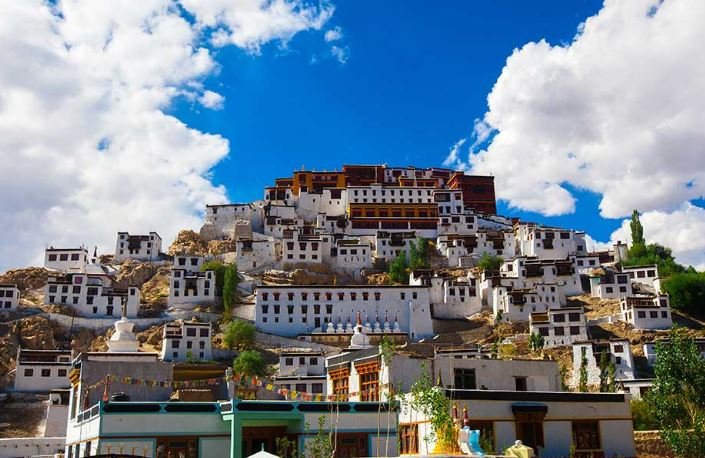
Leh, August 8: Ladakh’s tourism sector continues to witness a strong upward trajectory, with tourist arrivals crossing the one-lakh mark for two successive months in June and July 2026. The Union Territory recorded 3,30,332 tourist arrivals from January to July this year, already reaching 98.35% of the total 3,35,872 tourists recorded during the entire calendar year 2025.
The surge has been particularly noticeable in the months of June and July, when more than 2.12 lakh tourists visited Ladakh, accounting for nearly 65% of the total 3.30 lakh tourist arrivals recorded so far this year.
Ladakh received 1,05,046 tourists in July 2026, compared to 67,273 in July 2025, registering a growth of 56.15%. The July arrivals comprised 95,416 domestic and 9,630 foreign tourists.
June also witnessed a significant increase, with 1,07,740 tourists visiting Ladakh compared to 75,089 in June 2025, representing a growth of 43.48%. Of the June 2026 arrivals, 1,01,060 were domestic and 6,680 foreign tourists. The trend reflects the growing popularity of Ladakh as a destination for adventure, nature, culture. Spirituality and high-altitude tourism.
Lieutenant Governor Shri Vinai Kumar Saxena attributed the growing tourist footfall, particularly domestic tourism, to the sustained infrastructure development in Ladakh as well as the appeal of Hon’ble Prime Minister Shri Narendra Modi to citizens to visit tourist places in India and promote domestic tourism.
“The fact that Ladakh has crossed the one-lakh mark in tourist arrivals for two successive months and has already achieved more than 98 per cent of the entire 2025 footfall by the end of July is a very encouraging milestone. Hon’ble Prime Minister Shri Narendra Modi ji’s appeal to our citizens to explore the beauty and diversity of our own country has given a further impetus to domestic tourism. Ladakh and India are among the safest places for tourists, and we welcome visitors from across India and abroad. Our priority is to ensure that this growth translates into sustainable livelihood opportunities for our people while protecting Ladakh’s fragile ecology, rich culture and heritage,” said L-G Shri Saxena.
The surge in tourist arrivals during June and July has also been supported by a vibrant calendar of cultural, spiritual and experiential events organised across Ladakh. Major attractions during the period included the Hemis Festival, Pratham Sindhu Kumbh, Ladakh Astro Week 2026 (held in the last week of May), Phyang Tsedup and several other local monastic festivals, which brought together visitors interested in Ladakh’s rich Buddhist heritage, culture, spirituality and unique high-altitude experiences.
The composition of tourist arrivals till July also highlights the expanding accessibility of Ladakh through its expanding and improved air and road connectivity. Of the 3,30,332 tourists who visited Ladakh during January–July 2026, 1,57,371 (47.64%) arrived by air, while 1,16,523 (35.27%) entered through the Kashmir route and 56,438 (17.09%) arrived through the Manali route.
The growth in tourism assumes greater significance and coincides with a major and rapid transformation in Ladakh’s connectivity infrastructure since the formation of the Union Territory. The total road network has increased from 1,799 km in 2019 to over 4,200 km in 2026, while the number of bridges has increased from 19 to 72.
The period of seasonal disruption on key routes has also reduced substantially. Zoji La, the gateway to Ladakh from Kashmir, which earlier remained closed for around 127 days annually, now remains closed for only 16 days. Similarly, the annual closure of the Kargil–Zanskar Road has declined from 154 days to 11 days, significantly improving near year-round connectivity for tourists. The number of homestays has increased from 128 in 2019 to 2,275 in 2026, creating new livelihood opportunities for local households.
The tourism surge has further been supported by a series of reforms in the tourism sector, creating tourist-friendly infrastructure and amenities under the guidance of L-G Shri Saxena. Initiatives like tourism sector reforms to reduce compliance burden, simplification of cumbersome documentation, and granting of Industry Status to hotels and guest houses have strengthened confidence among tourism stakeholders, including hoteliers, guest house owners, tour operators, etc.

