


Colombia’s New Government Faces Mounting Strain as Earthquake Rescue Race Intensifies
Rescue teams race against time in the worst-hit regions as the death toll rises and international assistance reaches communities devastated by the powerful quake.
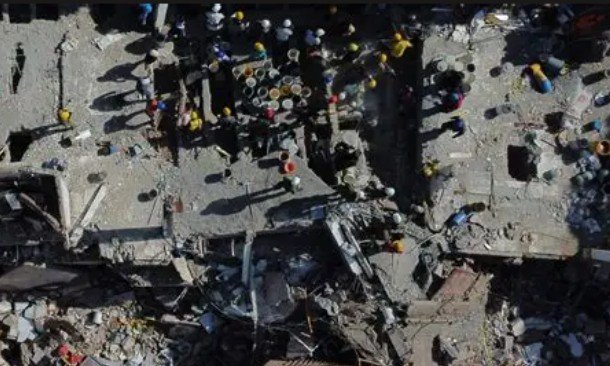
PEREIRA, Colombia, Aug 12: Rescue teams across western Colombia intensified their search for survivors on Wednesday as the critical window for finding people alive beneath collapsed buildings began to narrow following a powerful earthquake.
The disaster has placed significant pressure on the newly installed government of President Abelardo de la Espriella, which is coordinating emergency operations while humanitarian organisations and local communities work to deliver assistance to those most severely affected.
President de la Espriella said on Tuesday that the 7.4-magnitude earthquake had claimed at least 181 lives and injured 2,595 people across western Colombia. He also reported that around 195 people were still missing, although civilian led databases have put the number of unaccounted-for people at nearly 4,000.
Rescue crews worked through the night in some of the worst hit locations, including Cali, Pereira, Manizales and Quibdo. Teams continued removing debris from damaged structures in an effort to reach people who may still be trapped underneath.
The first 48 to 72 hours following a major earthquake are generally considered the most critical period for locating survivors. However, rescue specialists say people trapped beneath rubble can survive beyond that period when they have access to air, water and other essential resources.
Amid the devastation, rescuers recorded several dramatic breakthroughs. In one operation, a dust-covered baby was pulled through a narrow opening in a damaged concrete structure. In another, rescue workers managed to bring a woman out of the rubble as people nearby applauded and cheered.
The scale of the disaster has been compounded by longstanding humanitarian challenges in several affected regions. Poverty, displacement and years of armed conflict have left some communities particularly vulnerable and complicated efforts to organise relief operations.
Giovanni Rizzo, Colombia director for the Norwegian Refugee Council, said the earthquake had added to an already serious humanitarian crisis and stressed the need for greater support for relief efforts.
Humanitarian agencies, however, have existing networks in some of the affected areas, potentially allowing assistance to reach vulnerable populations more quickly. Maria Jose Torres, the United Nations resident coordinator in Colombia, said organisations already operating in conflict-affected areas were better positioned to respond to the emergency.
The Choco region, which lies near the earthquake’s epicentre, is among the areas where humanitarian organisations have maintained a presence. Torres said their established networks had significantly improved their ability to work directly with affected communities.
International assistance has also begun arriving as governments and aid organisations respond to Colombia’s emergency appeal.
The United States has pledged more than $15 million in assistance, while Mexico has offered to deploy search-and-rescue and medical personnel along with substantial quantities of medical supplies and equipment.
El Salvador has also announced plans to send two aircraft carrying around 100 tonnes of relief material in the coming days. President Nayib Bukele expressed solidarity with those affected and said his country’s support would be directed towards victims and their families.
As rescue teams continue working through unstable structures and mountains of debris, relatives of missing people remain gathered near damaged buildings, hoping for signs of life. The coming hours are expected to remain crucial as emergency workers race to reach anyone still trapped beneath the rubble.

