


US, South Korea Cut Joint Military Drills Following Trump’s Reduction Order
The allies will end the Ulchi Freedom Shield drills earlier than planned and reduce some field training activities amid concerns over military readiness and regional security.
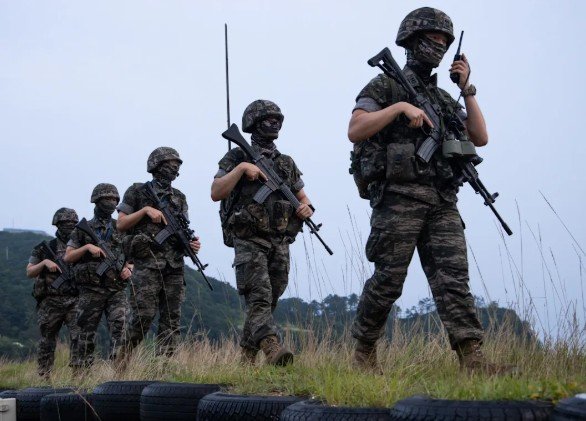
SEOUL, Aug 19: South Korea and the United States have agreed to shorten their ongoing joint military exercises following a request from Washington, South Korean officials said on Wednesday, days after US President Donald Trump ordered a substantial reduction in the drills.
The annual Ulchi Freedom Shield exercise began on Monday and was originally scheduled to continue for 11 days. Under the revised plan, the exercise will conclude on Friday, four days earlier than previously scheduled.
South Korea’s military said the two allies had also agreed to scale back some field training activities conducted alongside the command-post exercise.
Trump had directed the Pentagon to reduce the scale of the exercises, citing his improved relationship with North Korean leader Kim Jong Un and South Korea’s decision not to participate in the US military campaign against Iran.
The decision has raised concerns among security experts, who warn that reducing the scope and duration of combined exercises could affect the operational preparedness of American and South Korean forces.
Drills remain central to alliance
Ulchi Freedom Shield is primarily a computer-simulated command-post exercise designed to strengthen the allies’ ability to respond to potential security crises, particularly a conflict involving North Korea.
The exercise is normally accompanied by field training involving troops from both countries. The latest reduction will therefore affect both the duration of the command-post component and some practical training activities.
Joint exercises have remained an important element of the US-South Korea security partnership, which was established in the aftermath of the 1950-53 Korean War.
Washington maintains a substantial military presence in South Korea, while Seoul and the US regularly conduct combined exercises to improve coordination and operational readiness.
North Korea has consistently condemned these drills, describing them as preparations for an invasion. Pyongyang has frequently responded to such exercises with missile launches and other military demonstrations.
Pyongyang rejects military exercises
North Korea has so far shown little indication that it intends to respond positively to Trump’s latest outreach.
On Wednesday, the country’s state-run Korean Central News Agency published commentary describing the US-South Korean drills as dangerous and accusing the allies of pursuing hostile military policies.
The statement warned that Pyongyang would oppose what it described as efforts to increase military pressure against North Korea.
Analysts believe Kim may remain reluctant to resume negotiations with Washington without significant changes to the US position on North Korea’s nuclear programme.
Kim has previously indicated that Pyongyang would seek the removal of Washington’s demand for denuclearisation as a condition for renewed diplomacy.
Trump and Kim held three high-level meetings between 2018 and 2019, raising hopes of a breakthrough in negotiations over North Korea’s nuclear programme. The diplomatic process eventually collapsed amid disagreements over sanctions relief and the scope of Pyongyang’s proposed denuclearisation measures.
The latest adjustment to the military exercises comes as Washington and Seoul attempt to balance alliance readiness with efforts to manage tensions on the Korean Peninsula.

