


Medical Colleges in India Double Since 2014: Nadda at WHO Meet
Health Minister highlights expansion of medical, nursing and allied healthcare capacity, with greater focus on specialised services in underserved regions.
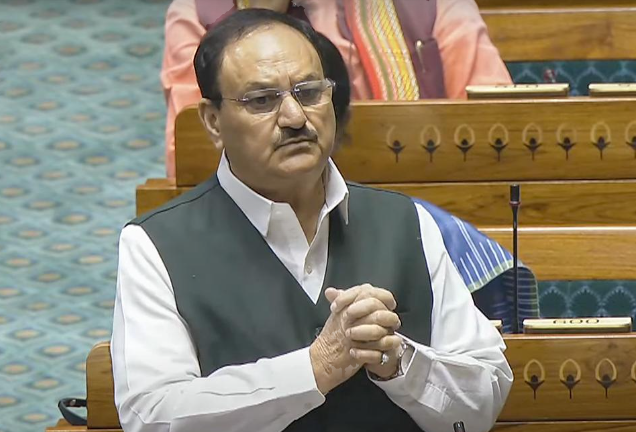
NEW DELHI, Sep 8: India has more than doubled its number of medical colleges since 2014, while MBBS and postgraduate seats have increased by over 175 per cent, Union Health Minister J P Nadda said at a WHO regional meeting in Timor Leste.
Addressing the 79th session of the WHO Regional Committee for South-East Asia, Nadda said the government has significantly strengthened medical education infrastructure by establishing new institutions and upgrading existing government medical colleges.
The minister was speaking at a ministerial roundtable on “Human Resources for Health: Equity in Specialised Care”, where he stressed that universal health coverage depends on ensuring equitable access to specialised medical services.
According to figures shared by Nadda, the number of medical colleges has increased from 387 in 2014 to 858, representing a rise of 121.71 per cent. MBBS seats have grown from 51,348 to 1,42,464, an increase of 177.45 per cent, while postgraduate seats have risen from 31,185 to 86,287, marking a growth of 176.69 per cent.
Nadda said the expansion has also been directed towards strengthening specialist healthcare in rural and underserved areas. He noted that postgraduate capacity enhancement schemes were extended in September 2025, with a target of adding 10,000 seats by 2028-29.
Special attention is being given to areas facing shortages of trained professionals, including emergency medicine, geriatrics, psychiatry and family medicine, he said.
The Health Minister also highlighted the expansion of nursing education. A total of 157 new nursing colleges are being established alongside existing medical colleges, which are expected to add nearly 15,700 nursing graduates every year. The initiative aims to improve access to affordable and quality nursing education, particularly in underserved districts, states and Union Territories.
Nurse practitioner programmes have been introduced in 10 critical specialities, supported by the National Nursing and Midwifery Commission Act, 2023, Nadda said.
India has also set a target of creating one lakh allied and healthcare professionals over five years. As many as 57 allied and healthcare professions have been brought under a formal regulatory framework through the National Commission for Allied and Healthcare Professions Act, 2021.
Nadda said primary healthcare facilities are being strengthened through Ayushman Arogya Mandirs, which provide services including screening, early detection and referrals. Ayushman Arogya Shivirs are also helping extend screening and specialist consultations to communities with limited access to healthcare.
He said community health centres and first referral units are playing an important role in providing specialist and referral services.
To address shortages of specialists in difficult locations, the government is adopting measures such as competitive remuneration, difficult-area allowances, performance-linked incentives, in sourcing of specialist services and fixed tenure postings.
Digital healthcare is also helping bridge geographical gaps, Nadda said. Platforms such as eSanjeevani and ABHA-enabled digital health records facilitate teleconsultations, referrals and continuity of treatment, particularly for people living in remote areas.
A major outcome of the WHO regional meeting was the adoption of the Dili Declaration on Human Resources for Health: Equity in Specialised Care by health ministers from member states of the WHO South-East Asia Region.
The declaration calls for stronger coordination between health workforce planning, education and financing, taking into account demographic changes, disease patterns and health emergency preparedness.
It also emphasises measures to attract, recruit, deploy and retain specialist healthcare professionals, particularly in rural and underserved communities.
The declaration promotes task sharing, mentoring, rotational outreach and visiting specialist programmes, as well as integrated referral systems, teleconsultation networks and coordinated referral hospitals.
It further supports the safe and equitable use of digital healthcare technologies, including telemedicine, teleconsultation and AI-assisted clinical tools, to expand access to specialised treatment.
Cancer, cardiovascular disease, trauma, maternal and newborn care, mental health, geriatric services and rehabilitation have been identified as priority areas for specialised healthcare.
India welcomed the declaration, stating that it would contribute to advancing universal health coverage and the goal of “Health for All” across the region.
During the WHO meeting, India also received two WHO South-East Asia Region awards.
The country was recognised for sustaining the elimination of maternal and neonatal tetanus over the past decade and for its leadership in addressing non-communicable diseases through primary healthcare, including achieving national targets for protocol-based management of hypertension and diabetes.
The Health Ministry credited frontline health workers for their contribution to strengthening the country’s healthcare system and improving health outcomes.

