


Rajnath Singh Stresses Freedom of Navigation, Respect for International Law as Key Priorities
India’s Defence Minister highlights closer maritime cooperation with Sri Lanka to safeguard regional security, boost trade and tackle emerging threats in the Indian Ocean.
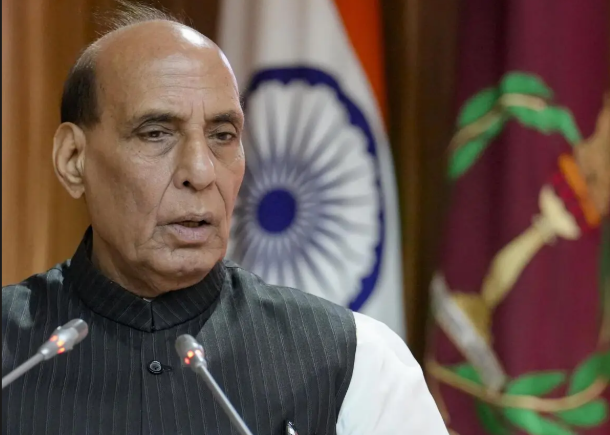
COLOMBO, Sep 9: Defence Minister Rajnath Singh on Wednesday called for stronger maritime cooperation between India and Sri Lanka, stressing the need to protect sea lanes, ensure freedom of navigation and uphold international law to promote peace, security and economic prosperity in South Asia.
Addressing a public event in Colombo on ‘India-Sri Lanka Maritime Cooperation in the Indian Ocean Region Civilisational Partners with Intertwined Destinies’, Singh said the two countries were well placed to work together in safeguarding stability across the Indian Ocean Region.
His remarks came after an “extremely productive” meeting with Sri Lankan President Anura Kumara Dissanayake, during which the two sides reaffirmed their commitment to strengthening ties as close neighbours, civilisational partners and maritime nations.
Singh said open shipping routes and secure maritime corridors were essential for regional development, given the Indian Ocean’s importance to global commerce.
He stressed that countries in the region must remain focused on maintaining safe waterways, respecting international maritime norms and ensuring that trade and commerce remain unhindered.
“It is essential that we work together towards shaping a favourable, secure maritime environment,” Singh said, emphasising the need to address emerging challenges before they develop into serious threats to regional development.
The Defence Minister noted that Sri Lanka’s strategic location gives it a significant role in the security architecture of the Indian Ocean. The island nation sits along major international trade routes that connect different parts of the world.
According to Singh, these maritime routes influence not only global trade but also the economic development, security and future prospects of countries across the region.
He described the Indian Ocean as an increasingly important arena for economic and strategic developments and said India and Sri Lanka, as maritime nations sharing the same ocean space, have a direct stake in maintaining its stability.
“India sees a friendly neighbour, a longstanding friend and a reliable partner” in Sri Lanka, Singh said, adding that closer collaboration at sea was important for the collective security of both nations.
He said the changing geopolitical environment had increased the importance of the Indian Ocean, while the emergence of India and Sri Lanka as developing democracies created opportunities for deeper cooperation.
Singh said New Delhi remained willing to share its expertise and work closely with Colombo in areas that support the country’s development. He added that Indian development projects in Sri Lanka are aligned with the needs of its people and priorities identified by its government.
The minister also highlighted the economic potential of greater collaboration between the two countries.
He said their ports could serve as centres of economic growth, while maritime industries could create new opportunities for people in both countries and contribute to broader regional prosperity.
Singh said geographical proximity naturally creates interdependence and that this should be transformed into opportunities for mutually beneficial development.
On the long-standing fishermen issue, Singh called for a cooperative approach to fisheries-related disputes, taking into account applicable laws and respective maritime jurisdictions.
He stressed that fishing is a livelihood concern for communities on both sides and said disputes should be handled with sensitivity while ensuring effective enforcement of maritime regulations.
Singh proposed greater cooperation in maritime domain awareness, including the development of an integrated system capable of providing comprehensive information in real time.
Such a mechanism, he said, could involve naval forces, Coast Guards and other relevant agencies from both countries working together to counter illegal fishing, monitor suspicious vessels, combat narcotics trafficking and smuggling, and respond to terrorism and other security threats.
He said India was ready to support Sri Lanka through capacity building initiatives, joint exercises and other measures aimed at enhancing cooperation.
The Defence Minister also called for moving beyond traditional security arrangements and exploring new areas of partnership under Prime Minister Narendra Modi’s MAHASAGAR vision for the Indian Ocean Region.
He said the concept places emphasis on mutual cooperation and a holistic approach to addressing regional challenges.
Singh further proposed the creation of a joint maritime humanitarian assistance and disaster relief mechanism involving government agencies, disaster management authorities and scientific institutions of both countries.
Such a framework could help ensure faster and coordinated responses during natural disasters and other emergencies.
He said future cooperation should extend beyond security and include institutional mechanisms for economic collaboration in areas such as fisheries and aquaculture, marine biotechnology, ocean sciences, protection of the marine environment and maritime tourism.
Singh arrived in Colombo on Tuesday for a three-day visit, becoming the first Indian Defence Minister to visit Sri Lanka in 38 years.

