


Search Continues for 6,000 People Nearly Four Weeks After Nepal Flash Floods
Rescuers recover bodies from damaged hydropower tunnels as authorities race to identify victims and restore vital river crossings
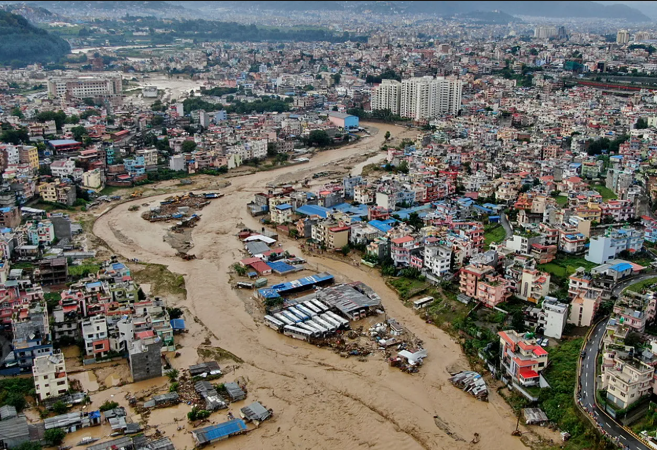
KATHMANDU, Sept 20: Search and rescue operations remained underway in Nepal on Sunday for nearly 6,000 people still unaccounted for almost four weeks after devastating flash floods killed more than 1,400 people.
The floods struck on August 26 after heavy water flows emerged near the Nepal-Tibet border, devastating settlements across northern and central parts of the country. The Bhotekoshi River surged downstream from the Himalayan region, sweeping away houses, vehicles, roads and bridges while causing extensive damage to hydropower facilities.
The disaster also affected neighbouring China, where 43 people were reported dead and more than 500 remained missing, according to Chinese media reports.
In Nepal, rescue teams have continued their search along riverbanks, debris covered areas and damaged hydropower sites in Rasuwa and nearby districts. At the Upper Trishuli-1 hydropower project in Rasuwa, 17 bodies have been recovered from a tunnel, according to the Nepali Army.
The remains were found buried under mud and trapped in reinforcement mesh inside the tunnel. Rescue personnel used grinders, gas cutters and rotary equipment to remove the bodies from the heavily damaged structure.
Earlier this month, a Nepal Army field commander said removing debris from some tunnels could take between three and four months because of the enormous quantity of material and difficult conditions inside the facilities.
Meanwhile, the destruction of roads and bridges continues to affect daily life in flood-hit communities. The government has started repairing suspension bridges along the Trishuli corridor after the August 26 floods destroyed or damaged crossings linking communities in Nuwakot and Dhading.
According to a report by The Kathmandu Post, repair work has begun on 12 suspension bridges, while another 33 were damaged beyond repair and will have to be rebuilt. The government has set a target of reopening the 12 bridges by October 6 and has invited tenders for reconstruction of the remaining crossings.
The loss of the bridges has disrupted access to schools, markets, healthcare facilities and other essential services. In several areas, residents have been forced to use longer routes or temporary arrangements to cross rivers.
Authorities are also facing difficulties in identifying victims. Only around 110 of the recovered bodies have so far been identified and handed over to relatives.
Officials said many remains were badly damaged or decomposed after spending prolonged periods in water, mud and debris. In some cases, only partial remains have been recovered, making identification through facial features, clothing or personal belongings difficult.
Forensic teams are increasingly relying on DNA analysis to establish identities. The process requires biological samples from recovered remains and relatives for comparison and can take considerable time.
Authorities said DNA samples have been collected from nearly 1,300 bodies that were temporarily buried following the disaster.

