


India’s Badminton Campaign Moves Into Individual Events at Asian Games
After securing a bronze in the team competition, Indian shuttlers began their individual campaigns in Aichi-Nagoya with Unnati Hooda among the early winners.
NAGOYA, Sept 25: Indian badminton players began their individual campaigns at the 2026 Asian Games on Friday after the country’s men’s team secured a bronze medal in the team competition.
The transition from team events to individual draws brought new challenges for India’s shuttlers, with players competing in singles, doubles and mixed doubles contests in Aichi-Nagoya.
Unnati Hooda made a winning start in the women’s singles competition, defeating North Korea’s Mi Song Yu in her opening-round match. Her result provided an encouraging beginning to India’s individual badminton campaign.
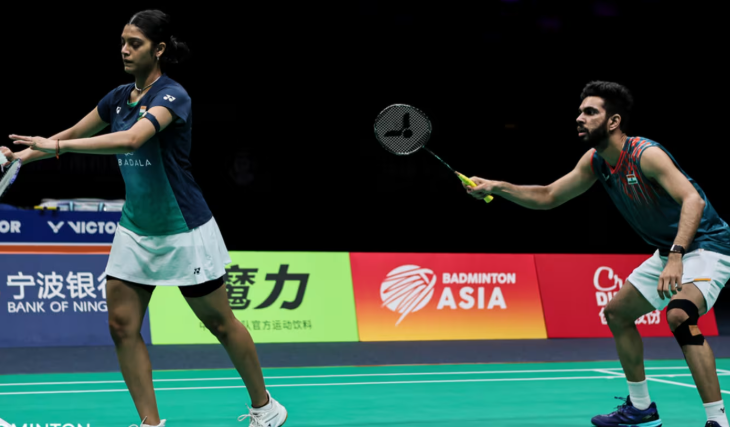
India’s mixed doubles combinations also entered the competition as the individual events got under way. The focus now shifts from team performance to individual pairings, where players must negotiate each round separately.
The Indian badminton contingent arrived at the individual competition with confidence following a podium finish in the men’s team event. The bronze medal added to India’s medal tally and provided an important result before the singles and doubles competitions began.
The individual events offer a different challenge because there is less room for recovery after a poor performance. Players must adapt quickly to their opponents and manage the pressure of knockout competition.
Hooda’s opening victory was therefore an important first step. The young shuttler has emerged as one of India’s notable prospects and will now look to build on the winning start as the tournament progresses.
The women’s singles draw remains highly competitive, with players from leading badminton nations expected to challenge for the medals. India will hope its representatives can advance through the rounds and convert strong individual performances into further podium finishes.
The men’s singles competition also features Indian representation, while doubles and mixed doubles provide additional medal opportunities.
The Asian Games badminton competition is taking place during a packed period for Indian sport. The country’s athletes are competing simultaneously in athletics, shooting, boxing, hockey, kabaddi, squash, table tennis and several other disciplines.
That wider sporting schedule means India’s badminton players will be competing for attention alongside athletes already producing medals in other arenas.
The team bronze had provided India with a solid start in badminton. The individual campaign, however, is expected to test the depth of the country’s talent because each player or pair must deal with different opponents and tactical challenges.
Hooda’s victory demonstrated the value of a composed start. Winning the opening match allows a player to settle into the competition and provides an opportunity to build momentum in subsequent rounds.
For the mixed doubles pairs, coordination will be particularly important. The format requires players to combine attacking and defensive responsibilities while adapting continuously to the opposition.
India’s men’s doubles combinations will also carry expectations after the country’s previous successes in international badminton. Their progress through the draw could become another important storyline as the Asian Games continue.
The individual events also provide younger players with valuable experience against established competitors from across Asia. A strong performance in Aichi-Nagoya could provide an important platform for future international competitions.
The Indian team had already experienced the highs and lows of the Games before the individual badminton events began. The country’s women’s cricket team won gold earlier in the tournament, while athletics and wushu added further medals on September 24.
The badminton players will now look to contribute to that broader medal effort.
For Hooda, the immediate priority will be to maintain her concentration after her first-round success. The later stages will bring tougher opponents and greater pressure, making preparation and tactical flexibility increasingly important.
The individual events also give Indian badminton an opportunity to demonstrate depth beyond its established names. Young players such as Hooda can gain valuable experience by competing in a major continental tournament against high-level opposition.
India’s schedule on September 25 includes badminton alongside a wide range of events, with the country’s athletes competing from the early morning through the evening in Aichi-Nagoya.
The Asian Games provide a particularly demanding environment because competitors have to deal with a packed schedule and the intensity of a multi-sport tournament.
India’s badminton campaign will therefore be closely followed as the individual draws progress. The men’s team bronze has already ensured a podium finish for the country in the sport, but the individual events offer further opportunities.
Hooda’s opening victory gives India an early positive result in the singles competition. The challenge now will be to maintain that momentum through the next rounds.
With the tournament continuing until October 4, India’s badminton players have time to make their mark. The individual competitions will determine whether the country can add to its medal collection in the sport after the men’s team secured bronze.
The early success also adds another storyline to an expanding Indian campaign in Aichi-Nagoya. As athletes across disciplines continue to compete for medals, Indian badminton has entered its next phase with its individual players seeking to go deeper into the tournament.

