


US Supreme Court Allows Trump Administration to Resume Third-Country Deportations
The ruling temporarily clears the way for Washington to continue transferring migrants to third countries as the administration challenges a lower-court decision over notice and due process protections.
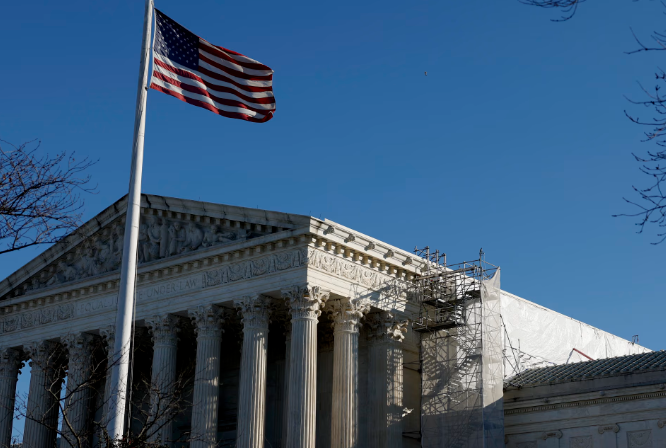
US, Sep 30 : The US Supreme Court on Tuesday allowed the Donald Trump administration to restart deportations of migrants to countries other than their countries of origin without first giving them an opportunity to raise concerns about potential persecution, torture or other serious harm.
The justices granted the Justice Department’s request to temporarily block a ruling by US District Judge Brian Murphy in Boston, who had found the Department of Homeland Security’s third-country removal policy unlawful. The administration will now be able to continue the deportations while it challenges Murphy’s decision before the Supreme Court.
Human rights groups estimate that more than 25,000 migrants have been removed to 29 countries under the policy introduced last year. Mexico has received the largest number of deportees.
The measure forms part of Trump’s broader immigration enforcement programme, which has focused heavily on increasing deportations since he returned to the White House last year. His administration has argued that sending migrants to third countries provides an additional mechanism for removing people who cannot be returned directly to their countries of nationality.
Among the destinations used by US authorities are South Sudan, Uganda, Equatorial Guinea, Liberia and the Central African Republic. The US State Department advises Americans against travelling to South Sudan because of threats including armed conflict, kidnapping and crime.
The Supreme Court had previously intervened in the dispute, suspending an earlier order from Murphy that temporarily stopped third-country removals. The justices later removed restrictions that the district judge had placed on the administration to prevent the transfer of a group of migrants to South Sudan.
The legal dispute dates back to 2025, when the Department of Homeland Security expanded efforts to remove migrants whose deportation orders did not identify a country to which they could be sent.
Under the policy, migrants could be transferred without advance notice to countries that had given diplomatic assurances that they would not be subjected to persecution or torture. In cases involving countries without such assurances, migrants were to be informed of the proposed destination, with US officials considering claims of possible persecution or torture if the individual independently expressed fear.
Immigrant rights organisations challenged the policy in a class action lawsuit. They argued that migrants should receive notice and a meaningful opportunity to explain why deportation to a particular third country could expose them to serious danger.
Murphy ruled in February that the policy conflicted with immigration procedures and violated due process protections under the Fifth Amendment to the US Constitution. The constitutional guarantee generally requires the government to provide notice and an opportunity to be heard before taking certain adverse actions.
In its emergency application to the Supreme Court, the Justice Department described third country removals as an important means of deporting certain migrants, including individuals with serious criminal records.
Critics and Murphy, however, have raised concerns that the programme also affects people who have received protection from removal to their countries of origin because of the risks they could face there.
Attorneys representing migrants have alleged that some deportees were subsequently transferred by third countries to their countries of origin despite having US protection against such returns. They have also reported allegations involving physical assaults, sexual violence, detention and disappearances.
The plaintiffs argued in court that the government was failing to account for the dangers faced by migrants, including longtime US residents and people without criminal records, when sending them to unfamiliar countries.
The 1st US Circuit Court of Appeals in Boston upheld most of Murphy’s ruling on September 18, prompting the administration to seek emergency intervention from the Supreme Court.
The litigation has also involved disputes over compliance with judicial orders. Murphy previously determined that the administration had violated, or attempted to violate, court directives, including an order requiring additional measures before a group of migrants could be transferred to South Sudan.
The latest Supreme Court action comes amid broader international concern over the treatment of migrants. More than a dozen UN human rights experts on Monday urged the US government to suspend policies they said could expose migrants to heightened risks of persecution, torture and other abuse in third countries.
The experts identified children, women, people with disabilities, trafficking survivors, LGBT people, human rights defenders and stateless individuals among those they said could face particularly serious risks.

