


EC Removes SIR Declaration from Form 6 in States Where Exercise Has Been Completed
The Election Commission has restored the standard voter enrolment process in states where the Special Intensive Revision has concluded, while the additional declaration remains applicable in areas where the exercise is continuing.
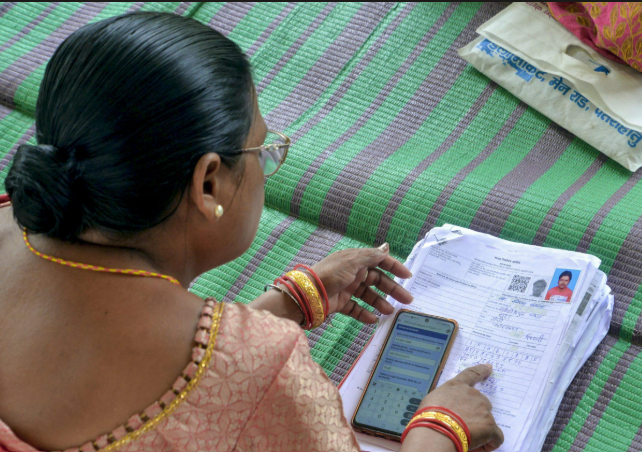
New Delhi, Sep 30: The Election Commission has removed the additional declaration linked to the Special Intensive Revision (SIR) from online Form 6 in states and Union Territories where the electoral roll revision exercise has been completed.
The change comes days after the full Commission clarified that the additional declaration attached to Form 6 was intended specifically for the SIR period. Outside an ongoing SIR exercise, applicants are to use the forms prescribed under the Registration of Electors Rules, 1960.
The declaration had required applicants seeking fresh enrolment to provide information establishing a connection between themselves, their parents or grandparents and electoral rolls prepared during an earlier intensive revision.
The additional section continues to be visible on the ECINET system in states and Union Territories where SIR is still underway. In areas where the exercise has concluded, however, the provision has been taken off the ECINET application and portal, as well as the websites operated by the respective Chief Electoral Officers.
Applicants in these areas will now have to complete the regular statutory Form 6 used for inclusion of eligible citizens in the electoral roll.
The decision follows a full Commission meeting held on September 26 by Chief Election Commissioner Gyanesh Kumar and Election Commissioners Sukhbir Singh Sandhu and Vivek Joshi. At the meeting, the poll panel reiterated that the SIR-specific declaration would operate only during the revision exercise.
The Commission had stated after the meeting that the declaration attached to Form 6 for SIR had been upheld by the Supreme Court, while the forms prescribed under the 1960 rules would apply during non-SIR periods.
The Form 6 provision had recently become a subject of internal disagreement within the poll panel. According to reports, Sandhu and Joshi had raised objections to the changes made to the online enrolment process.
Joshi had questioned whether a statutory form prescribed under the Registration of Electors Rules could be altered without a corresponding amendment to the rules. Sandhu subsequently supported the objection and sought removal of the additional requirement.
The Election Commission has maintained that the original Form 6 itself was not altered. Instead, it described the additional section as a separate declaration specifically connected with SIR. The panel has also maintained that the requirement received judicial backing in the Supreme Court’s proceedings concerning the Bihar SIR.
The controversy intensified after reports that the two Election Commissioners had raised objections on several occasions concerning decisions and orders associated with SIR.
The September 26 meeting was held against the backdrop of those reports. Following the meeting, the Commission said that decisions and orders concerning the revision exercise had received the unanimous approval of all three commissioners.
The latest change effectively separates the voter enrolment procedure applicable during SIR from the standard process followed when no such revision is taking place.
Form 6 is the prescribed application through which eligible citizens can seek inclusion in electoral rolls. The removal of the additional declaration means applicants in completed-SIR areas will no longer encounter the SIR-specific section while submitting the online enrolment request.
The move also brings the online process in those areas in line with the Commission’s September 26 clarification that regular statutory forms would be used outside an SIR period.
The SIR process is being implemented in phases across states and Union Territories. The Commission’s schedules show that several regions have already completed the exercise, while others remain at different stages of claims, objections, verification and final publication of electoral rolls.
For example, the Commission’s schedule placed Odisha, Mizoram, Sikkim, Manipur and Dadra and Nagar Haveli and Daman and Diu among the areas where the final roll was scheduled for publication in September. Other states, including Maharashtra and Delhi, remain in later stages of the process.
The distinction is significant because the additional declaration is intended to assist the mapping exercise associated with SIR. Once that exercise has ended in a particular jurisdiction, the Commission’s latest decision means the additional requirement no longer forms part of the online Form 6 process there.
The development comes as the Election Commission is also making changes to the wider SIR procedure. On September 26, the panel announced measures concerning hearings and verification, including greater use of Booth Level Officers for document collection in certain cases. It also extended some deadlines for claims and objections in Delhi and Maharashtra.
The Commission has said that its ECINET system will also undergo a review. A committee headed by a senior Deputy Election Commissioner and including an independent expert from IIT or IIIT has been tasked with examining the system’s compliance with relevant laws and rules.
The latest Form 6 change therefore does not end the SIR-related declaration everywhere. Instead, its application now depends on whether the revision exercise is continuing in the particular state or Union Territory.
Where SIR remains underway, new applicants may continue to encounter the additional declaration through the ECINET platform. Where the exercise has concluded, the SIR-related section has been removed and the standard statutory Form 6 applies.
The Election Commission’s decision provides a clearer distinction between the temporary requirements associated with electoral-roll revision and the regular voter enrolment procedure followed outside the SIR framework.

