


India Approves Rs 1.86 Lakh Crore Renewable Energy Programme to Expand Transmission and Storage
Cabinet clears major clean-energy investment plan aimed at strengthening power transmission and adding battery storage capacity as India expands renewable generation.
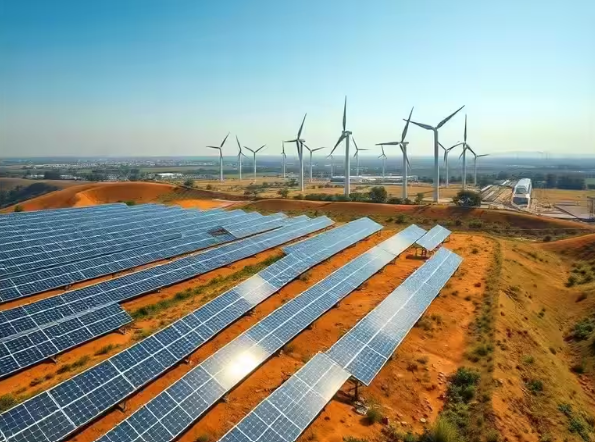
New Delhi, September 30: The Union Cabinet has approved a Rs 1.86 lakh crore programme to strengthen India’s renewable energy infrastructure, with a major focus on expanding electricity transmission networks and building battery storage capacity.
The decision comes as India accelerates the addition of clean energy capacity while seeking to address infrastructure constraints that can prevent electricity generated from renewable sources from reaching consumers.
Under the programme, Rs 1.36 lakh crore will be allocated towards strengthening the intra-state transmission system. The investment is expected to support the evacuation of electricity from renewable energy projects and create infrastructure capable of handling up to 135 gigawatts of additional clean-energy capacity.
The government has also approved a Rs 50,000 crore incentive programme for battery energy storage systems. The scheme is designed to support the installation of 50 gigawatt hours of battery storage capacity, helping address the intermittent nature of renewable sources such as solar and wind.
India has been rapidly expanding its renewable power generation base, but the growth has also increased the need for flexible electricity infrastructure. Solar generation, for example, is concentrated during daylight hours, while demand for electricity continues through the evening and night. Storage facilities can help bridge this gap by retaining electricity when generation is high and supplying it when required.
The approved investment therefore combines two elements of the power transition: moving electricity across the grid and storing surplus generation for later use.
According to details reported on the Cabinet decision, the programme is intended to strengthen India’s electricity network as the country works towards its longer-term clean-energy objectives. India currently has around 304 GW of non-fossil fuel power capacity and has set a target of reaching 500 GW by 2030.
The scale of the programme also reflects the changing requirements of India’s power system. Conventional generation can generally be scheduled according to demand, whereas renewable generation is influenced by weather and natural cycles. Greater transmission capacity and storage can make it easier for grid operators to manage these differences.
The transmission component will be particularly important for states where renewable projects are being developed at locations with strong solar or wind resources but where existing networks may not be sufficient to transport large quantities of electricity to consumption centres.
A stronger transmission network can also reduce congestion and improve the utilisation of generation assets. For renewable developers, availability of evacuation infrastructure is an important consideration because a power project can generate electricity only if the grid is capable of receiving and transporting it.
The storage component has a different but complementary role. Battery systems can respond quickly to changes in electricity demand and supply, making them useful for balancing the grid. They can also help reduce pressure on conventional generating units during periods when renewable output falls.
The government’s decision comes at a time when energy security, electricity demand and the cost of imported fuels remain important considerations for India’s economy. Expanding domestic renewable generation can reduce dependence on fossil-fuel imports over time, although the transition requires substantial investment in grids, storage and supporting infrastructure.
The programme is also expected to create opportunities for companies involved in power transmission, battery manufacturing, renewable-energy equipment and related engineering and construction activities.
For the manufacturing sector, the development of a larger domestic energy-storage market could encourage investments in battery cells, battery packs, power-management systems and other components. It may also support the wider development of supply chains associated with clean-energy technologies.
The transmission investment, meanwhile, is likely to generate demand for equipment such as transformers, conductors, substations and grid-management systems. Engineering, procurement and construction companies could also benefit from the expansion of electricity infrastructure.
The policy comes against a backdrop of rising electricity requirements as India’s economy expands. Industrial activity, urbanisation, digital infrastructure and increasing household ownership of electrical appliances are all contributing to higher power demand.
Renewable energy is increasingly being positioned as a major source of additional generation, but its contribution to the grid depends not only on the amount of capacity installed but also on the ability to transmit and manage that electricity.
This makes the infrastructure investment significant for the broader energy transition. Adding generation capacity without corresponding transmission and storage can create bottlenecks, particularly in regions where renewable projects are concentrated.
The battery incentive programme could help improve the commercial viability of large-scale storage projects by reducing part of the initial financial burden. Battery systems remain capital-intensive, and their economics depend on utilisation, technology costs, financing conditions and the value of services provided to the electricity grid.
As battery costs evolve and domestic manufacturing expands, storage could become an increasingly important part of India’s power-market structure.
The programme also fits into the government’s broader strategy of developing a cleaner and more resilient electricity system. Rather than treating renewable generation as a standalone investment, the latest decision places greater emphasis on the supporting infrastructure required to integrate it into the national power network.
The transmission expansion is expected to help move renewable electricity from generation-rich regions to areas with high demand. Storage can then provide additional flexibility by shifting electricity availability across different periods of the day.
The combined approach could become increasingly important as the share of variable renewable power rises in India’s electricity mix.
For businesses, the investment may create a longer pipeline of projects across the energy infrastructure sector. Equipment suppliers, project developers, engineering firms and technology companies could find opportunities as state-level transmission networks are expanded and storage projects are rolled out.
The programme also has implications for India’s efforts to build domestic capabilities in emerging energy technologies. A larger market for batteries and grid equipment could encourage manufacturers to expand production and invest in research, localisation and supply-chain development.
The government has not indicated that the programme will eliminate all challenges facing renewable integration. Land acquisition, project execution, financing, equipment availability and coordination between central and state authorities will continue to influence the pace at which infrastructure is developed.
Nevertheless, the Cabinet approval provides a substantial financial framework for addressing two of the major infrastructure requirements associated with India’s clean-energy expansion.
With India targeting 500 GW of non-fossil fuel capacity by 2030, the ability to transport and store electricity will become increasingly important alongside the construction of new generation projects.
The latest programme therefore places grid infrastructure and energy storage at the centre of the next phase of India’s renewable-energy expansion, with the government seeking to ensure that additional clean power can be integrated into the electricity system at scale.

