


Shubman Gill Double Century Powers India to Record ODI Chase Against West Indies
Shubman Gill's unbeaten 223 and Rohit Sharma's century help India chase 406 with eight wickets to spare and seal the three-match series 2-0.
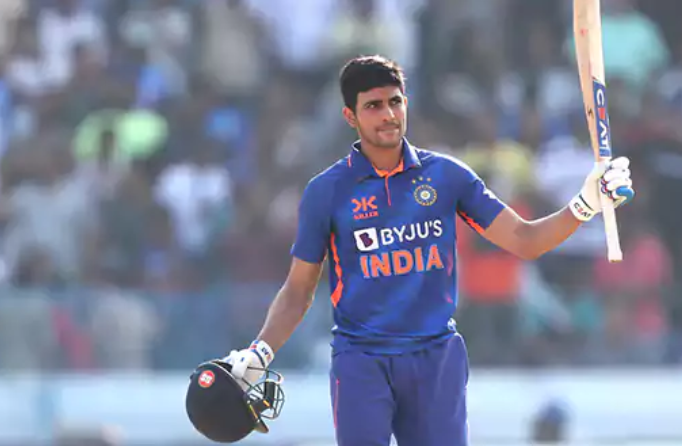
Guwahati, October 1: India produced one of the most remarkable batting displays in their ODI history as captain Shubman Gill smashed an unbeaten double century to guide the team past a 406-run target against the West Indies in the second match of the three game series at the Barsapara Cricket Stadium.
India completed the chase with eight wickets in hand and 39 balls remaining, securing an emphatic victory and taking an unassailable 2-0 lead in the series. Gill finished on 223 not out from 133 deliveries, an innings that combined power, timing and remarkable control throughout the chase. His performance also set a new record for the fastest double century in men’s ODI cricket.
The scale of India’s chase was underlined by the fact that the West Indies had posted 405 for seven after being sent in to bat. It was the Caribbean side’s first total above 400 in an ODI and appeared to give them a commanding position. Instead, India’s top order turned the contest into a record-setting run chase.
Gill’s innings was the centrepiece of India’s response. The right-hander reached his hundred at extraordinary speed before continuing to attack the West Indies bowling attack. He eventually crossed the 200 mark from just 117 balls, adding another landmark to a growing list of achievements in his ODI career.
His knock also came in a match in which India required a sustained attacking approach from the beginning. Rather than allowing the asking rate to dictate the tempo, the hosts kept scoring freely and maintained control over the chase.
Rohit Sharma provided the perfect platform for the captain. The veteran opener struck 101 and shared a 255-run opening partnership with Gill, putting India firmly in command before the West Indies could make meaningful inroads. Rohit’s century also saw him move beyond the 12,000-run mark in men’s ODI cricket, joining an elite group of Indian batters that includes Sachin Tendulkar and Virat Kohli.
The opening partnership effectively changed the complexion of the contest. The West Indies had produced a huge total, but India’s openers responded by attacking from the outset and preventing the visitors from building pressure through early wickets.
The West Indies’ innings itself contained several significant individual performances. John Campbell, Shai Hope and Amir Jangoo all scored centuries, making the match only the sixth ODI in which three batters from the same side had registered hundreds in one innings. Campbell and Hope provided the foundation before Jangoo accelerated the scoring towards the end.
Their collective effort helped the West Indies reach 405 for seven from their 50 overs. The total represented an enormous challenge, but India’s response was even more extraordinary.
Gill’s double century also added another milestone to his rapidly developing ODI record. Reuters reported that the Indian captain entered the match as the world’s top-ranked ODI batter, and his unbeaten 223 further strengthened his standing in the format.
The match was not without concerns for India’s coaching staff. Head coach Gautam Gambhir questioned the nature of the Guwahati surface after the extraordinary run accumulation. He argued that the pitch offered too much assistance to batters and did not provide sufficient contest between bat and ball.
Gambhir’s criticism came after both teams combined for 811 runs. He said that although such totals could appeal to spectators and broadcasters, excessive batting-friendly conditions could make it increasingly difficult for bowlers to influence ODI matches.
The India coach also pointed to the wider challenges facing bowlers in modern one-day cricket, including fielding restrictions, two new balls and the increasingly aggressive approach adopted by batters.
For India, however, the immediate priority was the series result, and the second ODI delivered that objective. After winning the opening match by eight wickets, the hosts once again dominated the chase and ensured that the final game would not determine the winner of the series.
The result also gives India an opportunity to assess players and combinations ahead of the next phase of their ODI programme. With the 2027 World Cup approaching, every bilateral series provides an opportunity to examine the depth available in different departments.
Gambhir indicated that India would continue experimenting with players in the months ahead. He referred to the limited time available before the World Cup, particularly because of the crowded international schedule and the Indian Premier League.
The West Indies, meanwhile, face a difficult task ahead of the final match. Their batting performance demonstrated their ability to produce a huge score, but their bowlers were unable to defend it. The inability to convert 405 into victory will be a major talking point for the visitors.
For the Caribbean side, the final ODI will offer an opportunity to finish the tour with a win and address some of the issues exposed during the two matches.
For India, the attention will turn towards New Chandigarh, where the third and final ODI is scheduled to be played on October 3. The team enters that contest with the series already secured, while the West Indies will be seeking a response after suffering another heavy defeat.
The Guwahati match will nevertheless stand out as the game in which India’s batting reached extraordinary levels. Gill’s unbeaten 223, Rohit’s century and the opening stand of 255 transformed a daunting chase into a convincing victory.
The contest also produced an unusual statistical contrast: the West Indies became the first side to score more than 400 in an ODI against India in this series, yet still lost by eight wickets. India’s successful chase of 406 ranks among the highest successful run chases in ODI cricket.
As India prepare for the final game, Gill’s performance has provided another significant chapter in his development as an ODI leader. His ability to remain unbeaten while carrying a chase of more than 400 runs demonstrated both endurance and attacking intent.
The second ODI therefore delivered far more than a series clinching victory. It produced multiple records, individual milestones and a rare batting spectacle, while also reigniting the debate over how much assistance modern ODI pitches should provide to batters and bowlers.

